What We Fix
What We Fix
Wall Cracks
Do wall cracks mean my home has a structural problem?
Wall cracks happen. Over time, every home develops a few. Some are surface-level — a bit of paint and filler sorts them out. Others run deeper.
The difference matters. A cosmetic crack is a nuisance. A structural wall crack is your home telling you something has changed — the ground has moved, bricks have expanded, or the wall has lost the ties holding it together. Knowing which one you're looking at changes everything about what to do next.
The symptoms below will help you work out what your wall cracks are telling you — and whether a structural engineer should take a look.
What are the symptoms of wall cracks?
Not all wall cracks are the same. Here are the patterns that point to something deeper.
Stepped Cracks
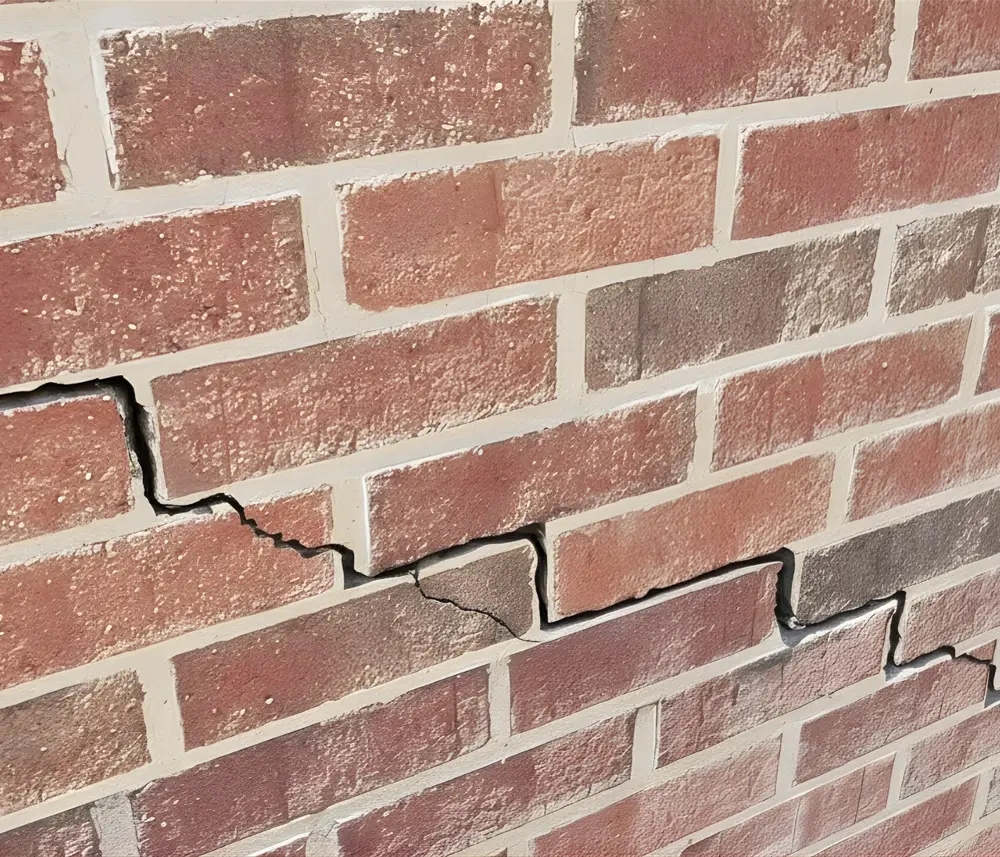
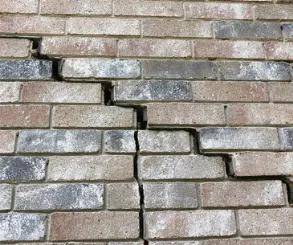
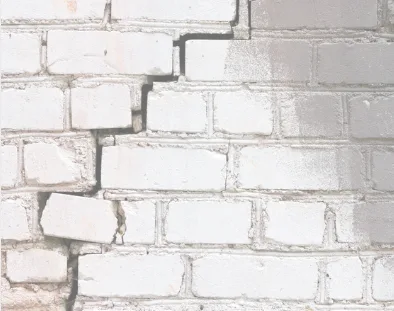
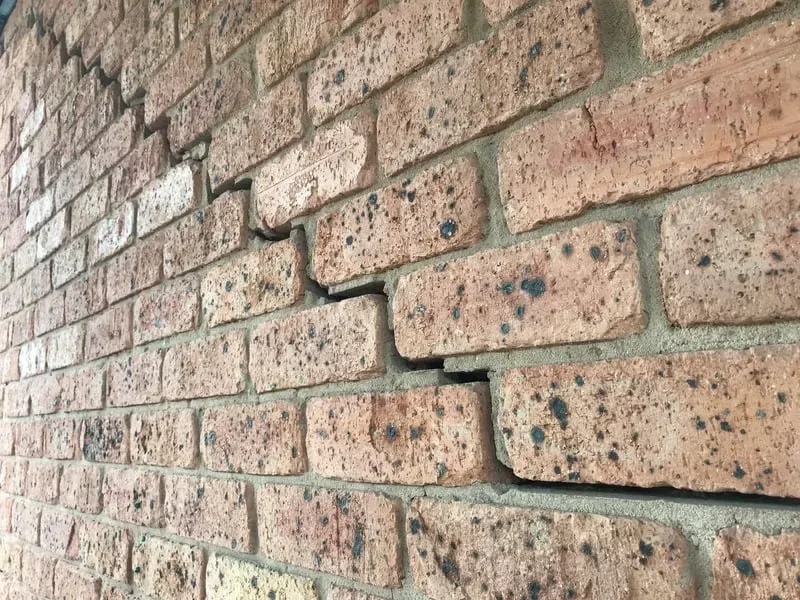
A crack that follows the mortar joints in a staircase pattern — up one bed joint, across the next. Bricks are rigid; they don’t bend. When the ground shifts, the wall gives way along its weakest line: the mortar. Slide a credit card into the crack. If it fits and wiggles freely, the crack is wider than 5 mm and the foundation beneath that section of wall has almost certainly moved.
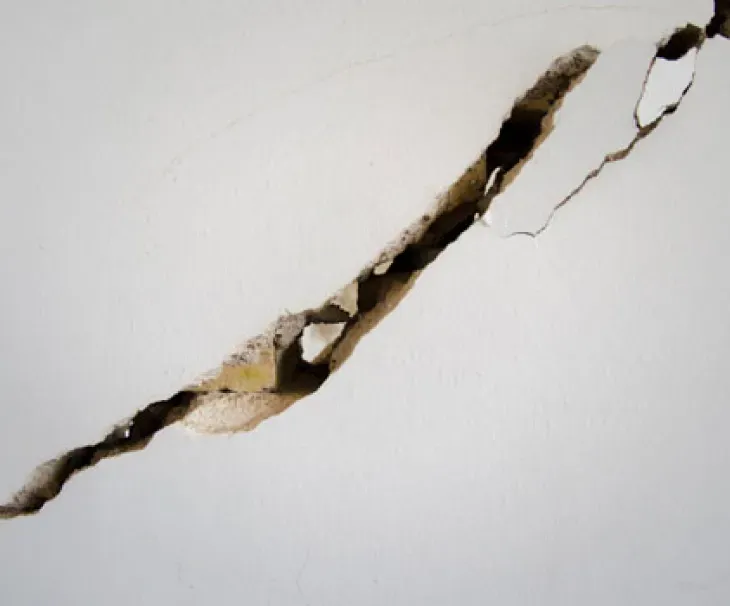
Cracks You Can See Through
If daylight comes through a wall crack, the wall has separated — it’s no longer a single structural unit. The two sides are moving independently. Hold a torch on one side and check for light on the other. If you can see it, the crack isn’t the problem. The crack is the messenger.
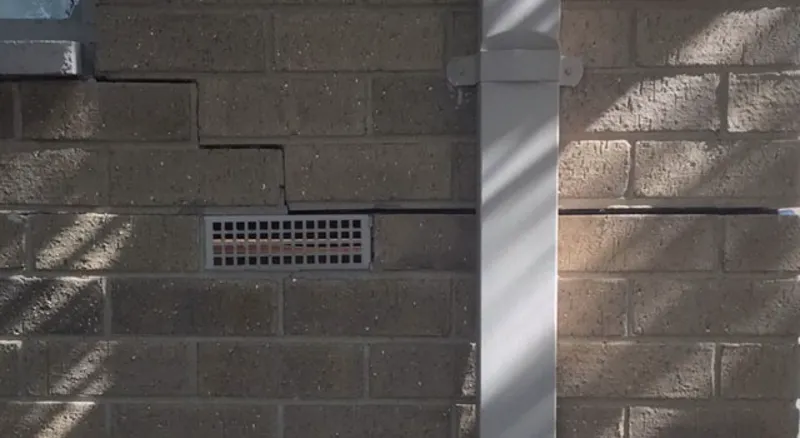
Cracks Near Corners and Downpipes
Cracks that appear near corners, downpipes, or subfloor vents. Water from a leaking or unconnected downpipe saturates the soil in one spot, and the foundation drops locally. The crack follows the mortar joints right next to the source of the problem. Check your downpipes — if one isn’t connected, that’s likely where the movement started.
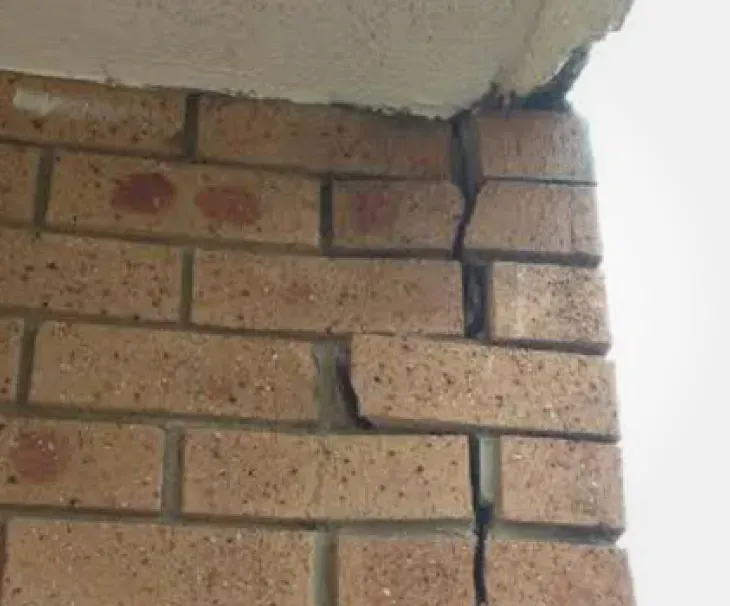
Corner Cracks
Clay bricks expand over time — sometimes several millimetres per year. Over decades, that expansion builds a lateral force that drives walls into each other at the corners. The cracks that appear are vertical and tight. Run your finger along the joint — if the mortar has crumbled and the bricks feel like they’re pushing apart, expansion is the cause.
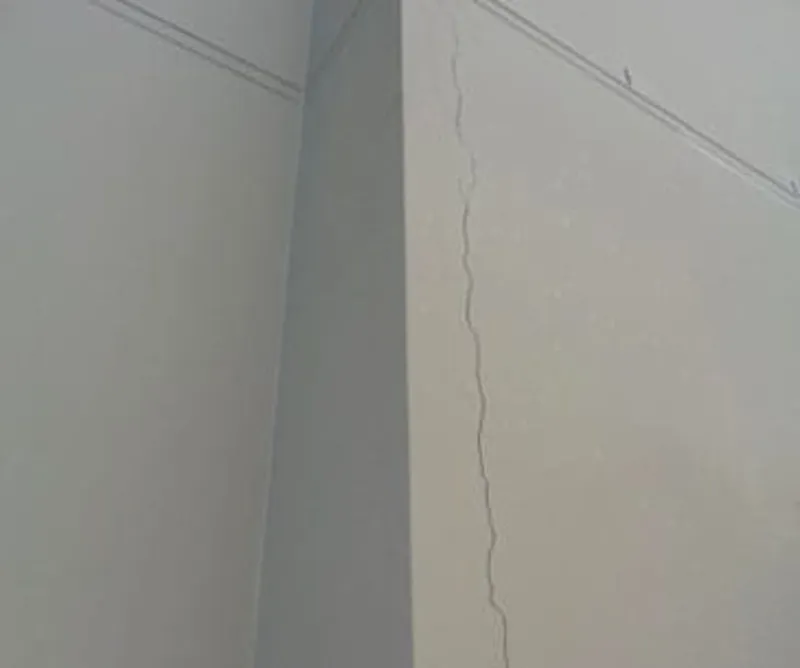
Internal Corner Cracks
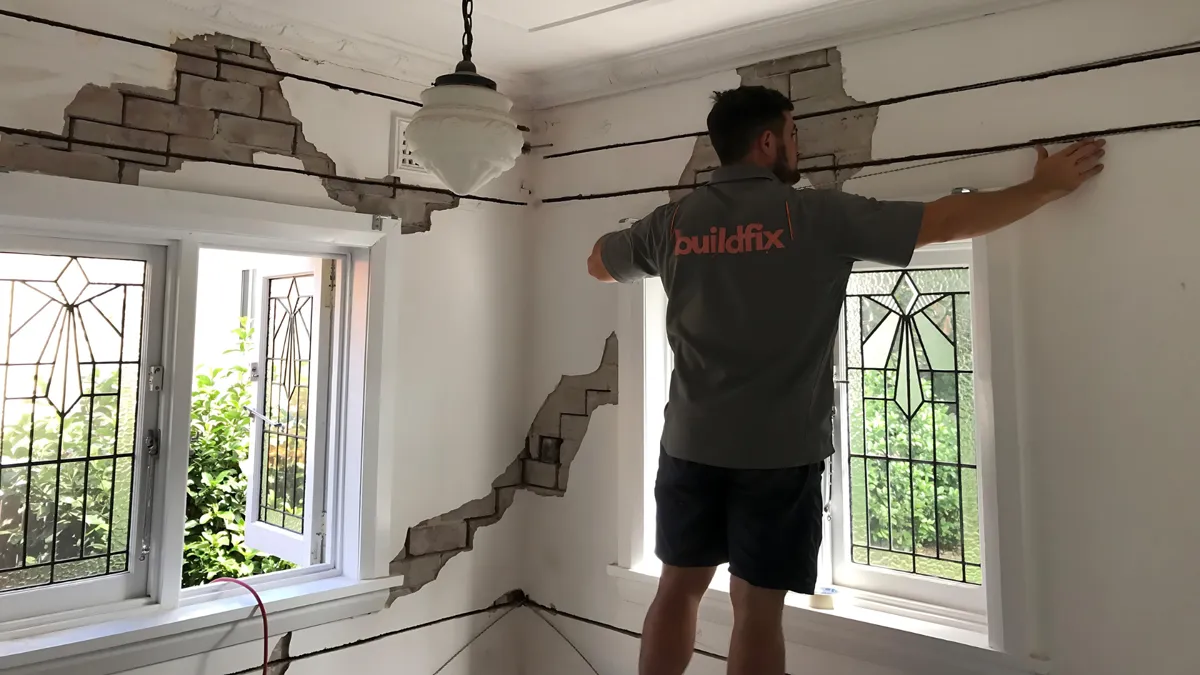
A vertical crack running down the corner of an interior wall — from ceiling to floor. This usually means the external wall is moving independently from the internal wall. The plaster cracks where the two walls meet. If the crack is wider at the top, the wall is rotating outward.
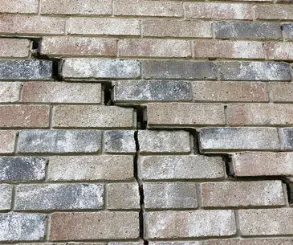
Recurring Cracks
The crack you filled last year is back. Same spot, sometimes wider. Recurring cracks are the single most reliable indicator that the cause hasn’t been fixed — whether that’s the foundation, brick expansion, or failed ties. Press on the filler — if it’s loose or has pulled away from the edges, the wall is still moving beneath it. That’s the plasterer’s trap: fill, paint, repeat.
What do structural wall cracks look like?
What causes wall cracks?
Wall cracks are the symptom. The cause could be underground, inside the cavity, or in the bricks themselves.
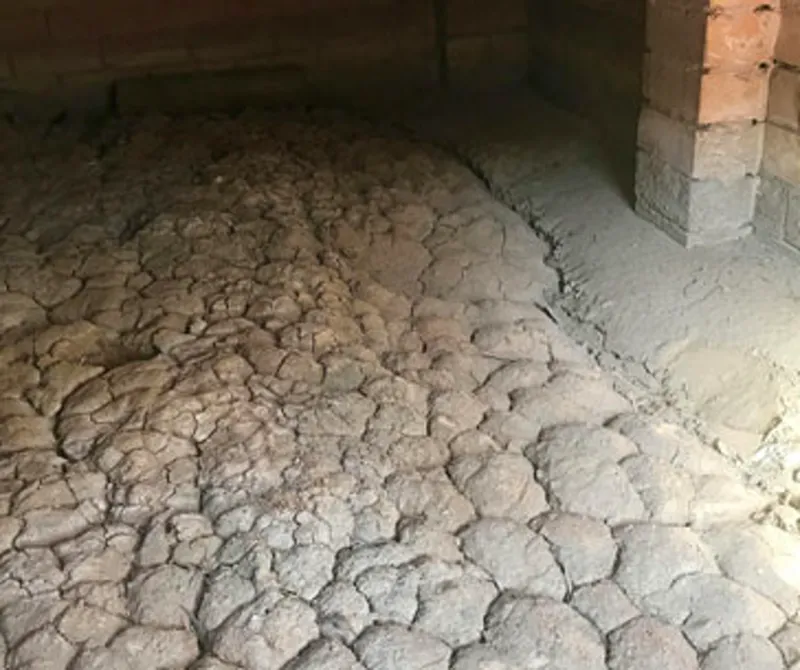
Reactive Clay Soil
Reactive clay is the single biggest cause of structural wall cracks across Melbourne, Western Sydney, and South East Queensland. The soil swells when wet, shrinks when dry, and moves your foundation with it. The wall above has no choice but to crack.
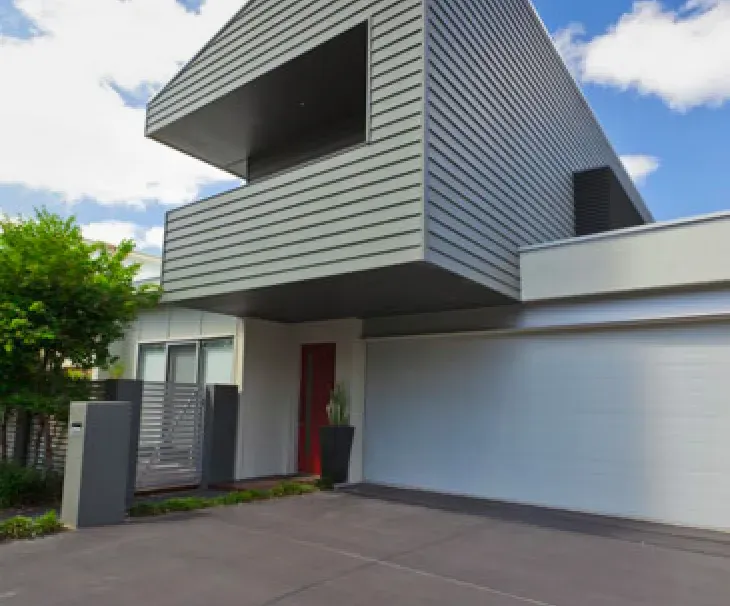
Additional Loads
Renovations, extensions, second-storey additions — every extra load pushes more force onto the foundation and the soil beneath it. If that force isn’t evenly distributed, the ground gives way at the weakest point. Wall cracks are the first sign the balance has shifted.
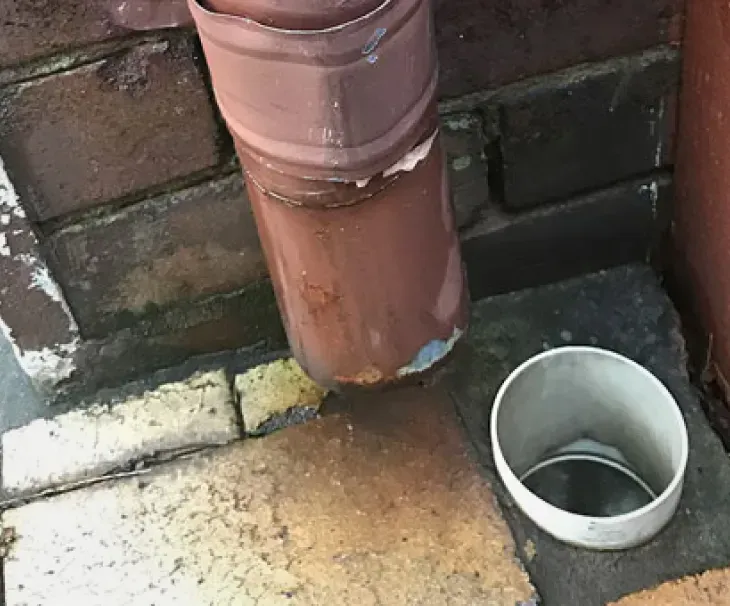
Poor Drainage
Unconnected pipes, broken drains, overflowing gutters — any of these lets water collect in the soil beneath your home. Over time, the water erodes the ground, creates voids, and the foundation sinks into them. Wall cracks follow as the structure gives way.
Poor Workmanship
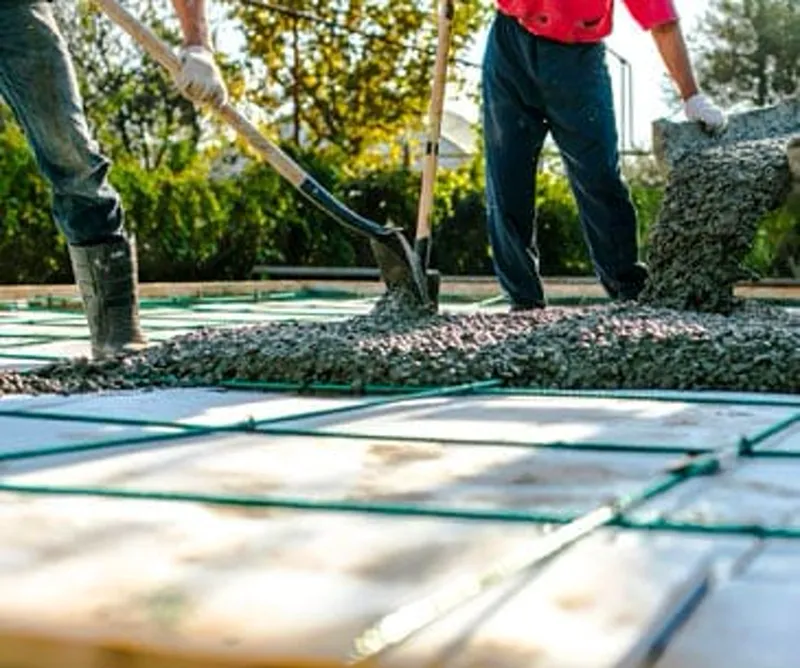
Shortcuts during construction eventually surface as wall cracks. Uncompacted fill, missing drainage, skipped soil testing — the foundation was never going to stay stable. The cracks are the house catching up with corners that were cut decades ago.
Expanding Materials
Clay bricks expand over their lifespan. Concrete can shrink and deflect. Both create stress on the structure. If expansion joints are missing or undersized, the wall has nowhere to go — and wall cracks open up.
Poor Design
Building codes have changed significantly over the decades. A home that met standards when it was built may not handle the forces expected today — heavier roofs, different soil classifications, changed drainage patterns. The design wasn’t wrong at the time. The conditions changed — and wall cracks are how the house tells you.
What causes wall cracks?
How to fix wall cracks
Non-Invasive. Permanent. Guaranteed.
Keep Existing. No Walls Knocked Down—Ever.
Your home's walls are designed to work as a single unit — distributing the weight of everything above them evenly down to the footing. When a structural wall crack opens, that unit breaks. The sections either side of the crack start working independently. Loads shift. Stress concentrates. The wall can't do what it was built to do.
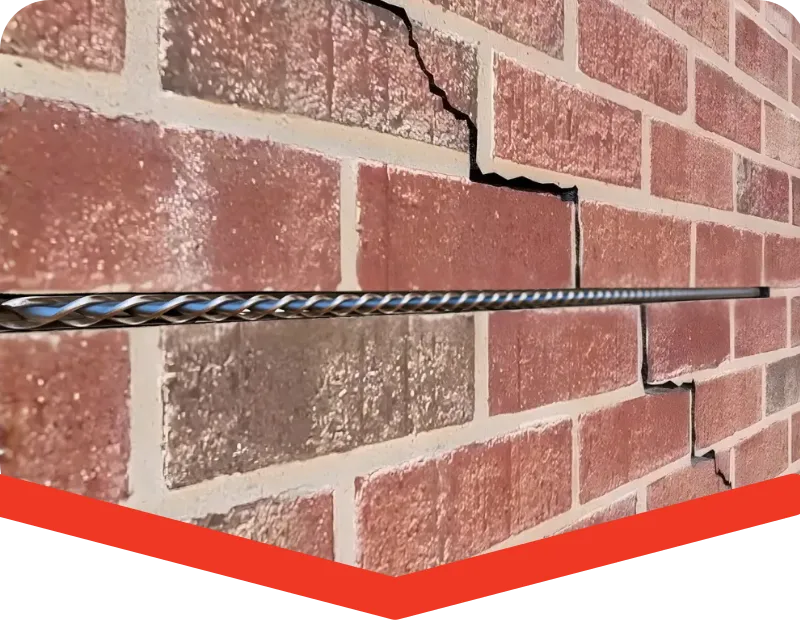
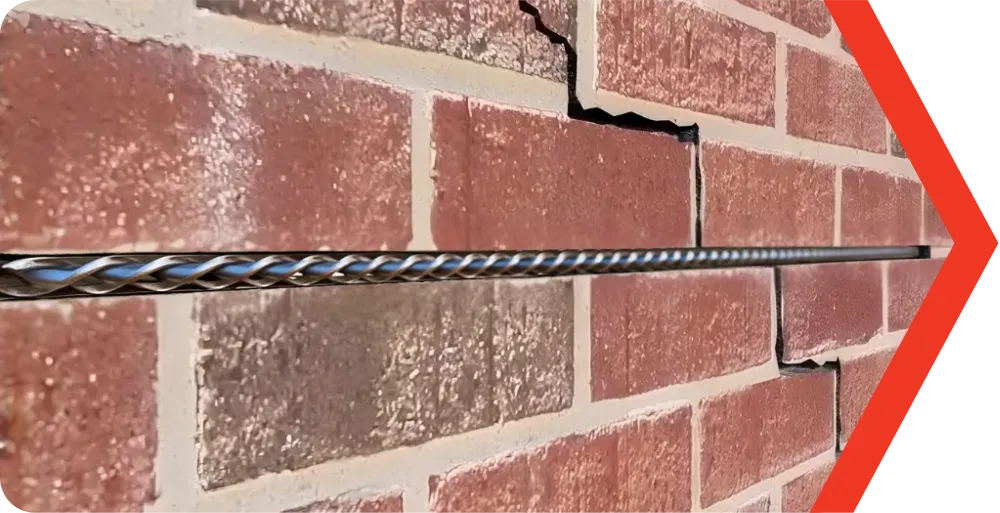
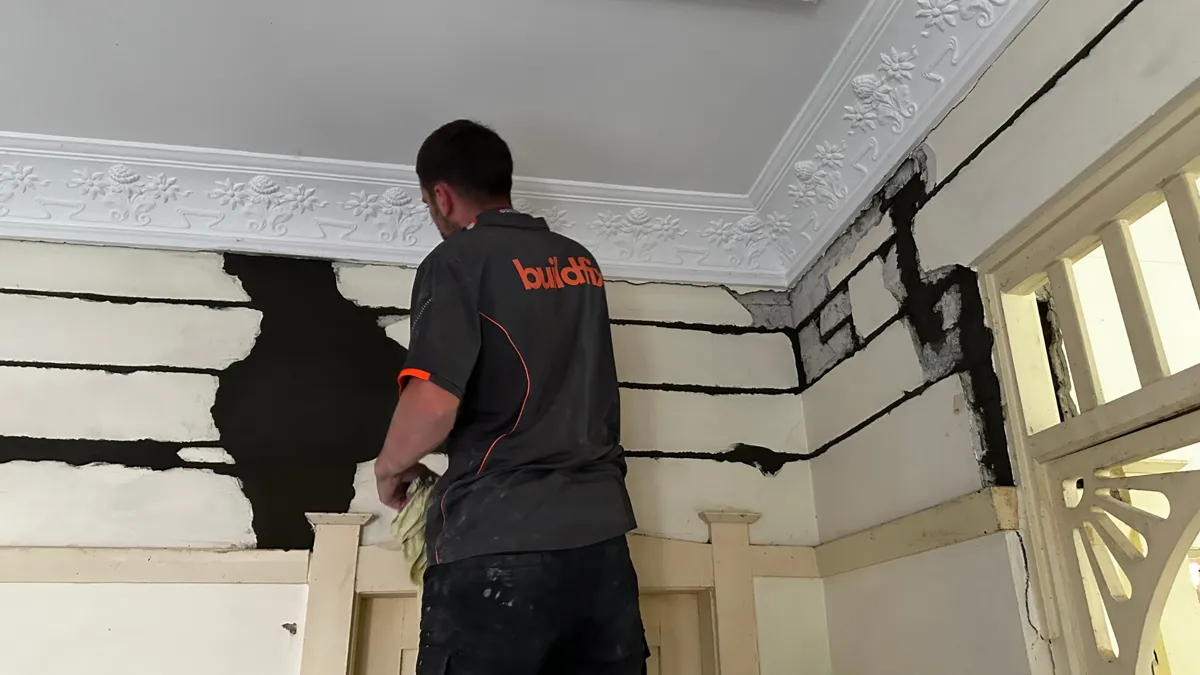
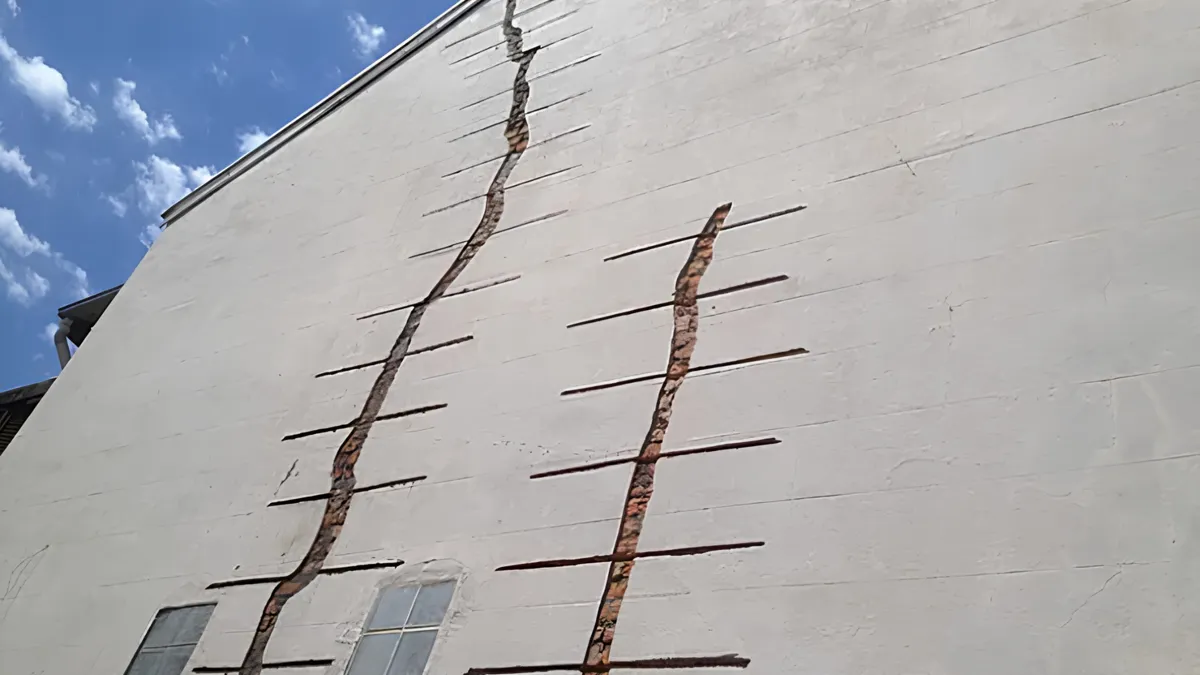
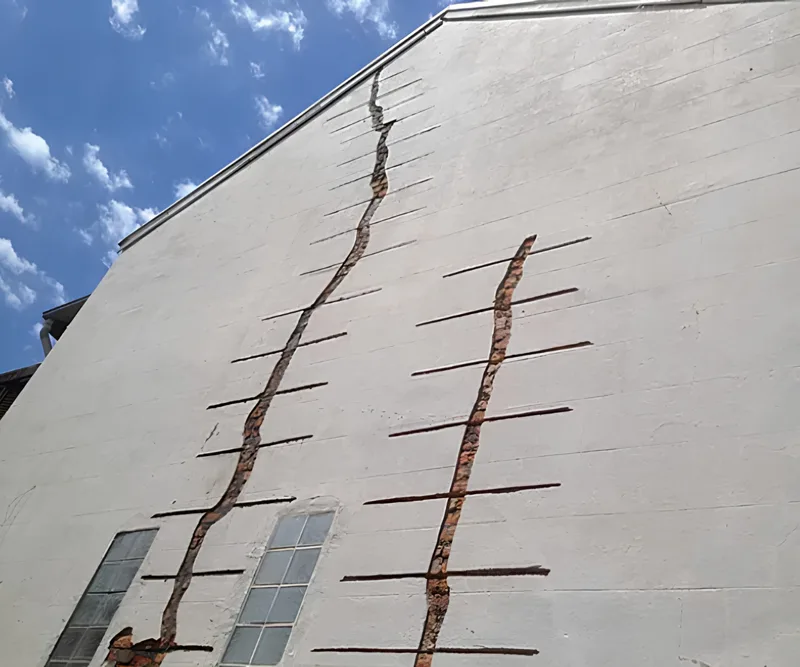
Reinforcing it reconnects those sections — and that's exactly what HelicalBar™ R304 does. High-tensile stainless steel masonry reinforcement bars, around 100 times tougher than the bricks themselves, are bonded into the mortar joints. The bars extend across the full wall, redistributing load evenly and returning your home back to what it was originally designed to do. What was the weakest point in your home becomes the strongest.
Need your walls reinforced? Learn about our wall crack repair solution.
Structural Engineers · Licensed Builders · Skilled Technicians
Help & Advice
Articles to help you understand wall cracks and what to do next.
 Wall Cracks
How to Fix Wall Cracks Structurally — Not Just Cosmetically
If a wall crack is structural, filling it won't fix it. Plastering it won't fix it. Painting over it won't fix it. The crack comes back six months later, same place, sometimes wider.
 Wall Cracks
Cosmetic vs Structural Cracks
Wall cracks are common in Australian homes, but not all mean something's wrong. Some are harmless signs of natural settling or aging materials.
 Wall Cracks
How to Fix Cracks Above Doors and Windows
A diagonal crack running up from the corner of a door or window is the wall telling you something specific. The lintel above the opening has failed, or the brickwork arching the load over the opening has rotated.
 Wall Cracks
Does My Home Need the Cracks Fixed? A Homeowner's Decision Tree
Most wall cracks aren't a problem. A few are. The trick is knowing which is which standing in front of one.
 Wall Cracks
What Is Crack Stitching?
Crack stitching is a specific structural repair for cracked masonry walls. Stainless steel bars are bonded into the mortar joints across the crack, tying the wall back together so it carries load as one piece again.
Common questions about wall cracks
The questions homeowners ask us most often.