
Help & Advice
How to Fix Cracks Above Doors and Windows
Help & Advice
How to Fix Cracks Above Doors and Windows
A diagonal crack running up from the corner of a door or window is the wall telling you something specific. The lintel above the opening has failed, or the brickwork arching the load over the opening has rotated. The crack isn't random. It's the wall finding a new way to carry a load it can no longer carry the way it was built to.
Here's why those cracks appear, what's actually going on inside the wall, and how the right fix puts the wall back to one piece.
Why Openings Are the Weak Points
Every door and every window is a hole in a load-bearing wall. The wall above each opening has to carry the load of the brickwork, the floor above, and a share of the roof — but it can't carry that load through the air across the opening. Something has to bridge the gap.
In modern construction, that something is a steel or concrete lintel — a beam that sits across the opening and transfers the load above it down into the brickwork on either side. In older homes, particularly homes built before the 1950s, the load was often carried by a brick arch above the opening, or by a timber lintel embedded in the wall.
Lintels and arches do most of their work invisibly. You don't think about them — until they stop working.
When a lintel sags, rusts, rots, or the arch above an opening loses its compression, the load has nowhere to go. It pushes the brickwork above the opening downward, the two halves of the wall above start to drop, and the brickwork either side of the opening rotates inward. The result on the outside is the classic diagonal crack — one starting at the top corner of the door or window and running up at roughly 45 degrees through the mortar joints.
What's Actually Failing
A few different things produce the same crack pattern. The fix depends on which.
Rusted steel lintels. Steel lintels rust when moisture gets to them — usually because the cavity above the opening was never properly flashed, or because rising damp has fed water into the masonry around the lintel. When steel rusts, it expands. The expansion pushes the brickwork above the lintel up and outward, the lintel itself loses strength, and the wall above starts to drop. Common in homes built between the 1930s and 1970s.
Rotted or split timber lintels. Older homes often have timber lintels above internal openings. When borer or moisture has eaten the timber, the lintel sags. The brickwork above follows it down, and a stepped or diagonal crack opens above the opening.
Failed brick arches. A brick arch carries its load through compression — each brick presses against its neighbours, transferring force outward and down into the wall on either side. If the foundation beneath one side of the arch drops, the arch loses compression. The bricks at the top of the arch can rotate, drop, or in extreme cases push apart entirely. The crack appears at the side of the arch, not above it.
Undersized or misinstalled lintels. Sometimes the lintel simply wasn't sized for the load. A renovation that added a second storey above an existing opening, a kitchen knocked through without a proper structural beam, a window enlarged without the lintel being upgraded — all can push a lintel past its design load and produce the same crack pattern.
How the Repair Actually Works
The fix depends on what's failed, but the principle is the same. Reconnect the wall as a single structural unit and either repair or replace the load path across the opening.
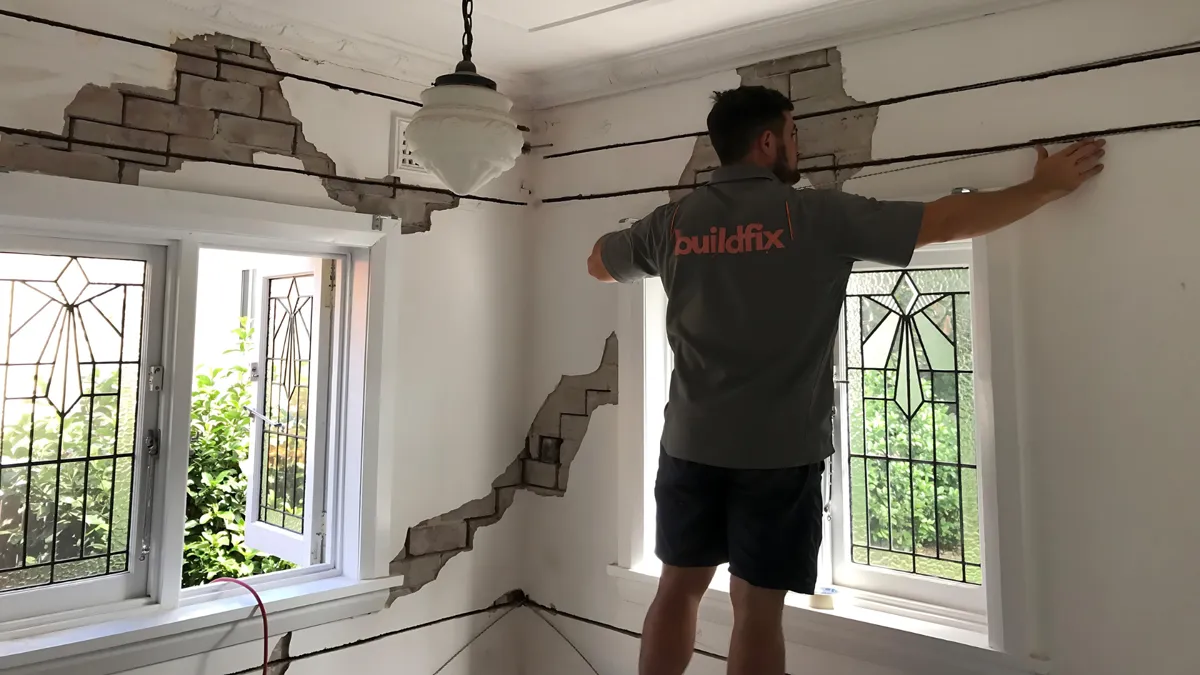
Where the crack itself runs through the mortar joints above and either side of the opening, HelicalBar™ masonry reinforcement is set into slots cut in the mortar — high-tensile stainless steel bars bonded with structural resin. The bars run across the crack and several metres into solid masonry on each side. They tie the rotated brickwork back into the rest of the wall, and they form a new tension path above the opening that the failed lintel or arch can no longer provide on its own. In many cases, that's the whole repair — no lintel replacement, no rebuild, the wall reinforced from the outside in 1–2 days.
Where the lintel itself has rusted through or rotted past the point of carrying any load, the lintel is replaced. That's a more involved job — the brickwork above the opening is propped, the failed lintel cut out, a new lintel installed, and the brickwork made good. It's still less invasive than a full wall rebuild, but it's a couple of days of structural work rather than a same-day reinforcement.
Where the underlying cause is rising damp feeding moisture into the lintel area, the rising damp gets stopped at the source at the same time — otherwise the new repair just rusts the way the old one did.
What You'll See After the Repair
Once the wall is tied back into a single unit and the load path is restored, the cracks above the opening stop moving. The brickwork around the door or window settles back into a stable configuration. The crack itself can be repointed flush with the original mortar — the slot where the reinforcement was set is sealed, the wall looks the way it did before, and there's no visible scar.
The repaired section is stronger than it was before the lintel started failing. The bars carry tension the original lintel never had backing it up. Every Buildfix structural wall crack repair is backed by a 20-year structural warranty. If the structural issue returns, so do we.
When to Get the Opening Looked At
If a crack has appeared running up from the corner of a door or window, especially a diagonal one, and especially one you can fit a credit card into — that's the assessment to book. A 30-minute visit, the lintel checked, the crack measured, and a clear answer on whether the wall needs reinforcement, lintel replacement, or both. It's free, and you'll know exactly what's failed.
For nearly 15 years Buildfix has repaired cracked openings on more than 15,000 homes and structures — heritage terraces with brick arches, post-war homes with rusted steel lintels, renovated cottages with overloaded openings, and everything in between.
Call 1300 854 115 or book a free on-site assessment.
Share this article
Related Articles
How to Fix Wall Cracks Structurally — Not Just Cosmetically
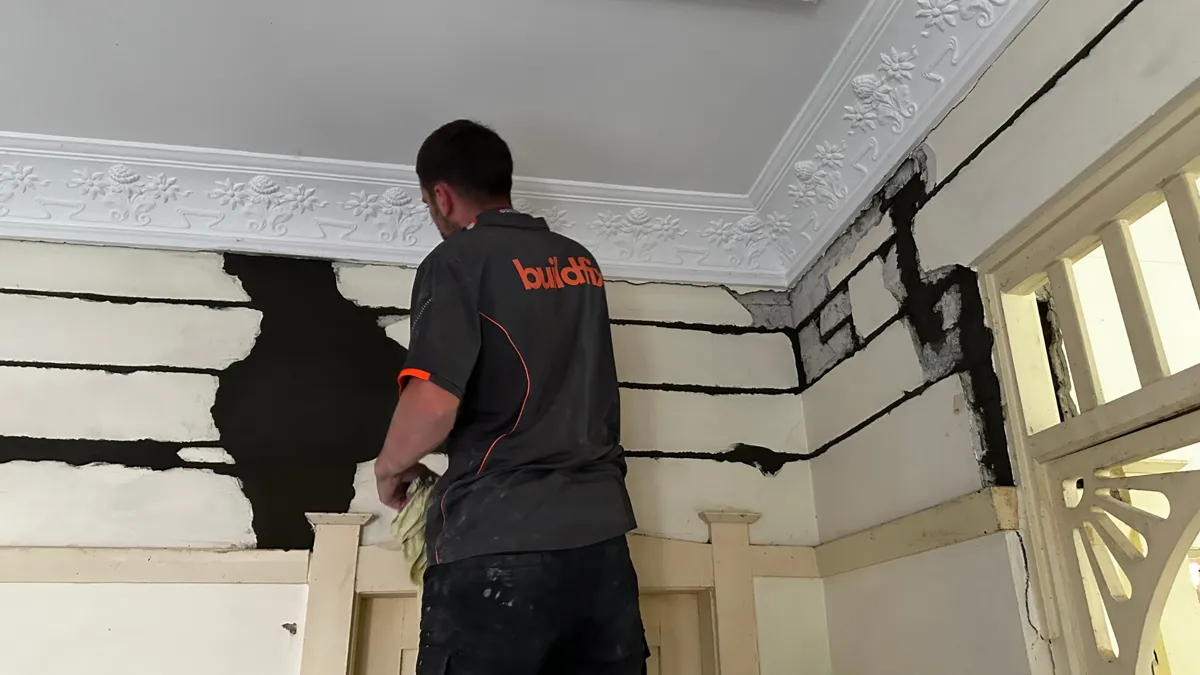
If a wall crack is structural, filling it won't fix it. Plastering it won't fix it. Painting over it won't fix it. The crack comes back six months later, same place, sometimes wider.
Read More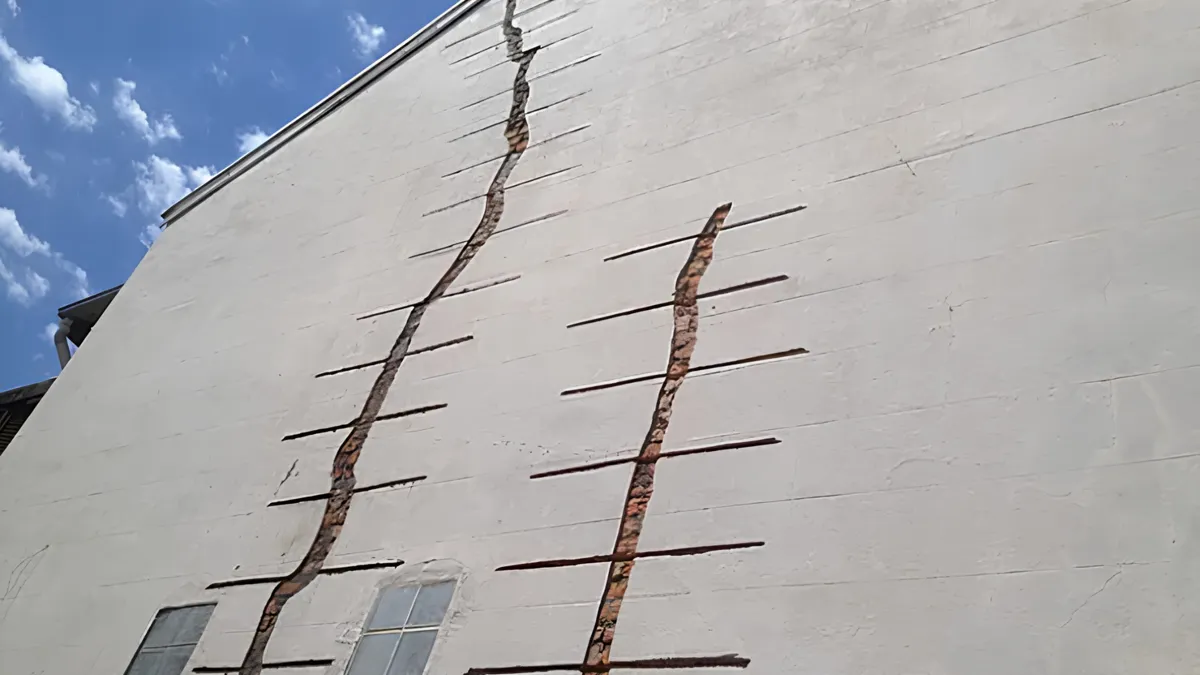
Does My Home Need the Cracks Fixed? A Homeowner's Decision Tree
Most wall cracks aren't a problem. A few are. The trick is knowing which is which standing in front of one.
Read More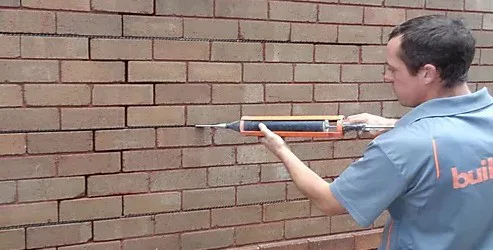
Brick Repair: How to Repoint Your Brick Wall
When the mortar joints between the bricks in your home begin aging, they crumble and crack. Repointing is something you can do yourself. Here’s our step-by-step guide.
Read More
Need expert advice on your home?
Our team of engineers and technicians are ready to help.
Book a free structural assessment today.