
Help & Advice
Does My Home Need the Cracks Fixed? A Homeowner's Decision Tree
Help & Advice
Does My Home Need the Cracks Fixed? A Homeowner's Decision Tree
Most wall cracks aren't a problem. A few are. The trick is knowing which is which standing in front of one.
Not every crack needs fixing. Some are cosmetic and can be left for the next paint job. Some are settling cracks that have stopped moving and just need filling. Some are structural — the wall is still moving, and those are the ones that come back wider every time they're filled.
Here's the decision tree.
Question 1: Can You Fit a Credit Card Into It?
Get a credit card or a 5-cent piece. Try to slide it into the crack.
If it won't go in: the crack is under about 0.8mm wide. That's a hairline crack — almost always cosmetic, especially if it's confined to a single sheet of plaster. Paint, filler, done. No action needed beyond a touch-up at your next paint job.
If the card goes in but doesn't wiggle: the crack is roughly 1–2mm wide. Could be cosmetic, could be the early stage of something structural. Move to question 2.
If the card goes in and wiggles, or if a 5-cent piece's edge sits in the gap: the crack is 3mm or wider. That's structural until proven otherwise. Move straight to question 4.
Question 2: What Direction Does the Crack Run?
The direction of a crack tells you where the load is. Cosmetic cracks tend to be random — hairline, short, often confined to a single sheet of plaster. Structural cracks have a shape.
Vertical hairline cracks in a single sheet of plaster — usually cosmetic, often caused by plaster shrinkage when the wall was first finished. Lower priority.
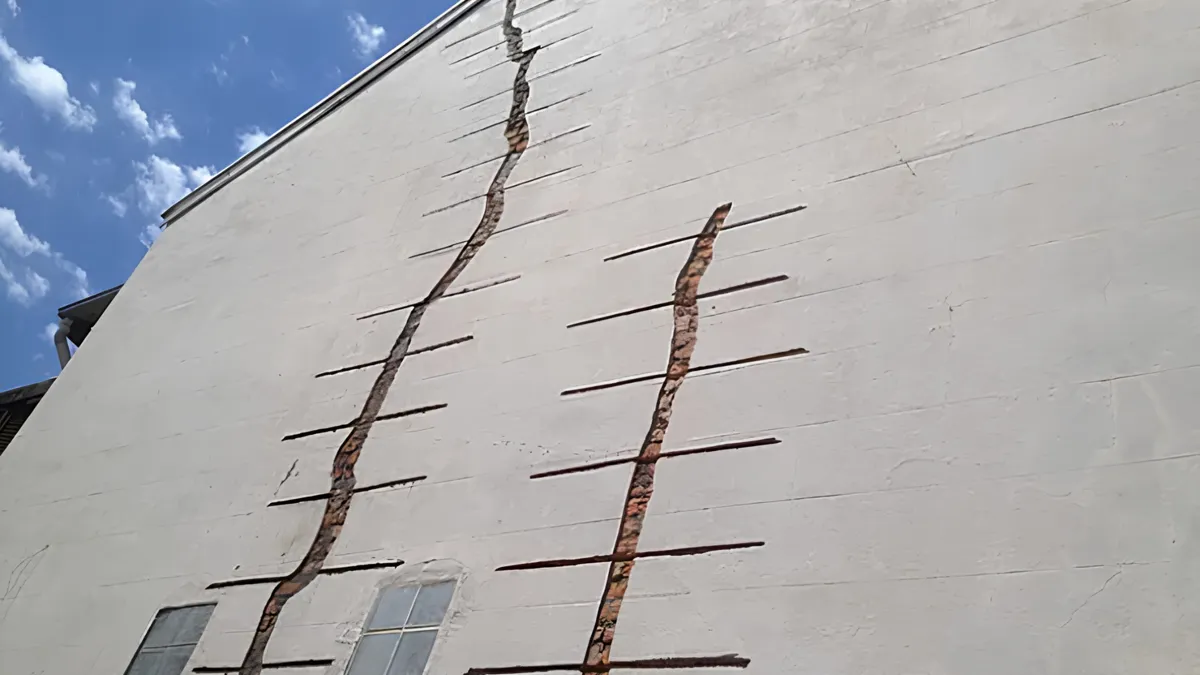
Stepped cracks following the mortar joints in a brick wall — running diagonally in a staircase pattern. These are the most reliable indicator of foundation movement. Brick is rigid; it doesn't bend. When the wall is pulled out of shape, it gives way along its weakest line, which is the mortar. A stepped crack on a brick wall is almost always structural.
Diagonal cracks from the corner of a door or window — running up from the corner of the opening at roughly 45 degrees. These come from the wall above the opening rotating slightly when the foundation drops. Structural.
Horizontal cracks — running along a course of bricks or along the line where a wall meets a slab. These are less common and usually more serious. They can indicate the wall is being pushed laterally — by soil pressure, by an undersized lintel, or by foundation rotation. Worth an engineer's reading regardless of width.
Question 3: Has It Come Back After Being Filled?
This is the single most reliable indicator of an active structural problem. If you (or the previous owner) filled the crack and it's reappeared in the same spot — that wall is still moving. The filler held until something moved it again.
A crack that comes back is the foundation telling you the cause is still active. The cosmetic fix did exactly what it was designed to do; the wall just kept moving underneath it. The fact that the same crack has reopened means a cosmetic repair will fail again. That's the plasterer's trap — fill, paint, repeat.
If a crack has come back even once, treat it as structural until an engineer says otherwise.
Question 4: What Else Is Happening at the Same Time?
Cracks rarely arrive on their own. The other signals around them tell you whether the foundation is involved.
Check the doors near the cracked wall. Are any of them sticking, swinging open by themselves, or no longer closing the way they used to? Place a tennis ball on the floor of the same room. Does it roll? Look at the skirting boards. Are there gaps between the skirting and the floor that weren't there a couple of years ago?
If the answer to one of those is yes, the crack is part of a bigger story. The foundation is moving and the wall is showing it. If the answer to all of them is no, the crack is more likely to be local — settlement of the wall itself, or thermal movement at a joint, or a long-finished episode that's already stable.
The Action Plan
Cosmetic cracks (under 1mm, no other symptoms): filler and paint at your next paint job. No urgency.
Settling cracks (1–3mm, no other symptoms, hasn't grown in 12 months): worth a quick measurement and a baseline. Mark the end of the crack with a pencil, write the date next to it, and check again in 6 months. If it hasn't grown, fill and paint. If it has, treat it as structural.
Structural cracks (3mm+, stepped or diagonal, or coming back after being filled, or paired with sticking doors or sloping floors): these need to be measured properly and the cause identified. Structural wall crack repair with HelicalBar™ reinforcement reconnects the wall as a single unit — done in 1–2 days, backed by a 20-year structural warranty.
Anything you can fit two credit cards into: book the assessment. That's the foundation talking, not the wall.
When to Get an Engineer's Reading
If you're still not sure, that's exactly what a free assessment is for. A structural engineer measures every visible crack — width, length, direction — checks doors and floors for related movement, and tells you which cracks need fixing now, which need monitoring, and which can be left alone. The whole visit takes 30–60 minutes. It's free, and you walk away with a clear answer either way.
For nearly 15 years Buildfix has assessed walls on more than 15,000 homes and structures. Most cracks don't need anything more than a baseline and a recheck. The ones that do, get caught early enough that the fix is still straightforward.
Call 1300 854 115 or book a free on-site assessment.
Share this article
Related Articles
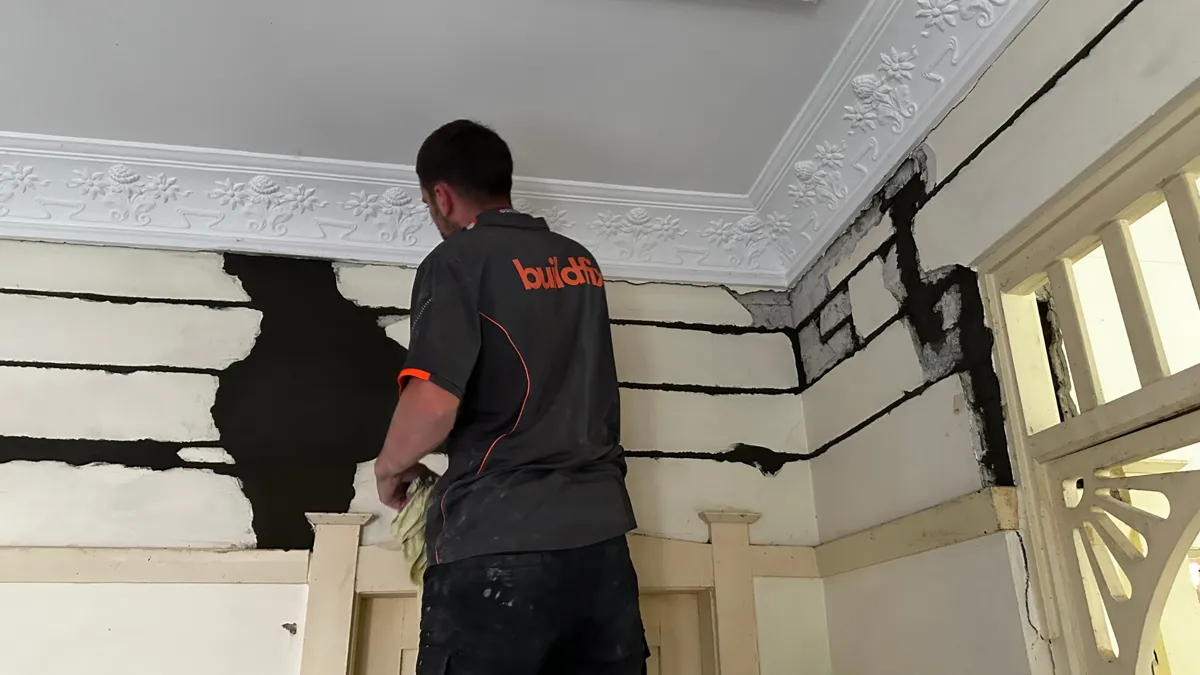
How to Fix Wall Cracks Structurally — Not Just Cosmetically
If a wall crack is structural, filling it won't fix it. Plastering it won't fix it. Painting over it won't fix it. The crack comes back six months later, same place, sometimes wider.
Read More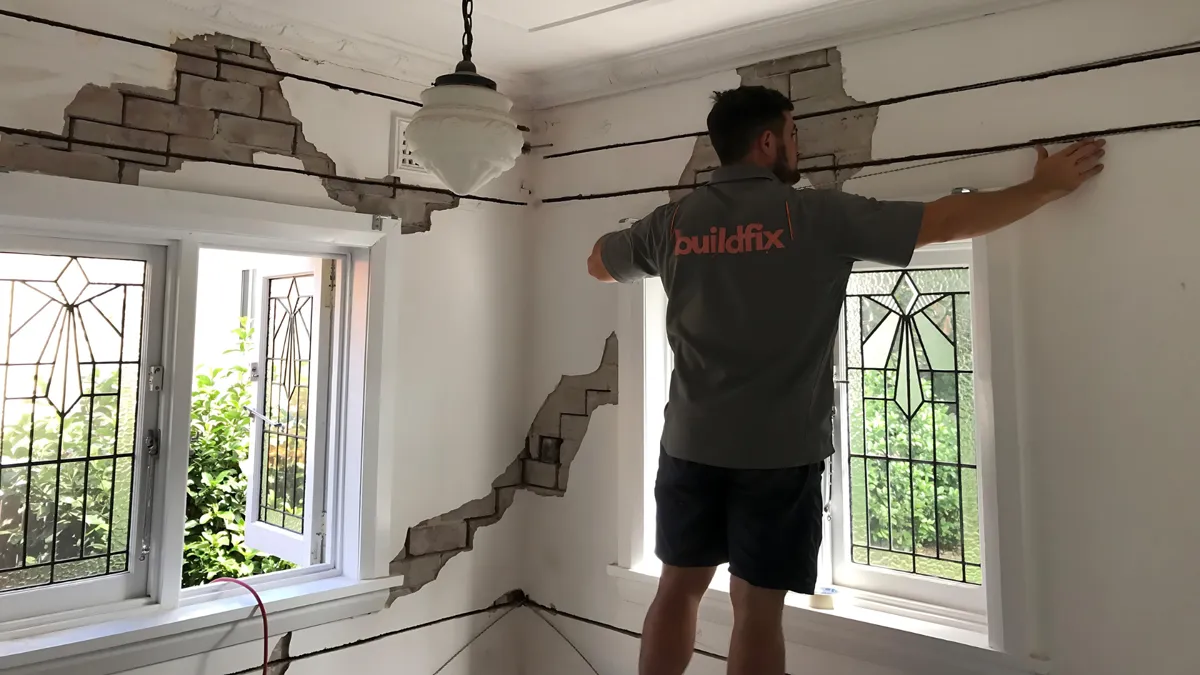
How to Fix Cracks Above Doors and Windows
A diagonal crack running up from the corner of a door or window is the wall telling you something specific. The lintel above the opening has failed, or the brickwork arching the load over the opening has rotated.
Read More
Brick Repair: How to Repoint Your Brick Wall
When the mortar joints between the bricks in your home begin aging, they crumble and crack. Repointing is something you can do yourself. Here’s our step-by-step guide.
Read More
Need expert advice on your home?
Our team of engineers and technicians are ready to help.
Book a free structural assessment today.