
Help & Advice
How to Fix Wall Cracks Structurally — Not Just Cosmetically
Help & Advice
How to Fix Wall Cracks Structurally — Not Just Cosmetically
If a wall crack is structural, filling it won't fix it. Plastering it won't fix it. Painting over it won't fix it. The crack comes back six months later, same place, sometimes wider, and the homeowner who's been told "just monitor it" is back where they started — only with less faith in tradies and a wall that's now demonstrably moved twice.
Structural cracks need a structural fix. Here's what that actually is.
Why Filling Doesn't Last
A wall is meant to behave as a single structural unit — the bricks and the mortar work together to carry loads down to the footing and to resist forces pushing on the wall from outside. When that wall cracks structurally, it stops behaving as one piece. The two halves of the wall are now joined only by friction and whatever filler has been pushed into the gap.
Filler is soft. Plaster is brittle. Neither has the tensile strength to hold a wall together across a crack that's already opened once. Any movement at all — wind on the wall, normal temperature expansion, more soil shift below — and the filler tears. The crack reappears. The wall is no stronger than it was before the filler went in.
That's the plasterer's trap. Fill, paint, repeat. The plasterer did nothing wrong. The wall just needed something the plaster could never do.
What "Structural" Actually Means
A structural crack is one where the wall has lost its ability to act as a single load-bearing unit. The clues are width, direction, and behaviour over time.
Width — anything you can fit a credit card into is structural until proven otherwise. Hairline cracks under 1mm are usually cosmetic, especially if they're confined to plaster. Anything from 2mm up, sitting on a brick wall, has moved enough to interrupt the wall's structural continuity.
Direction — stepped cracks in brickwork (following the mortar joints in a staircase pattern), diagonal cracks above doors and windows, and horizontal cracks anywhere are structural signals. Vertical hairline cracks in a single sheet of plaster usually aren't.
Behaviour — if the crack came back after being filled, or if it's grown over 12 months, it's an active structural crack. The wall is still moving relative to itself, and any cosmetic fix will fail again.
How HelicalBar™ Reinforcement Actually Works
To fix a structural crack, the wall has to be reconnected as a single unit. That means installing reinforcement that runs across the crack and several metres beyond it, with enough tensile strength to carry the loads the wall can no longer carry on its own.
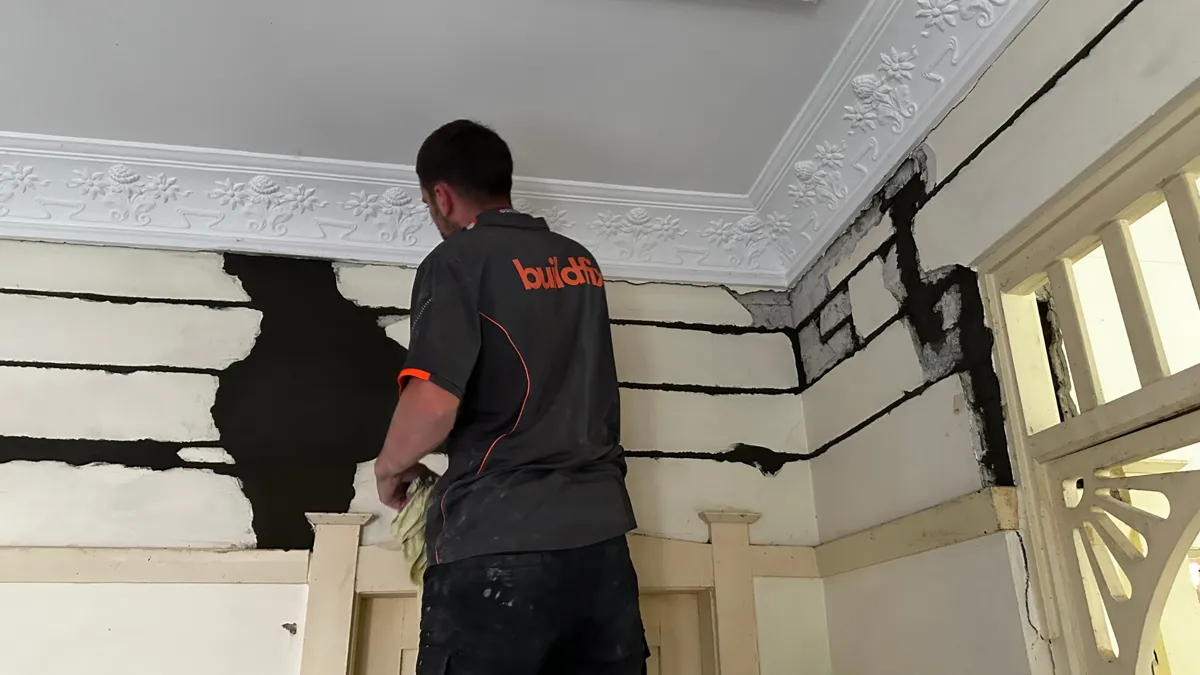
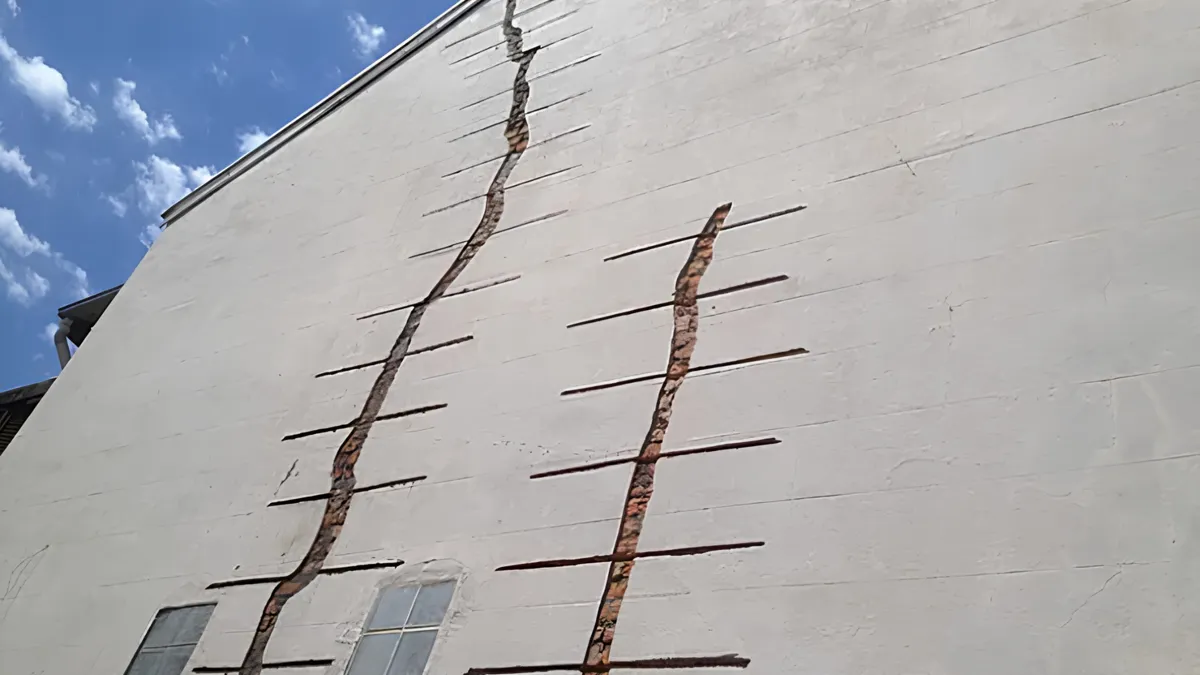
On a Buildfix job that's HelicalBar™ masonry reinforcement — high-tensile stainless steel bars, roughly 100 times tougher than the surrounding bricks. The bars are set into slots cut into the mortar joints, bonded with a structural resin, and finished flush so the wall looks the way it did before the slot was cut. Once cured, the bars tie the cracked section back into solid masonry on either side.
The wall isn't just patched. It's reinforced. Loads that used to concentrate at the edges of the crack now flow smoothly through the bars and into the undisturbed masonry beyond. The section of the wall that was the weakest point becomes the strongest. The crack itself can then be repointed or skimmed back to a clean finish.
When the reinforcement is designed by an engineer, it can carry the structural loads that the cracked masonry can no longer carry — which means a HelicalBar™ wall repair can reduce or remove the need for further foundation work, depending on what's underneath.
What You'll See on the Day
The structural fix runs to a predictable pattern. A structural engineer measures every crack — width, length, depth, direction — and maps where the bars need to go. Slots are cut into the mortar joints with a thin diamond blade. The bars are pushed into the slots, the resin is injected behind them, and the joints are repointed flush with the original mortar.
The work is mostly invisible from outside the wall once it's finished. No bricks come out. No section of the wall gets knocked down. No props go up. Most jobs are done in 1–2 days.
When it's complete, the wall is stronger than it was before the crack appeared. Every Buildfix wall reinforcement is backed by a 20-year structural warranty. If the structural issue returns, so do we.
When Foundation Work Comes Into It Too
Sometimes the crack is the symptom and the foundation is the cause. If the ground beneath the wall is still moving, reinforcing the wall alone won't be the whole answer — the foundation gets stabilised too. That's a separate piece of work using GeoPoly™ resin injection beneath the footing, often done in the same week as the wall reinforcement.
The engineer's assessment decides which jobs the house needs and in which order. What's never the right answer on a structural crack is filler-and-paint. That fixes the look. It doesn't fix the wall.
When to Get the Cracks Measured
If a crack is wider than a 5-cent piece's edge, has come back after being filled, or has grown in 12 months — that's the assessment to book. A 30-minute visit, every crack measured, the cause identified, and a fixed-price quote on the spot. It's free, and you'll know exactly what's holding the wall together and what isn't.
For nearly 15 years Buildfix has reinforced cracked walls on more than 15,000 homes and structures.
Call 1300 854 115 or book a free on-site assessment.
Share this article
Related Articles
Does My Home Need the Cracks Fixed? A Homeowner's Decision Tree
Most wall cracks aren't a problem. A few are. The trick is knowing which is which standing in front of one.
Read More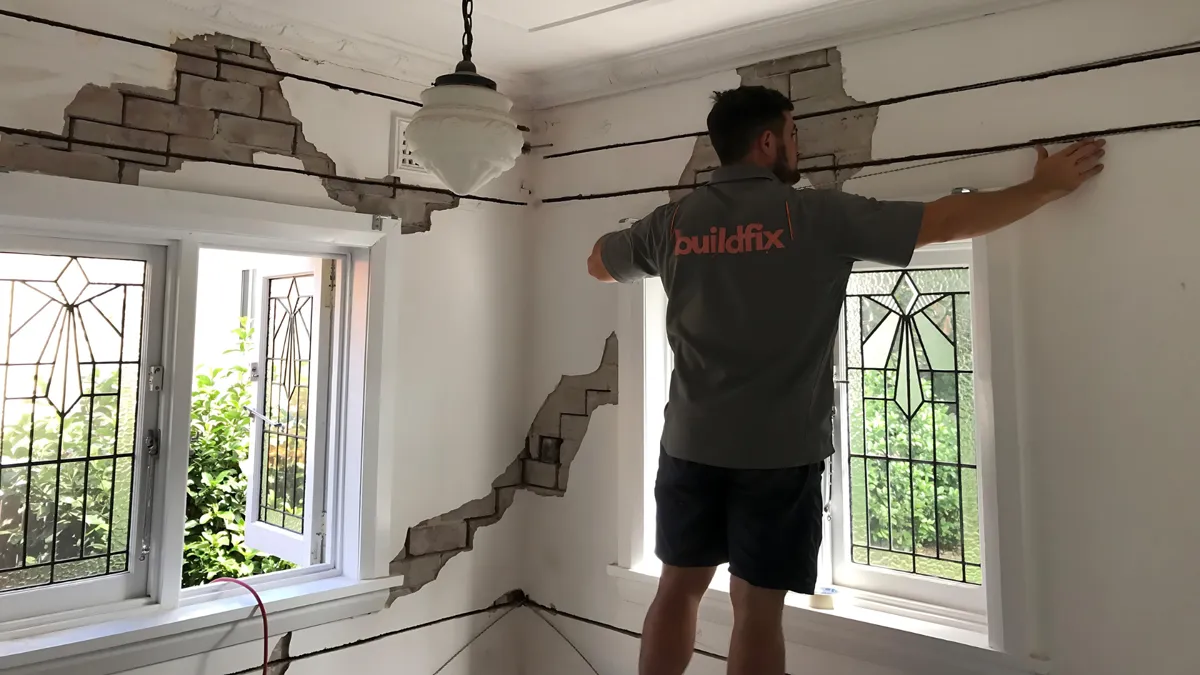
How to Fix Cracks Above Doors and Windows
A diagonal crack running up from the corner of a door or window is the wall telling you something specific. The lintel above the opening has failed, or the brickwork arching the load over the opening has rotated.
Read More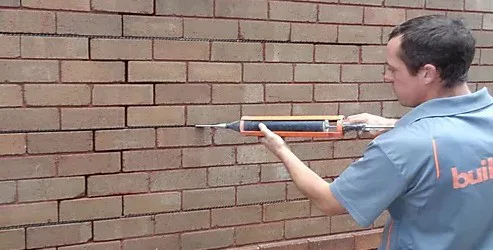
Brick Repair: How to Repoint Your Brick Wall
When the mortar joints between the bricks in your home begin aging, they crumble and crack. Repointing is something you can do yourself. Here’s our step-by-step guide.
Read More
Need expert advice on your home?
Our team of engineers and technicians are ready to help.
Book a free structural assessment today.