What We Fix
What We Fix
Plaster & Internal Wall Damage
Why does my plaster keep cracking?
Plaster cracks happen in every home eventually. A hairline crack above a door frame, a fine line where the wall meets the ceiling — most of the time, a bit of filler and a coat of paint sorts it out. No drama.
But when the cracks keep coming back — same spot, sometimes wider — filler isn't fixing anything. It's hiding it. The plaster isn't the problem. The wall behind it is. Foundation movement, structural cracks in the brickwork, rising damp eating away at the masonry — these are the forces that push through plaster. Until the cause is addressed, every repair is temporary.
The signs below will help you work out whether your plaster wall damage is cosmetic or structural — and what to do about it.
What are the symptoms of plaster & internal wall damage?
Not all plaster damage is cosmetic. Here are the interior signs that point to something deeper.
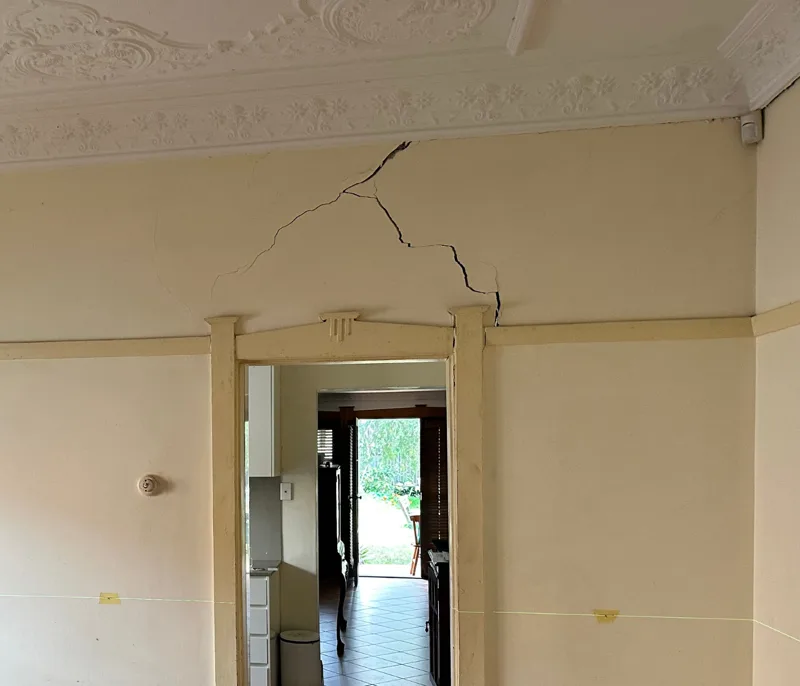
Cracks Above Door Frames
A crack that starts at the corner of a door frame and runs diagonally toward the ceiling. The door frame is rigid — when the wall around it moves, the stress concentrates at the corners and the plaster splits. If the door is also sticking or the frame is visibly out of square, the foundation beneath that section of wall has likely shifted.
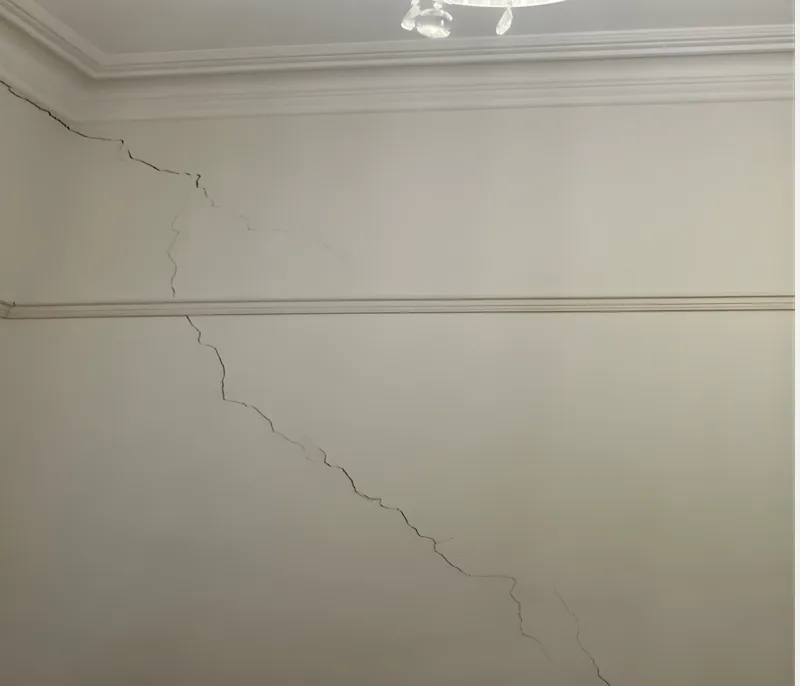
Cracks That Run Floor to Ceiling
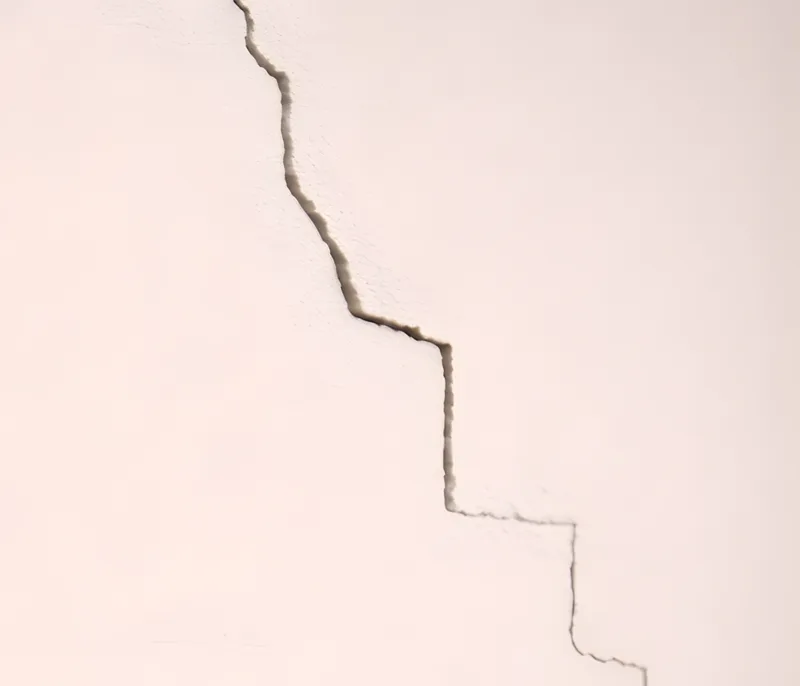
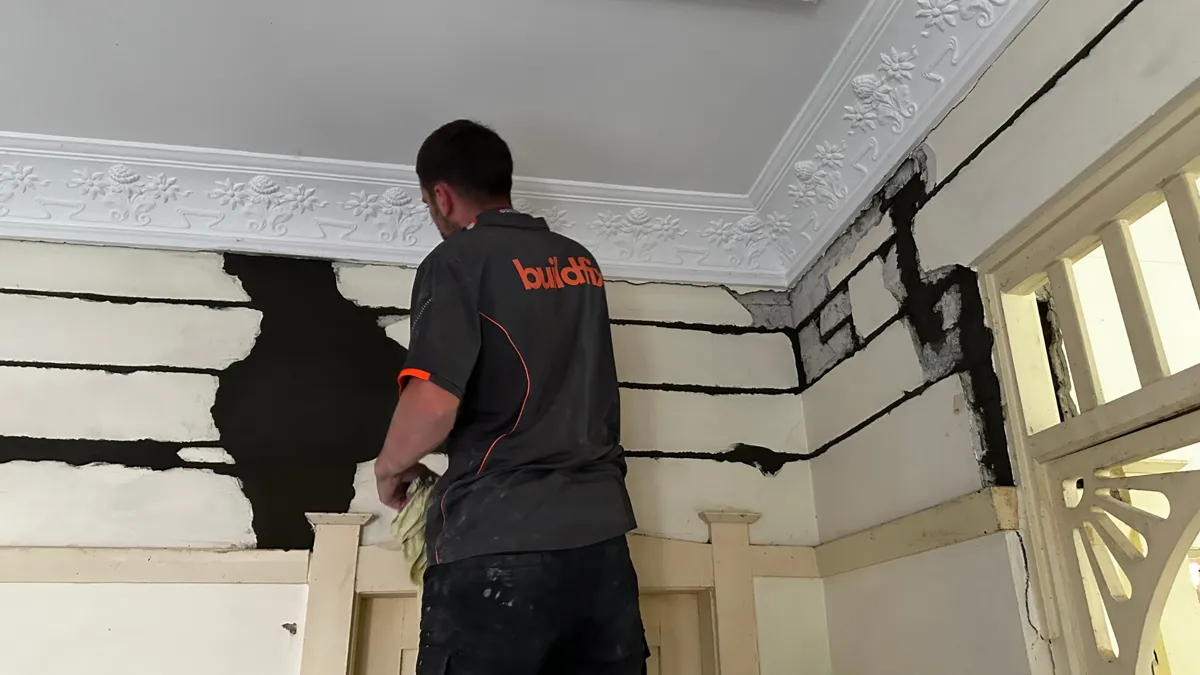
A single crack that travels the full height of the wall — from near the skirting to the cornice. This isn’t surface movement. A crack that long means the masonry behind the plaster has separated into two sections that are moving independently. The wall has stopped working as one piece. Filler won’t hold it — the structure needs reconnecting.
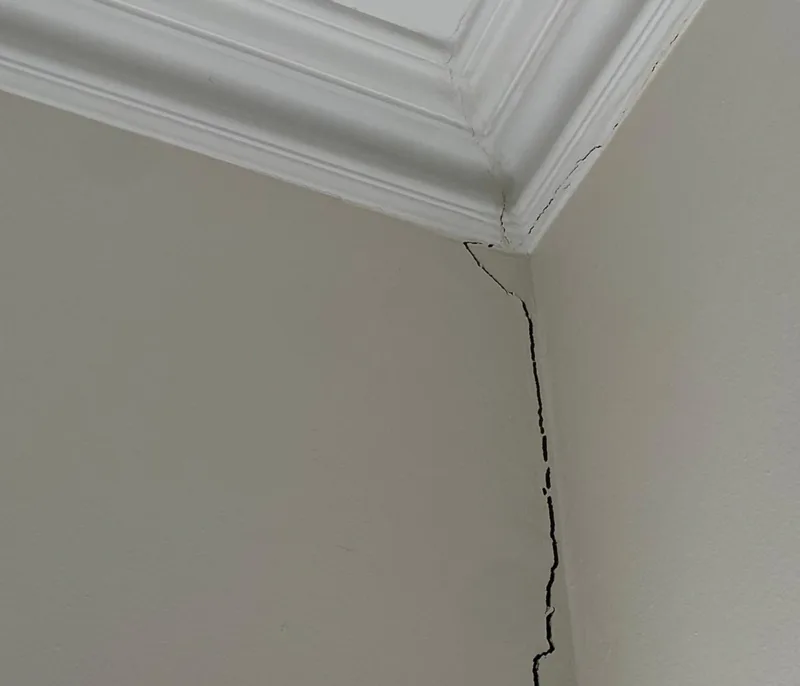
Cracks Near Corners
A crack that follows the corner where two walls meet, running vertically from partway up the wall into the ceiling. Corners are where two sections of masonry join — and when the foundation moves unevenly, this joint is the first to give. If the cornice above is also separating, the movement is pulling the walls apart.
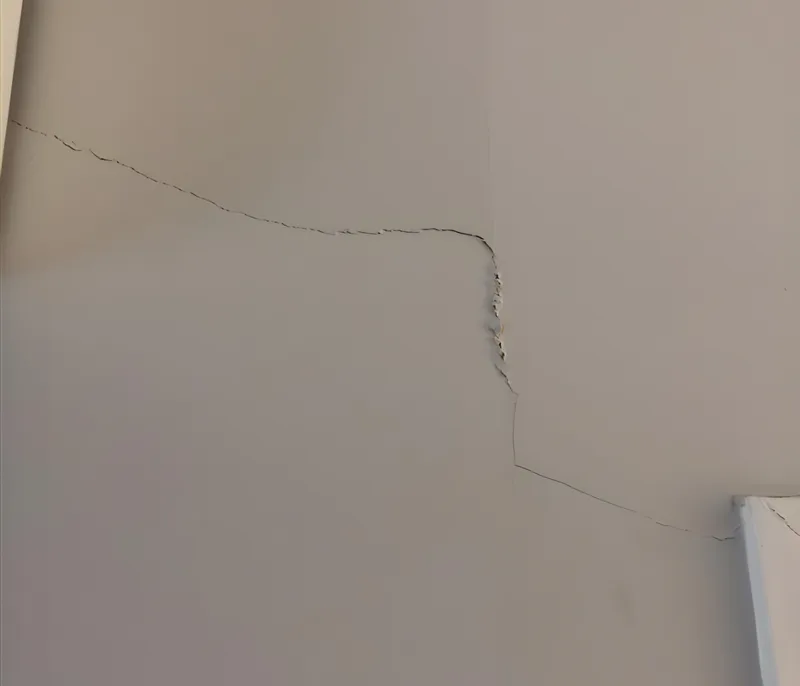
Cracks That Close During Rain
A crack that seems to close up after heavy rain, then opens again in dry weather. This is reactive clay at work — the soil beneath your home swells when wet and shrinks when dry, and the foundation moves with it. The crack isn’t healing. It’s breathing with the seasons. If your home is on clay across Western Sydney, Melbourne’s west, or South East Queensland, this pattern is common.
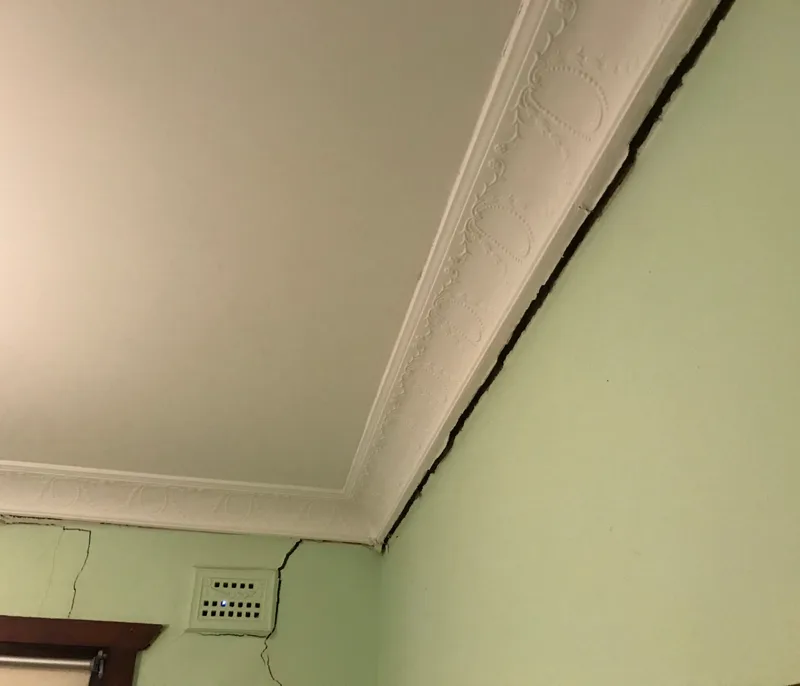
Cracks That Join with Cornice Gaps
A gap opens between the cornice and the wall — and a crack in the plaster below runs up to meet it. The two aren’t separate problems. The wall has dropped or tilted away from the ceiling, pulling the cornice joint apart and cracking the plaster on the way. If the gap is wider on one side of the room than the other, the movement is uneven — and structural.
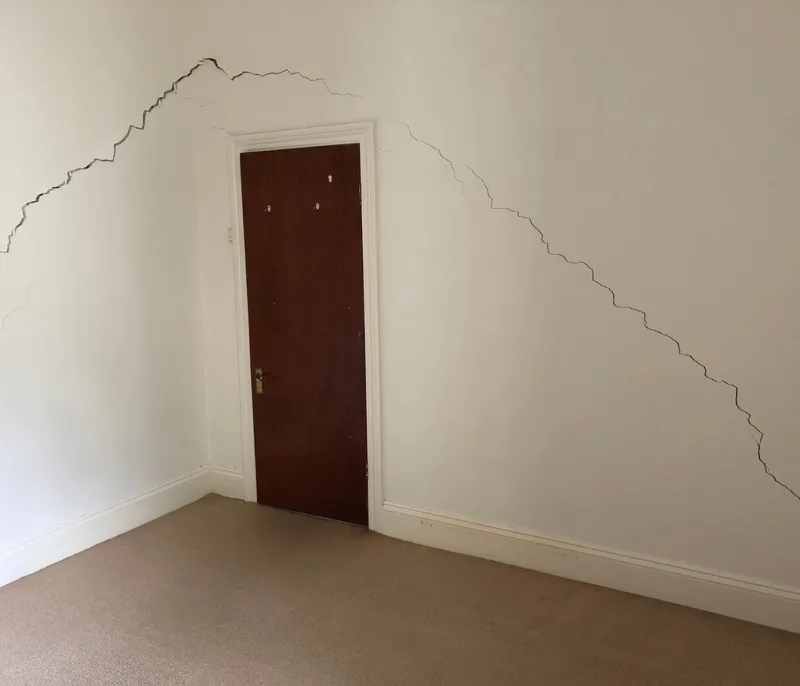
Cracks That Spread Across the Wall
What started as a single crack has branched into a web — spreading up, down, and sideways across the wall. This happens when the structure behind the plaster has moved enough that stress is no longer concentrated in one place. The wall is redistributing load through the only path it has left: the cracks. Multiple spreading cracks on the same wall are a clear sign the movement is ongoing.
What does structural plaster damage look like?
How to fix plaster wall damage permanently
Reinforced. Replastered. Guaranteed.
Fix the Structure. Then Fix the Surface.
The fix depends on what's causing the damage. That's why every plaster wall repair starts with a free structural assessment — a structural engineer identifies whether the problem is foundation movement, cracked brickwork, or rising damp before anything is touched. No replastering over the top and hoping for the best.
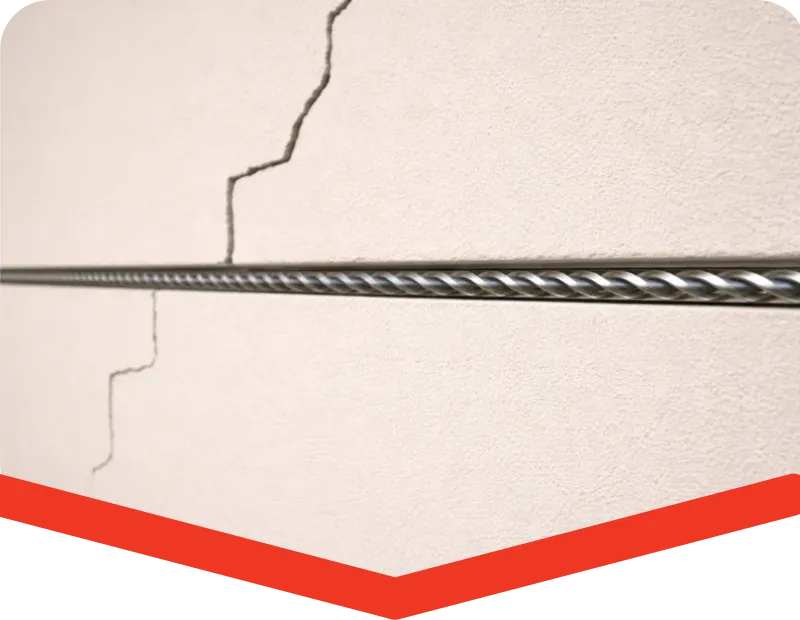
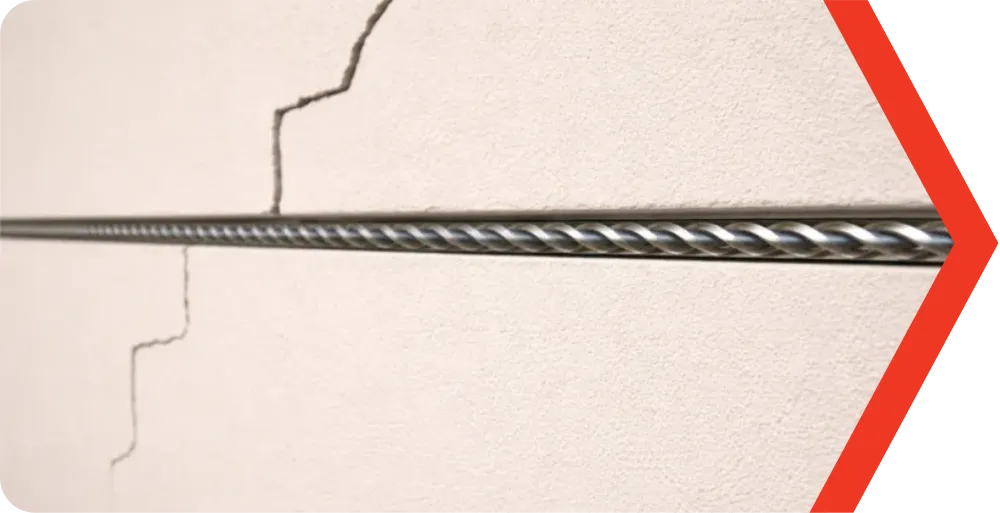
If the damage is driven by structural wall cracks, HelicalBar™ R304 stainless steel reinforcement bars are bonded into the mortar joints behind the plaster — spanning the crack and locking both sides of the wall back together. The bars sit concealed inside the masonry, invisible from either side, and around 100 times tougher than the bricks themselves. Once the wall is structurally reconnected, the surface is finished with gypsum plaster and left paint-ready.
If the foundation has moved, GeoPoly™ resin injection stabilises and relevels the ground first. If rising damp is the cause, DampBlock™ installs a new damp proof course to stop the moisture at its source. The plaster is only finished once the structural issue is resolved.
Not sure what's behind your plaster damage? That's exactly what the free assessment answers.
Structural Engineers · Licensed Builders · Skilled Technicians
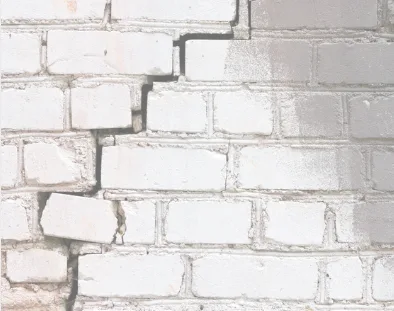
Help & Advice
Articles to help you understand plaster & internal wall damage and what to do next.
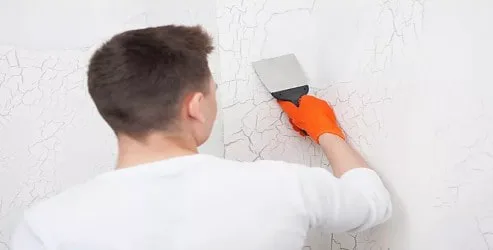 Wall Cracks
Fixing Wall Cracks and Dents
Cracks and dents can appear in your walls as weather conditions change throughout the year. They form when the temperature goes up and down too quickly.
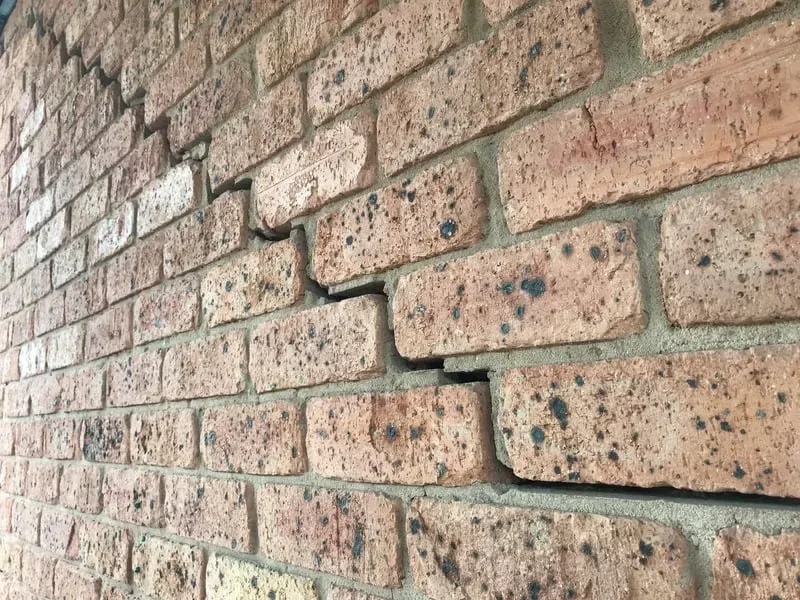 Wall Cracks
Cosmetic vs Structural Cracks
Wall cracks are common in Australian homes, but not all mean something's wrong. Some are harmless signs of natural settling or aging materials.
 Wall Cracks
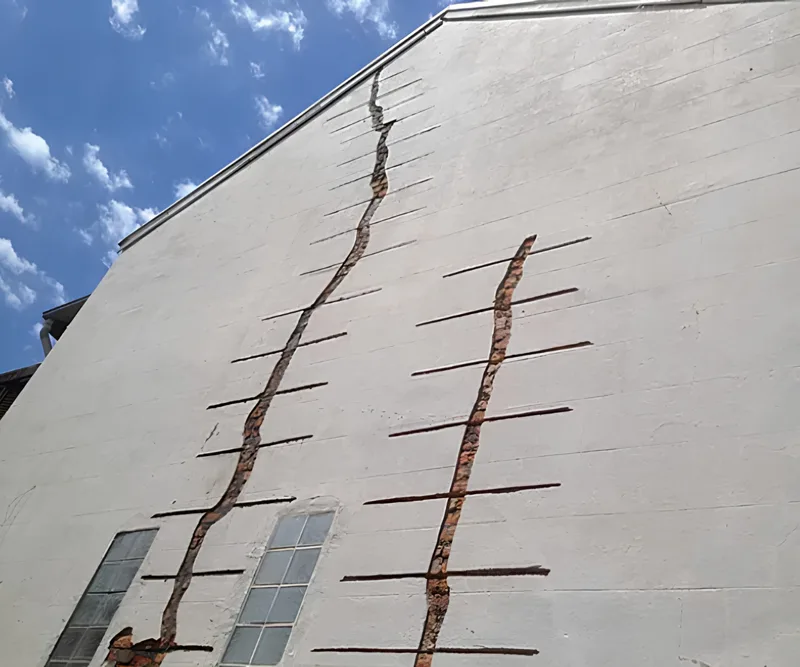
How to Fix Wall Cracks Structurally — Not Just Cosmetically
If a wall crack is structural, filling it won't fix it. Plastering it won't fix it. Painting over it won't fix it. The crack comes back six months later, same place, sometimes wider.
 Wall Cracks
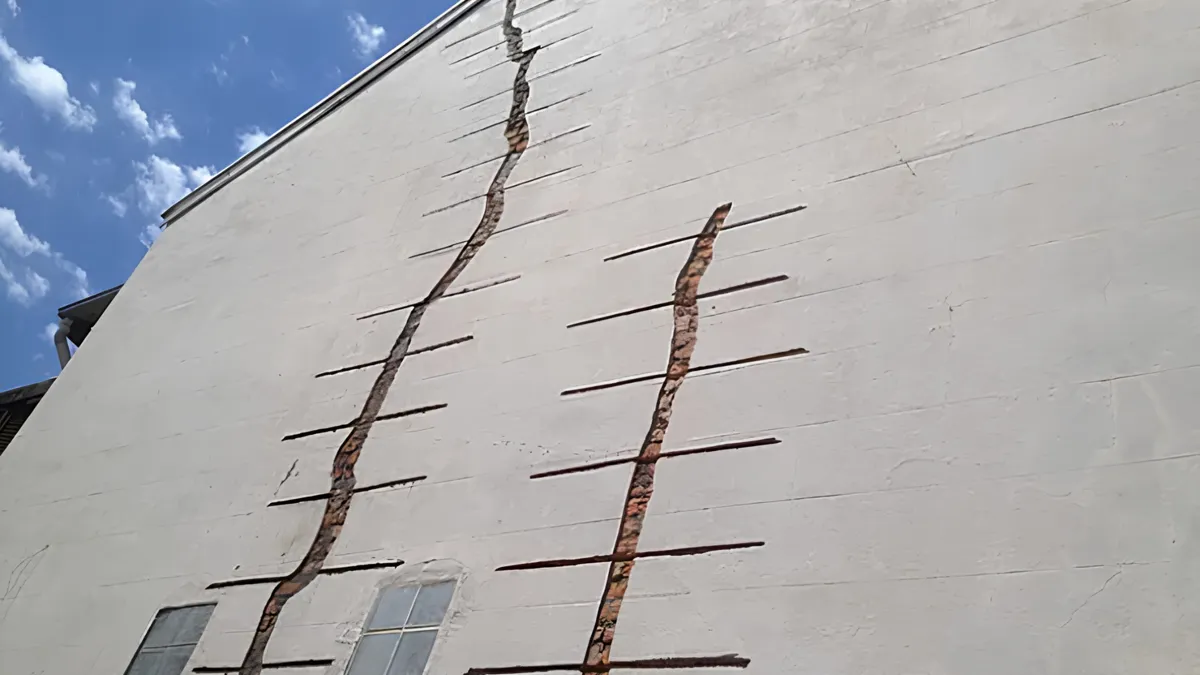
What Is Crack Stitching?
Crack stitching is a specific structural repair for cracked masonry walls. Stainless steel bars are bonded into the mortar joints across the crack, tying the wall back together so it carries load as one piece again.
 Wall Cracks
Does My Home Need the Cracks Fixed? A Homeowner's Decision Tree
Most wall cracks aren't a problem. A few are. The trick is knowing which is which standing in front of one.
Common questions about plaster wall damage
The questions homeowners ask us most often.