
Help & Advice
What Is Crack Stitching?
Help & Advice
What Is Crack Stitching?
Crack stitching is a specific structural repair for cracked masonry walls. Stainless steel bars are bonded into the mortar joints across the crack, tying the wall back together so it carries load as one piece again. No bricks come out. The whole job is usually done in a day.
But here's the part most homeowners aren't told. Crack stitching works on its own when the cause of the crack has stopped. If the wall is still moving — from subsidence, reactive clay, or brick expansion — stitching alone won't hold. You need crack stitching paired with whatever's actually causing the wall to crack in the first place.
This is what crack stitching is, when it's enough on its own, and what to do when it isn't.
What Crack Stitching Actually Is
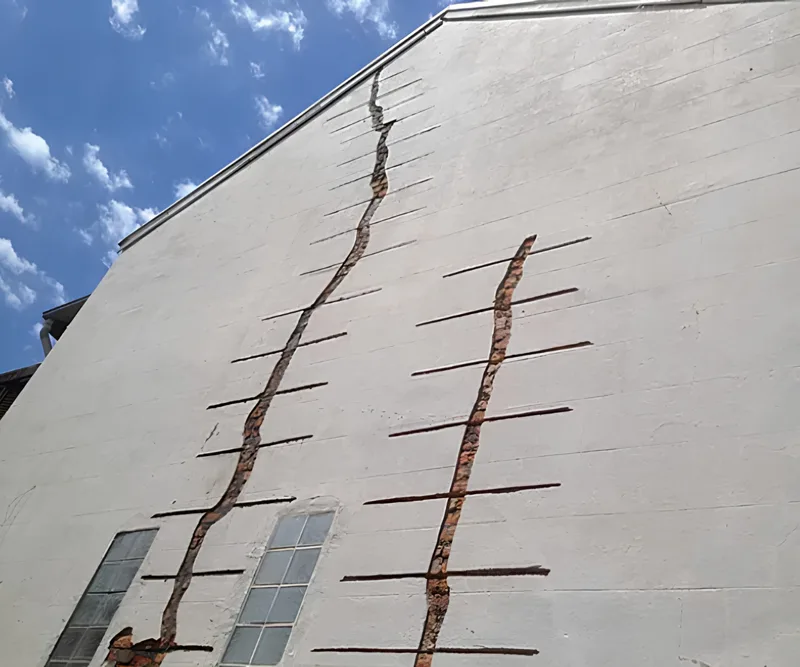
Narrow slots — about the width of a thin diamond blade — are cut into the mortar joints along the crack line. A 1m HelicalBar™ R304 stainless steel bar is pushed into each slot. The bar spans the crack with around 500mm of length set into solid masonry on each side. Structural grout is injected behind it, bonding the bar into the brickwork at depth. The slot is then closed up, the mortar repointed, and the colour matched to the rest of the wall.
That's one bar. A full crack stitching repair runs bars every few mortar courses up the entire height of the crack. A 1.5m-tall stepped crack might have five or six bars stacked vertically through different courses — each one a 1m HelicalBar™ spanning the crack at a different height, with 500mm of solid masonry overlap on either side. The end result is a vertical line of stainless steel running up through the wall on both flanks of the original crack, transferring tensile load across the gap so the wall behaves as one piece again.
The bars themselves are around 100 times tougher than the bricks they sit between. The helical profile cut into the steel locks mechanically into the structural grout — once cured, the bar, the grout and the surrounding masonry act as a single system. The repaired section ends up stronger at the crack line than it was before the crack appeared.
When Crack Stitching Alone Is the Right Fix
Crack stitching works on its own when the cause of the crack has stopped moving. The wall has cracked, settled into a stable position, and now just needs to be reconnected structurally.
Typical scenarios:
Historic settlement cracks. A home settled in its first few years, opened a stepped crack, and hasn't moved since. The crack is wide but stable. Stitching reconnects the wall and the repair holds permanently.
Cracks from a one-off event. A lintel that's been replaced, a wall tie that's been repaired, an old impact that opened a crack. The cause has been fixed; the wall just needs to come back together.
Localised stress that's already been redistributed. A wall that cracked at one point years ago and the masonry has found a new equilibrium since.
The signal is stability. If the crack has been there for years without growing, and the cause has been addressed, stitching alone is the right call. Every Buildfix crack stitching repair is backed by a 20-year product and workmanship warranty. If the structural issue returns, so do we.
When Crack Stitching Alone Isn't Enough
Three causes that crack stitching can't fix on its own. They're also the three most common causes of structural wall cracks in Australian homes.
Subsidence. The foundation has moved — and might still be moving. The ground beneath one section of the home has dropped, pulling the wall above with it. Stitch the existing crack and the wall keeps being pulled apart. Either a new crack opens beside the stitched line, or the bars carry forces they weren't designed for. The cause has to be addressed first. See subsidence for the underlying problem.
Reactive clay. Across Melbourne's west, Western Sydney, the ACT, and most of South East Queensland, the soil expands when wet and contracts when dry. Each annual cycle moves the foundation by several millimetres. Stitch a single crack on a reactive-clay site and the wall flexes against the stitch every season. Over time the bars take loads they weren't designed for, and the wall finds another place to crack.
Brick expansion. Clay bricks expand over their lifespan as they absorb moisture — sometimes 1–2mm per metre over decades. The expanding masonry pushes outward against fixed points like corners, window openings, and adjoining walls. Stitching one crack on an expanding wall doesn't address the broader compressive stress. The wall finds another place to release the force.
In each case, the visible crack is a symptom. Fixing the symptom without fixing the cause is fill-paint-repeat with a more expensive filler.
The More Robust Solutions
When the cause of the crack is bigger than the crack itself, the fix has to match. Two options sit above crack stitching in the structural reinforcement hierarchy.
Masonry beams with HelicalBar™. Instead of stitching across a single crack, HelicalBar™ R304 bars are bonded into multiple mortar courses running several metres horizontally along the wall. The bars become a reinforced beam within the masonry — distributing load across the whole wall section, not just across the original crack line. The mechanic is the same as crack stitching (bars set in mortar joints, bonded with structural grout), but the engineering brief is different. Crack stitching is local. A masonry beam is sectional. Same product, broader application — and the right call when the wall is cracking from larger-scale movement like brick expansion or multiple connected cracks.
Resin injection underpinning. If the foundation is the cause — subsidence, reactive clay, washed-out fill — the ground has to be stabilised before the wall is reinforced. GeoPoly™ resin is injected through coin-sized holes beneath the footings. It compacts loose soil, fills voids, and lifts the foundation back towards level. Most homes are done in 1–2 days, the family stays in the house the whole time, and no digging is required. Once the ground is stable, the wall stops being pulled apart, and the crack stitching (or masonry beam) above can do its job. See underpinning for how foundation repair fits in.
For homes with foundation movement AND wall cracking, both fixes happen together. Foundation first, wall second — or both at once if the access allows. The full method comparison is on the wall crack repair page.
How to Know Which One You Need
A free on-site assessment is what answers it. A structural engineer measures every crack — width, length, direction — checks the floor levels with a laser, reads the soil and the drainage, and identifies the actual cause. From there the repair plan is designed: crack stitching alone, masonry beams, foundation underpinning, or some combination of the three. You walk away with a fixed-price quote on the spot.
For nearly 15 years Buildfix has reinforced cracked walls on more than 15,000 homes and structures across NSW, VIC, QLD and the ACT. Most jobs end up being one of three things — crack stitching, masonry beams, or one of those paired with foundation work. The right answer depends on what's actually moving beneath your wall.
Call 1300 854 115 or book a free on-site assessment.
Share this article
Related Articles
How to Fix Wall Cracks Structurally — Not Just Cosmetically
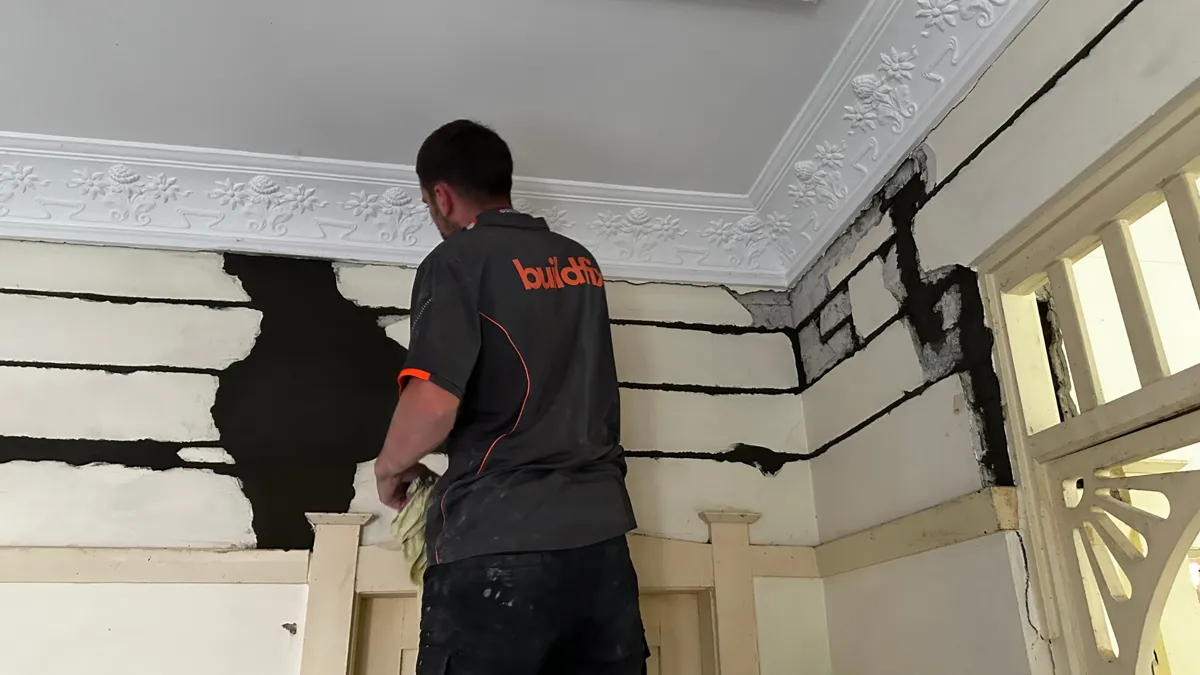
If a wall crack is structural, filling it won't fix it. Plastering it won't fix it. Painting over it won't fix it. The crack comes back six months later, same place, sometimes wider.
Read More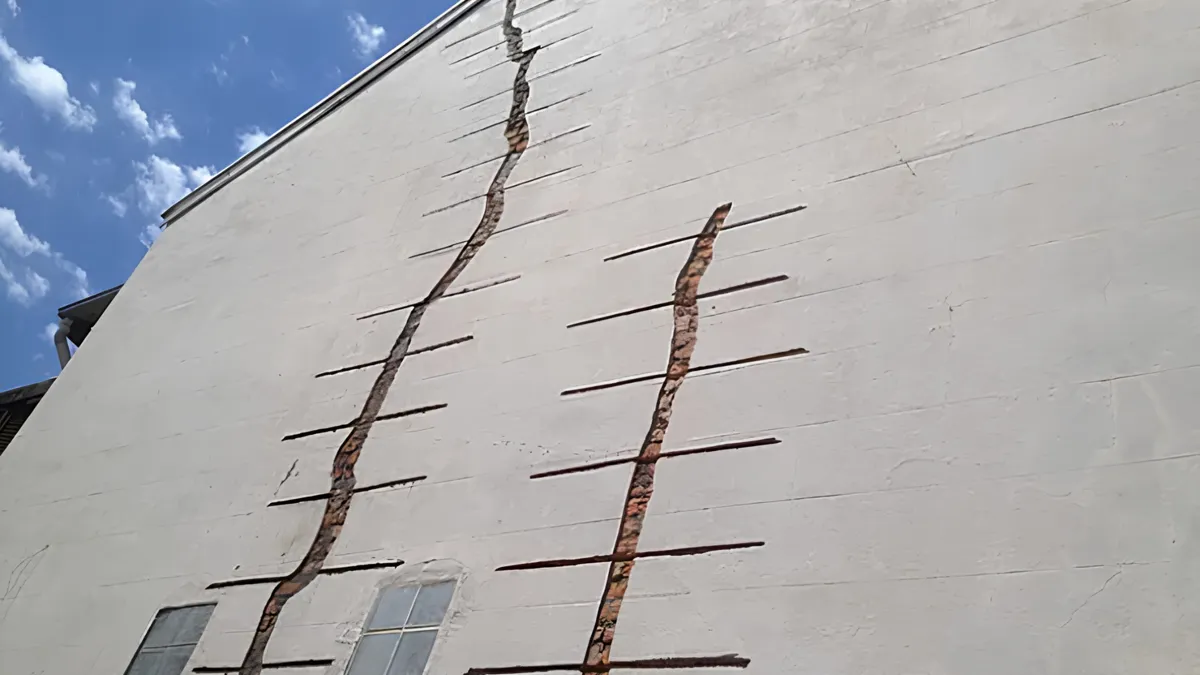
Does My Home Need the Cracks Fixed? A Homeowner's Decision Tree
Most wall cracks aren't a problem. A few are. The trick is knowing which is which standing in front of one.
Read More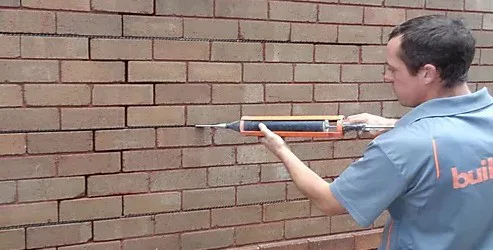
Brick Repair: How to Repoint Your Brick Wall
When the mortar joints between the bricks in your home begin aging, they crumble and crack. Repointing is something you can do yourself. Here’s our step-by-step guide.
Read More
Need expert advice on your home?
Our team of engineers and technicians are ready to help.
Book a free structural assessment today.