What We Fix
What We Fix
Rising Damp
Does my home have rising damp?
You've noticed something at the base of your walls. Paint peeling. Stains that won't wash off. Maybe a damp, earthy smell in a room that never quite goes away. You've probably already repainted or replastered — and it came back. That's how rising damp announces itself.
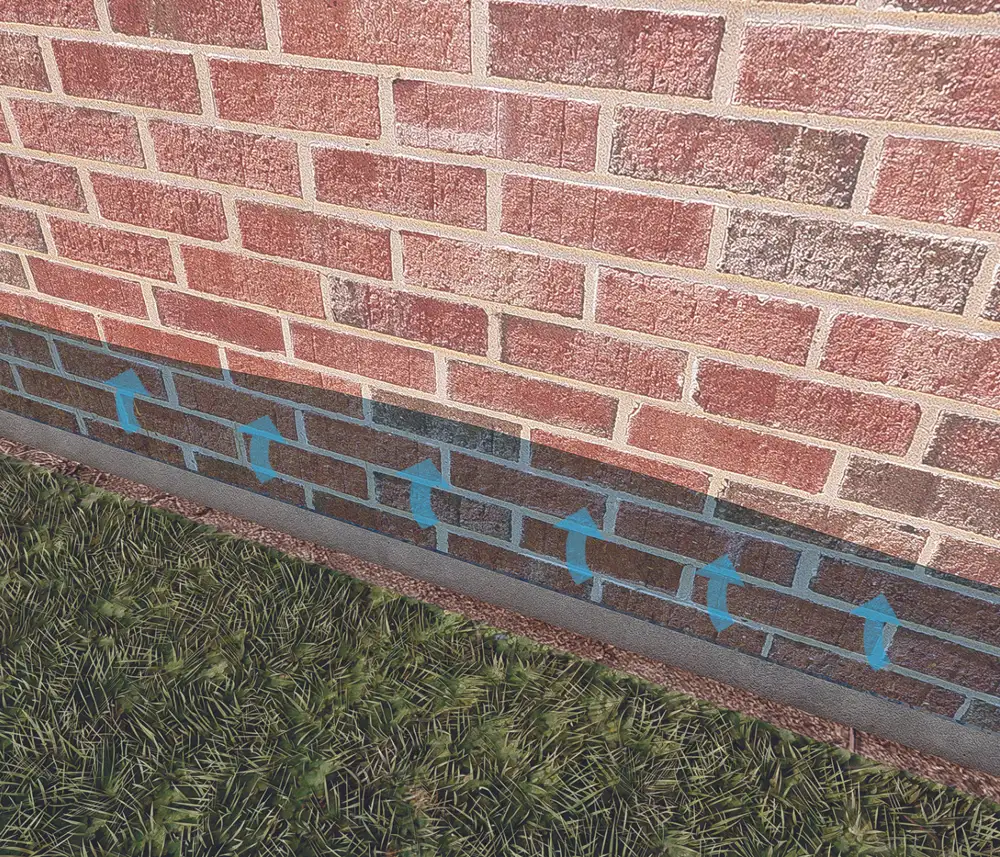
The damage you can see is only the surface. Rising damp carries salts from the ground into the masonry, and those salts crystallise inside the brickwork — right where the wall meets the foundation. Over time, they turn solid mortar and brick to dust from the inside out. The damage is hidden until it's serious.
The symptoms below will help you work out if rising damp is what you're dealing with — and what's behind it.
What are the symptoms of rising damp?
Rising damp stays low — usually below one metre. These are the signs that confirm it.
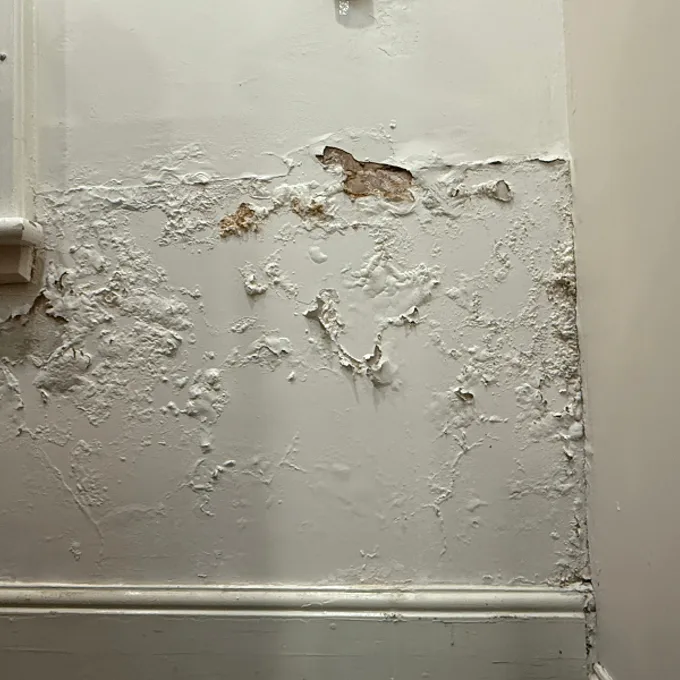
Peeling or Bubbling Paint
Paint that blisters, flakes, or turns powdery near the base of your walls is one of the earliest visible signs of rising damp. If repainting only holds for a few months before the same thing happens again, the moisture is coming from inside the wall — not the surface. The damage typically starts at the base and works its way upward as the damp rises higher through the masonry.
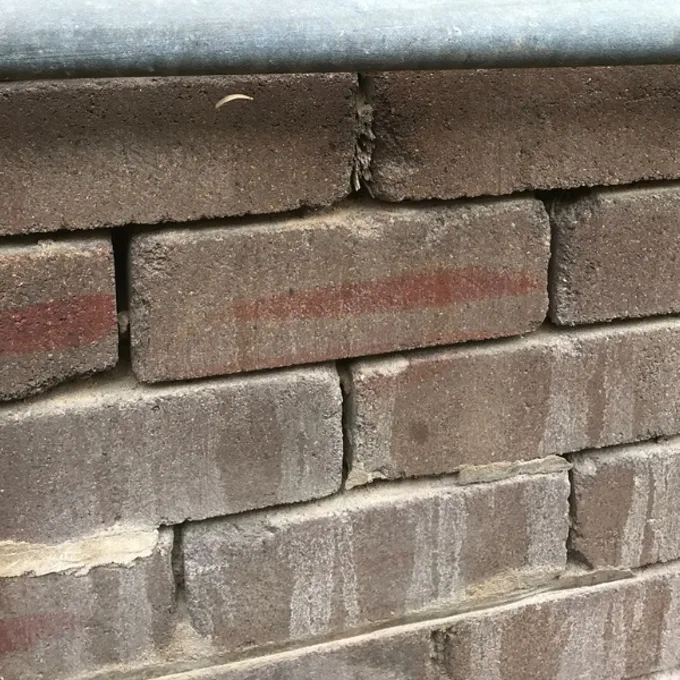
White Salt Deposits
Those white, chalky streaks on your brickwork are salt deposits left by rising damp — called efflorescence. As moisture rises through the wall, it carries dissolved salts from the ground. When the water evaporates, the salts crystallise on the surface. Over time, they eat into mortar joints and weaken the masonry from the inside — even when the surface looks dry.
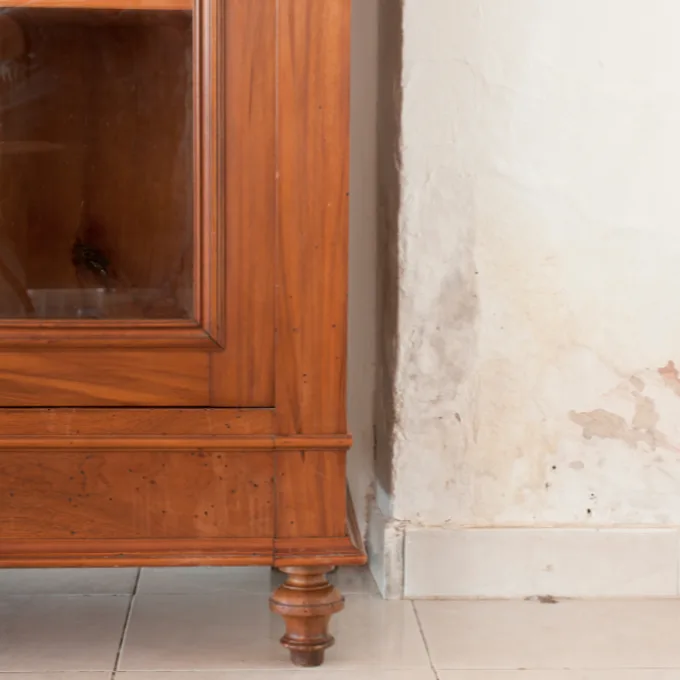
Tide Marks and Staining
A brown or pink stain creeping up the base of your walls is a telltale sign of rising damp. The stain follows the height the moisture has reached — usually between 300mm and a metre above ground level. It won’t wash off or paint over permanently, because the moisture keeps feeding it from below. The line may shift with the seasons as ground moisture levels change.
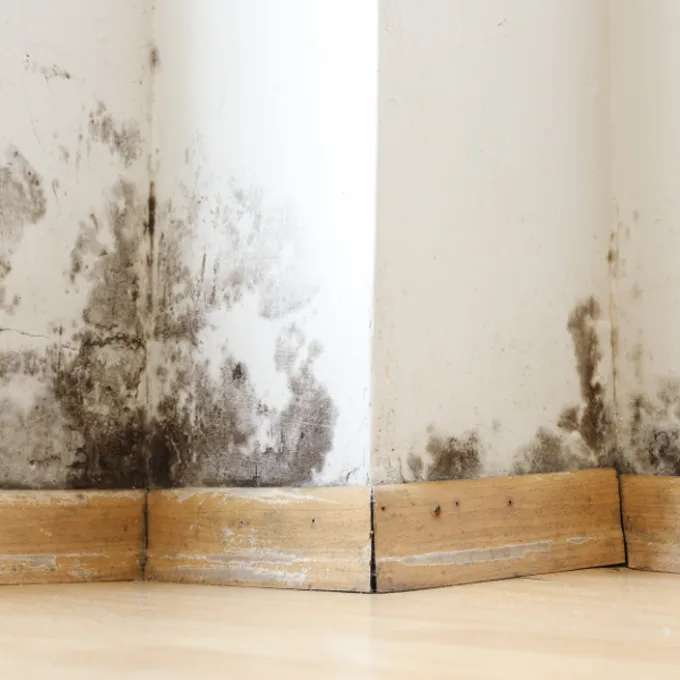
Mould Around Skirting Boards
Mould forming along skirting boards, in corners at floor level, or behind furniture against the wall is a common sign of rising damp. The moisture wicking up through the wall transfers into everything it touches — timber, carpet, underlay. Mould higher up on walls or around ceilings is usually a ventilation or condensation issue, not rising damp. Rising damp stays low.
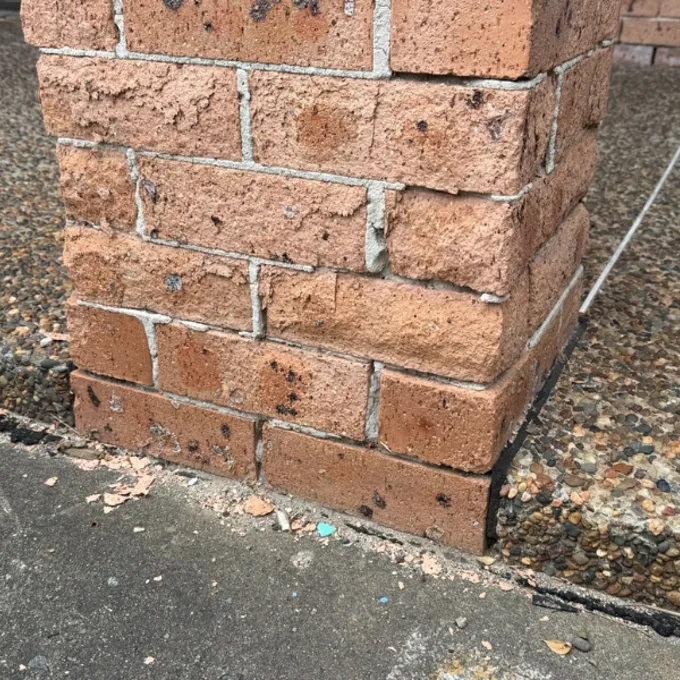
Crumbling Bricks
When rising damp carries ground salts into your brickwork, the real damage happens inside the masonry. As moisture evaporates, those salts crystallise and expand — and the brick is no match for that pressure. Over time, the face of the brick starts to crack, flake, and crumble away. Once the surface breaks down, more moisture gets in and the cycle accelerates. If your bricks are spalling or turning to powder at the base, salt attack from rising damp is almost always the cause.
What are the signs of rising damp?
What causes rising damp?
Rising damp always has a cause. Knowing yours changes everything about the fix.
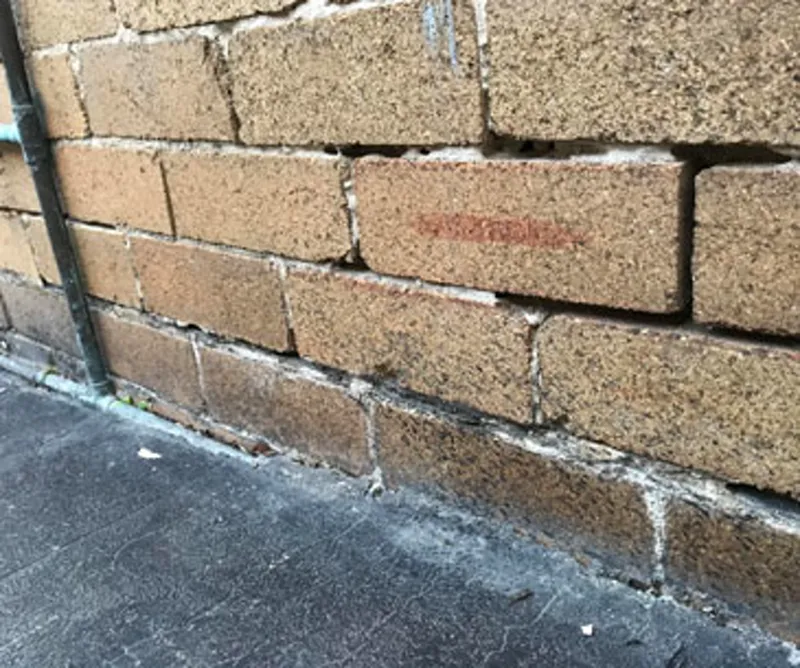
Failed Damp Proof Course
When your home was built, a damp proof course — a layer of bitumen, plastic, slate, or tin — was installed in the walls to block moisture from the ground. But few DPCs last forever. Over decades, the membrane corrodes, cracks, or loses its seal. Water and salts get back into the masonry above. The DPC didn’t break overnight. It wore out doing its job until it couldn’t anymore. And rising damp begins.
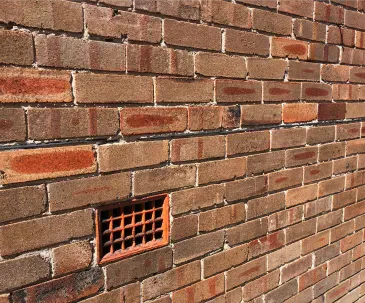
Wrong Barrier Height
Rising damp rarely exceeds one metre in height — gravity wins. For a DPC to work, it needs to sit just above ground level, blocking moisture before it climbs. In many older homes, the barrier was installed higher than necessary or at the wrong point in the wall. The moisture bypasses it entirely. The DPC is there — it’s just in the wrong spot.
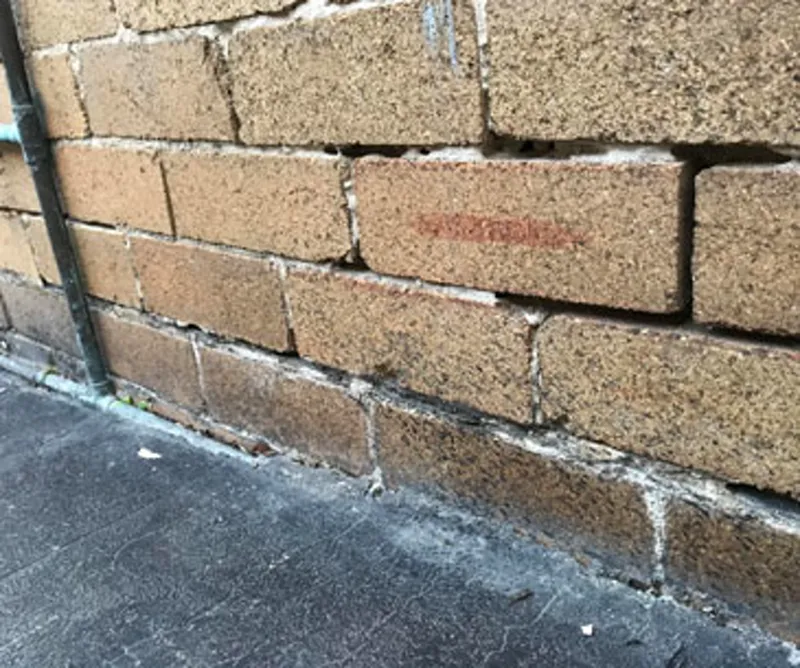
Bridging
Bridging happens when something allows moisture to bypass the DPC. A new garden bed raised above the barrier line. A patio poured against the wall. Render applied over the DPC. Landscape changes are the most common cause — the ground level goes up, and suddenly the barrier that worked for 30 years is below the soil line. Rising damp follows.
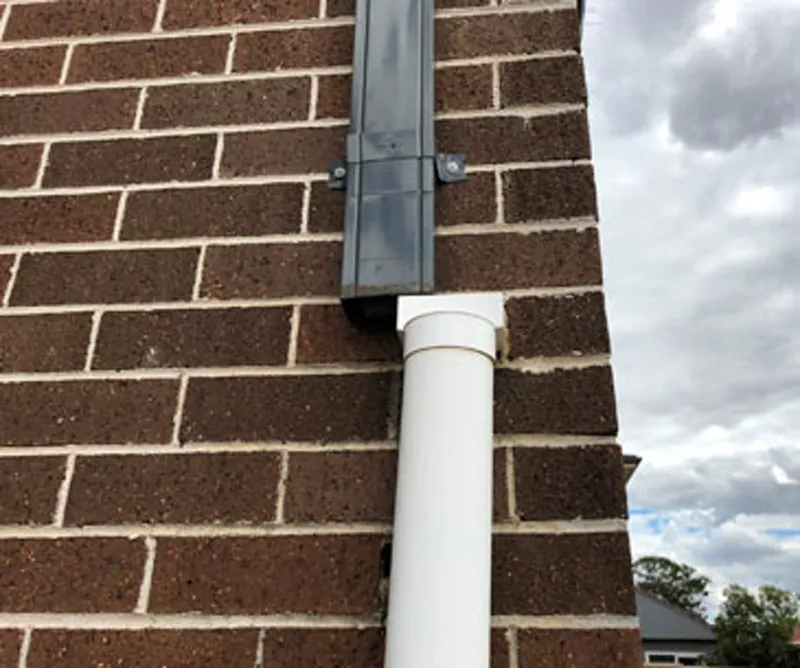
No DPC at All
Homes built before the 1950s often have no damp proof course at all. The brick sits directly on the footing with nothing between the masonry and the ground. In inner-city Sydney, Melbourne, and older suburbs across the ACT, this is the most common cause of rising damp. There’s no barrier to fail — because there never was one.
What causes rising damp?
How to fix rising damp
Non-Toxic. Odourless. Permanent.
A New DPC Without Removing a Single Brick.
Repainting, replastering, surface sealants — every surface fix treats what you can see. The moisture keeps rising because the barrier that was supposed to stop it no longer works. Until you replace that barrier, the cycle repeats. That's the trap most homeowners fall into — spending money on the surface while the wall keeps getting wetter from within. Rising damp doesn't care about paint.
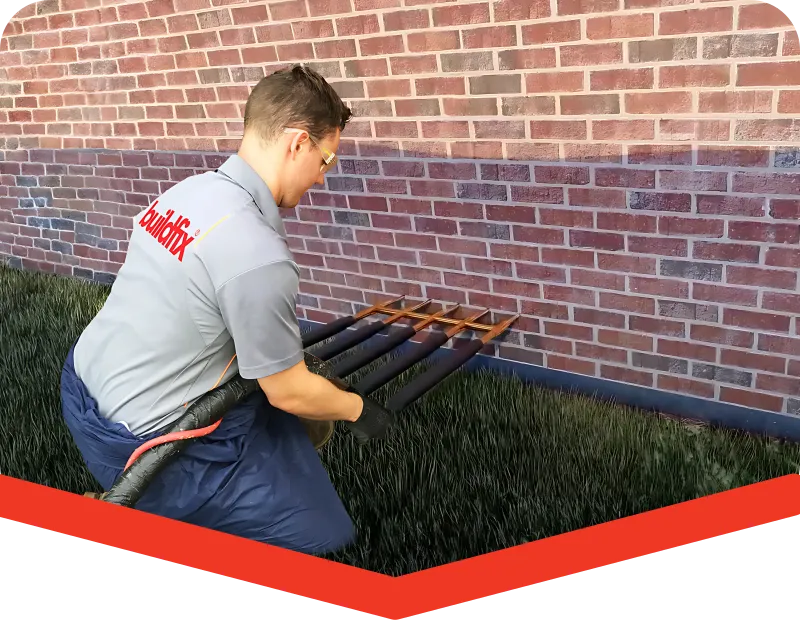
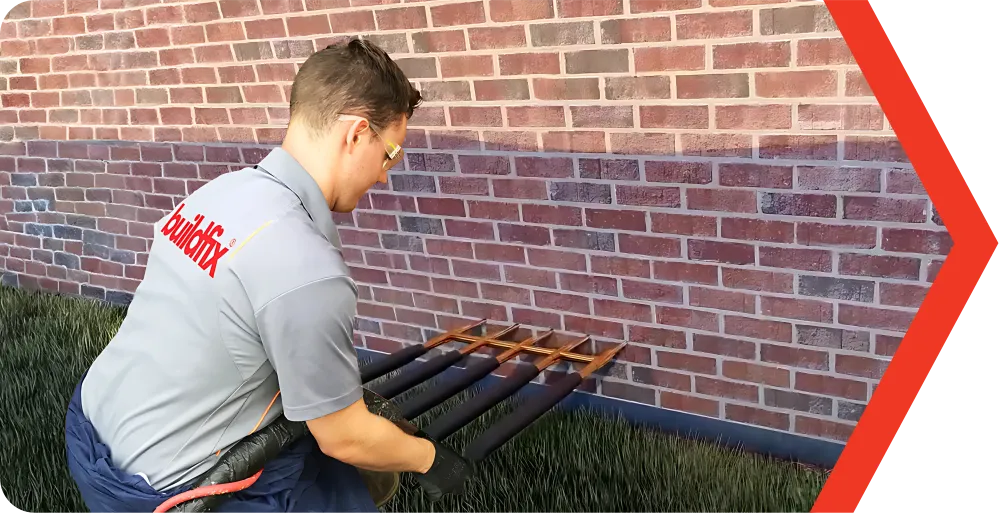
DampBlock™ AQ50 is injected into the mortar course at the base of the wall through small holes drilled at close intervals. The resin spreads through the masonry and cures to form a permanent damp proof course — a brand-new DPC, without removing a single brick. Non-toxic, completely odourless, and safe for your family. Most treatments are completed in a single day.
Once the new DPC is in place, the wall above the treatment line begins to dry out naturally. Salt damage stops progressing. Within weeks, you'll notice the damp patches receding and the musty smell fading. The conditions that were destroying your brickwork no longer exist.
Need a permanent damp-proof course? Learn about our damp proofing solution.
Structural Engineers · Licensed Builders · Skilled Technicians
Help & Advice
Articles to help you understand rising damp and what to do next.
 Rising Damp
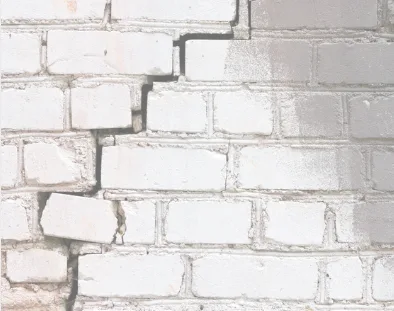
What Is a Damp Proof Course?
A damp proof course (DPC) is your home's first line of defense against rising damp, stopping moisture from creeping up through porous masonry walls. But when it fails, trouble starts—yellow stains, peeling paint, salt deposits, and rotting skirting boards are all warning signs.
 Rising Damp
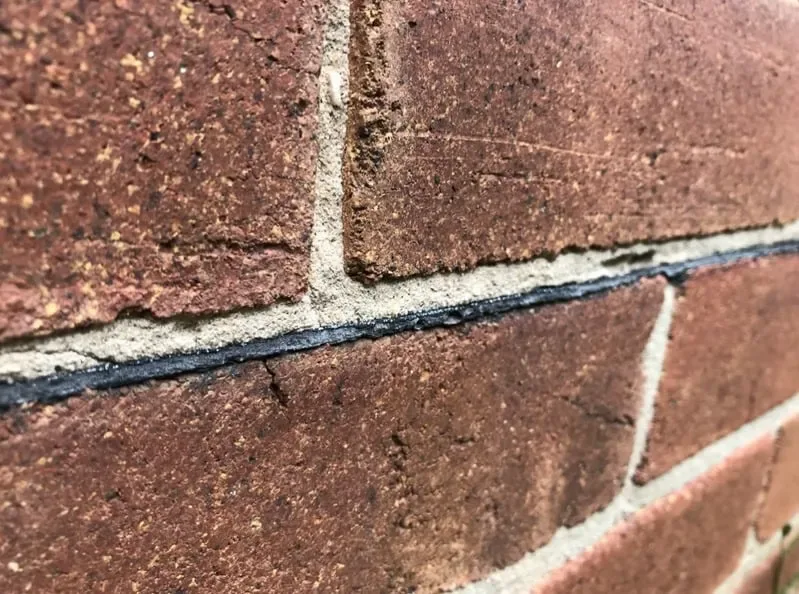
How to Stop Rising Damp in Your Home
If a wall has rising damp, paint won't fix it. Ventilation won't fix it. A dehumidifier won't fix it. None of those touch the cause.
 Drainage
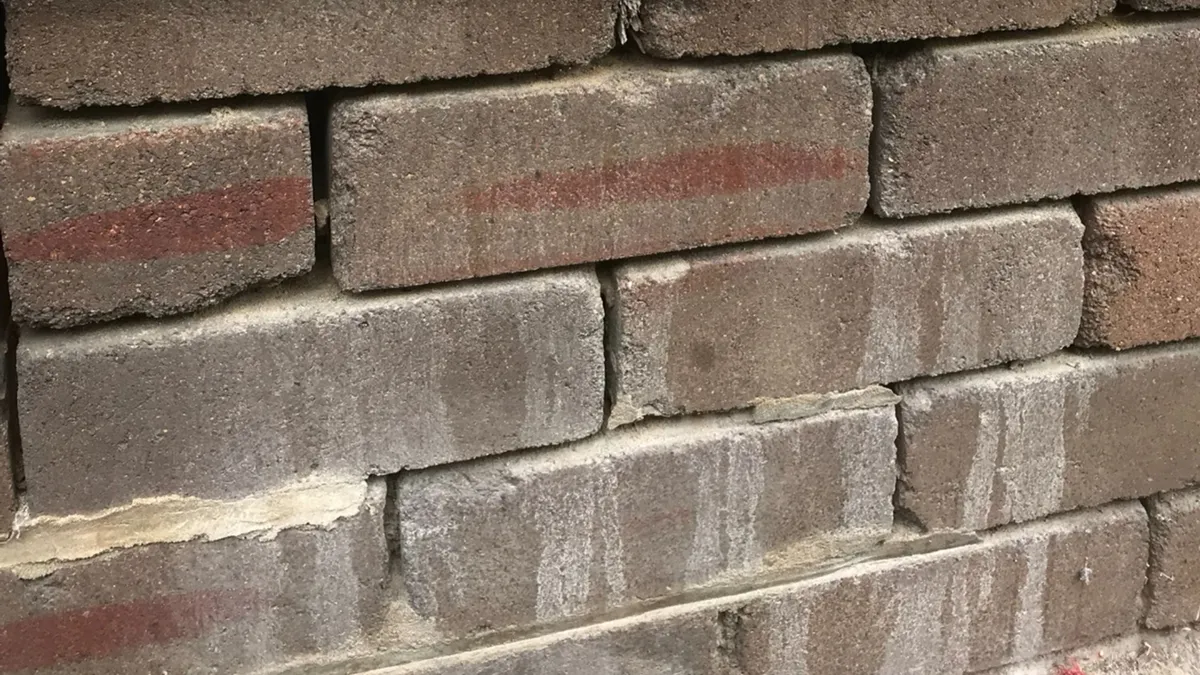
Drainage and Structural Integrity
Poor drainage around your home leads to water pooling, soil erosion, and foundation movement. Signs include mould, cracked walls, and uneven ground.
 Rising Damp
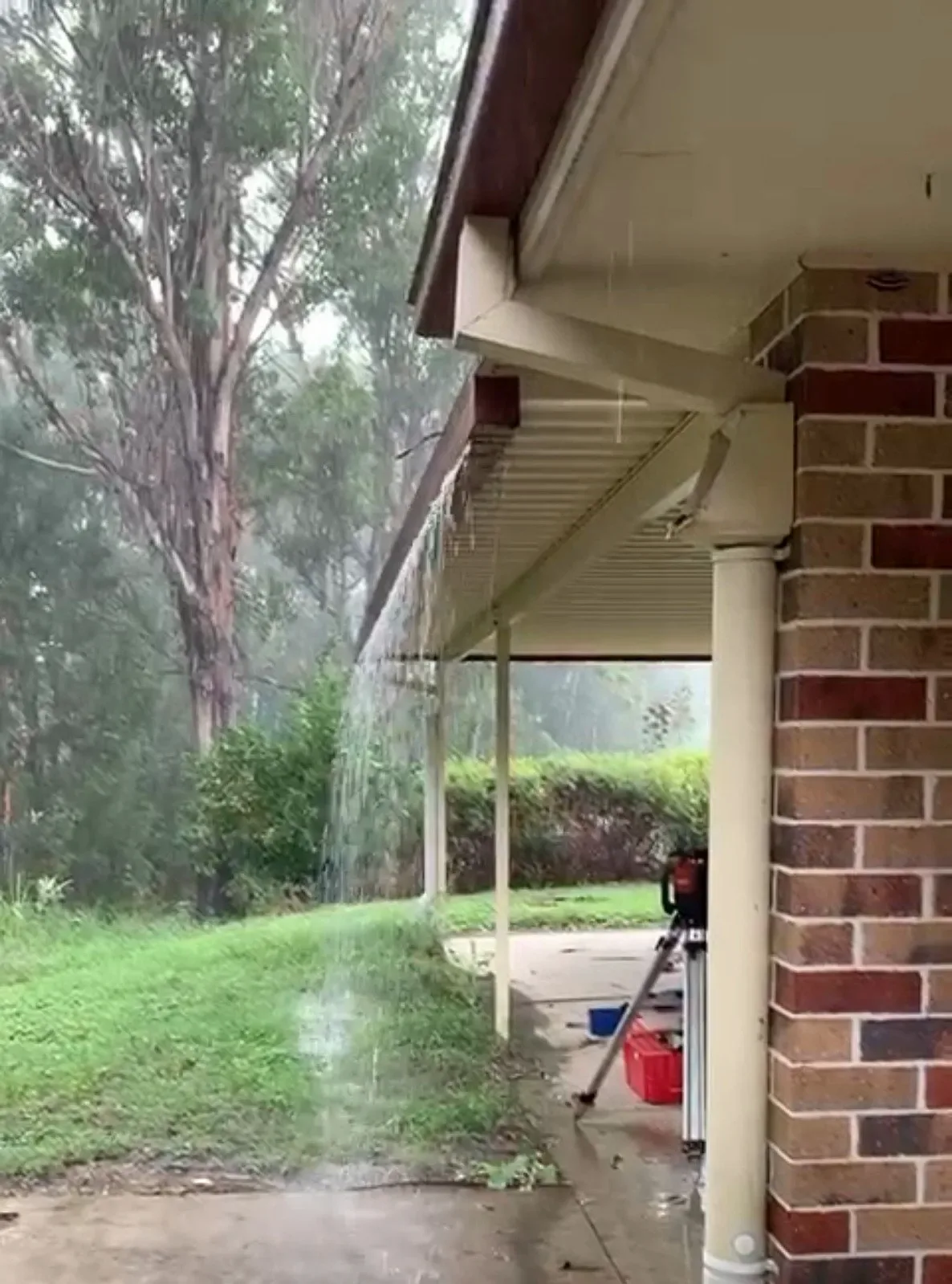
Why Your Damp Proof Course Has Failed
A damp proof course, also known as a damp proof membrane, is a form of moisture control for your home. Commonly made of bitumen, plastic, slate or tin, they stop moisture from travelling into porous masonry.
 Rising Damp
How to Get Rid of Damp Smells
A strong damp smell is an indicator there’s too much moisture in your home. Here are some of our top tips to rid your home of that damp smell.
Common questions about rising damp
The questions homeowners ask us most often.