
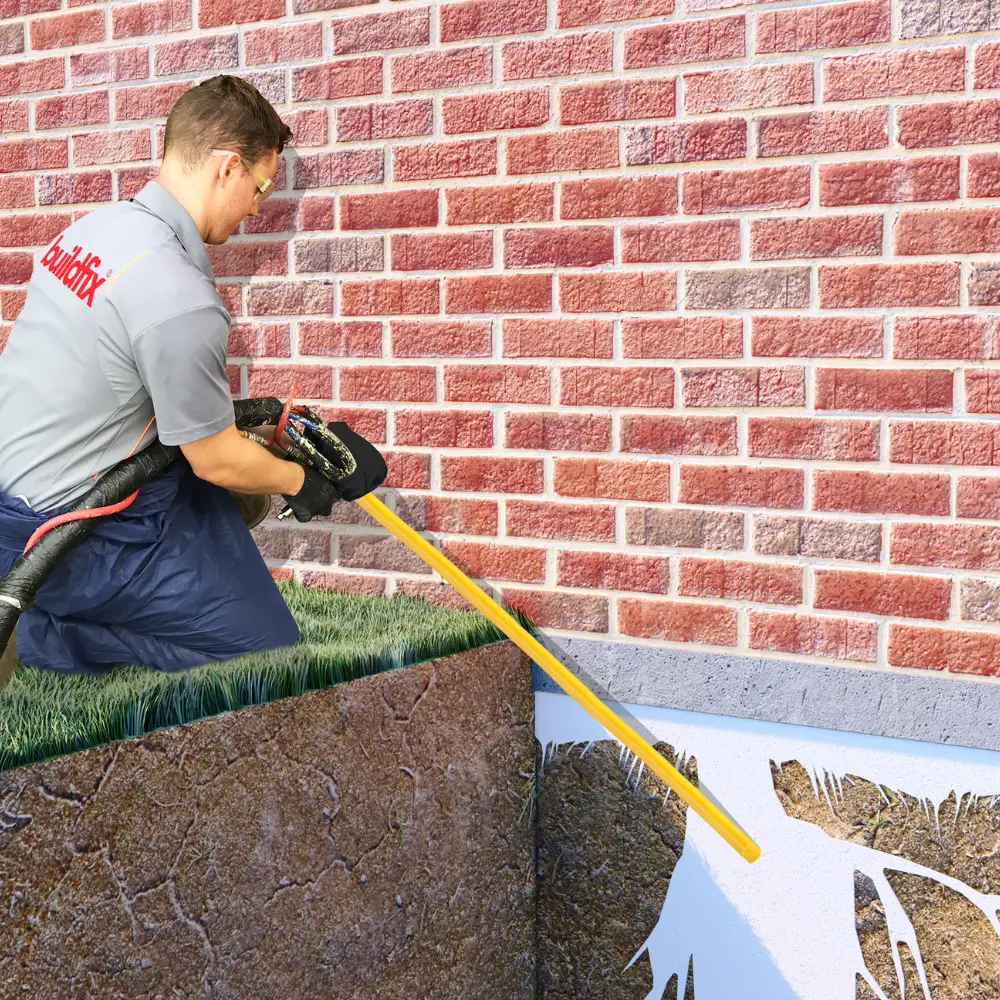
What affects the cost of underpinning
The cost of underpinning depends on three things: how far the foundation has dropped, how much of the home is affected, and what's causing the ground to move.
A single corner that's dropped 10mm is a different job to a home where three sides have sunk 40mm. The resin volume, the number of injection points, and the monitoring time all scale with the size of the problem. That's why the approximate cost sits between $4,000 and $16,000. If you're seeing cracks, sloping floors, or doors that won't close, those are signs of subsidence — and underpinning is how it's fixed.
Soil type matters too. Sandy soils on the coast soak up resin — voids are larger, the ground is looser, and the volume needed to stabilise it is higher. That pushes the cost up. Dense clays are a different story. Melbourne’s grey reactive clays, for example, shift dramatically between seasons but absorb less resin per injection point. Brisbane’s western suburbs — places like Ipswich — sit on dense red clay that behaves similarly. Underpinning on clay ground can sometimes come in cheaper than sandy coastal areas like Newcastle and Sydney’s northern and eastern suburbs. Not what most homeowners expect.
Most homeowners who've been quoted for traditional concrete underpinning have seen numbers between $20,000 and $100,000. Resin injection underpinning sits at a fraction of that — and it's done in 1–2 days, not months.