
Help & Advice
Why Fixing Your House Foundation Is Only Part of the Puzzle
Help & Advice
Why Fixing Your House Foundation Is Only Part of the Puzzle
This is the most expensive misconception in structural repair. Fixing the foundation does not fix the wall.
The foundation repair stops the ground moving. That's a real and valuable job. But the wall is still cracked. A cracked wall can't distribute loads the way an intact wall does — the weight from the sunken section isn't tied back into solid masonry, the stress has to go somewhere, and over time it ends up back in the foundation repair carrying loads it wasn't designed to carry alone.
Fixing the foundation without fixing the wall is like building a house and stopping at the slab.
Here's what most homeowners don't get told.
What Foundation Repair Actually Does
A foundation repair with resin injection stabilises the soil beneath the footing and lifts the footing back towards level. It addresses the cause of the movement — reactive clay, washed-out fill, a sunken pad, a void from a leaking pipe. The ground stops dropping. The footing stops following the ground down.
That's the foundation repair, in plain language. It's the part of the puzzle that controls the ground.
What it doesn't do is reach up into the wall. It doesn't close a stepped crack that's already opened. It doesn't reconnect the brickwork on either side of that crack. It doesn't make the wall behave as a single structural unit again.
What a Wall Is Actually Doing
A masonry wall isn't a stack of bricks. It's a single structural element that transfers vertical loads down to the footing and resists horizontal forces — wind on the roof, the lateral thrust from a tiled roof spreading the eaves, the push from the ground on the other side. When the wall is intact, those forces move through the wall as one piece. The mortar joints and the bricks act together.
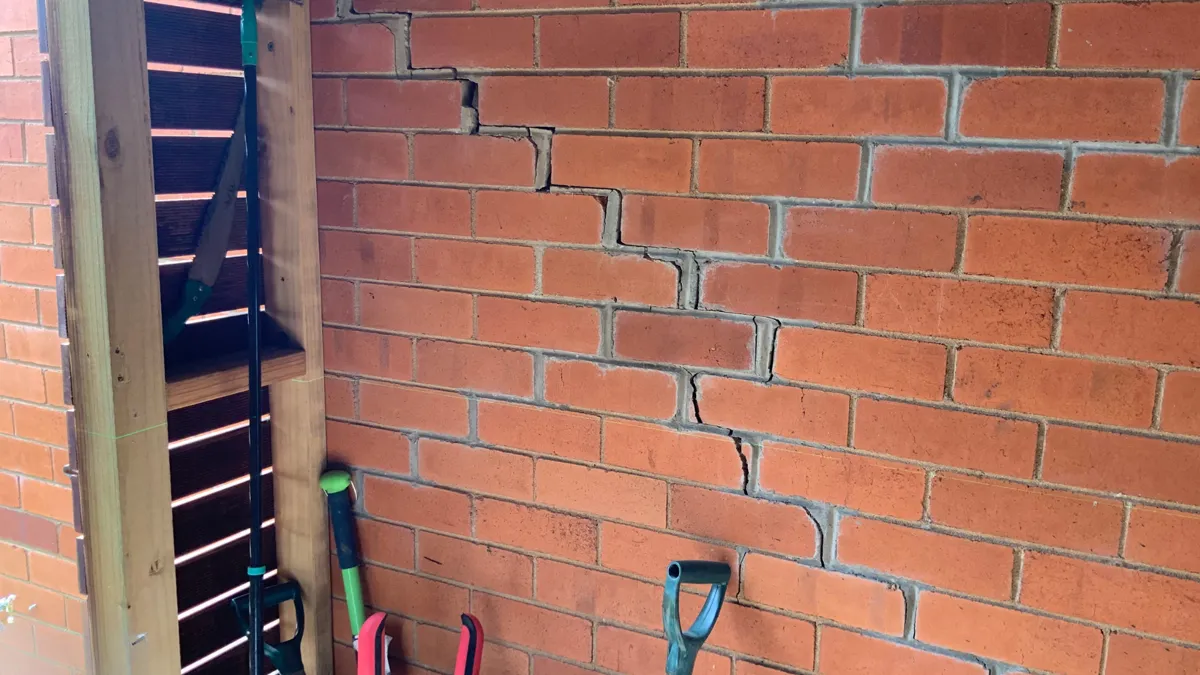
When a stepped crack opens — usually in a staircase pattern following the mortar joints — the wall loses that single-unit behaviour. The two halves of the wall are now two separate sections joined only by friction. Loads that used to flow smoothly through the wall now concentrate at the edges of the crack and at the points where the wall meets the footing.
Fix the foundation and you stop the ground from moving the wall apart any further. You don't restore the wall.
What the Wall Repair Actually Does
This is where most foundation repair companies leave the job unfinished. Stitching the wall back into a single structural element requires masonry reinforcement — high-tensile stainless steel bars set into the mortar joints, bonded with structural resin, running across the crack and several metres beyond it.
On a Buildfix job that's HelicalBar™ wall crack repair. The bars are roughly 100 times tougher than the bricks they sit between. They tie the cracked section back into solid masonry on both sides. Once they're installed, the wall behaves as a single unit again — and the section that was the weakest point becomes the strongest.
When the bars are designed by an engineer, they can carry the wall loads that the failed section can no longer carry. In many cases, the wall reinforcement reduces or removes the need for further foundation work — because once the wall is tied back into solid masonry, the stress on the foundation drops.
When You Need Both — And Why That's the Point
The right question on most jobs isn't "do I need foundation repair or wall crack repair?" It's "which sequence does this house need, and what does each part do?"
If the foundation is still moving, the ground is fixed first. The cracks won't close by themselves — but at least they stop getting worse while the wall repair is planned. If the wall has cracked badly enough that it's no longer carrying loads safely, the wall reinforcement happens first or alongside the foundation work.
The decision belongs to the engineer doing the assessment, with the laser readings and the crack measurements in hand. What it never is, on a real job, is "just fix the foundation and the cracks will sort themselves out." They don't. The crack is already in the wall.
What This Means for the Quote You're Holding
If you've been quoted only for foundation work and the wall has visible cracks, it's worth asking what happens to the wall after the foundation is stabilised. A good answer involves measurements, photos, and an honest conversation about whether the wall needs reinforcement now, in stage two, or genuinely not at all. A weak answer is "the cracks will close once the foundation is back to level" — because that's not how a cracked wall works.
A real assessment maps both. The engineer measures the floor levels with a laser, reads every wall crack for width, length and depth, and tells you which parts of the structure are still moving and which have settled. From there the fix is designed as a sequence — foundation first, wall second, or both at once — backed by a 20-year structural warranty on the wall repair and a 20-year product and workmanship warranty on the foundation repair.
What You'll Notice When Both Halves Are Done
When the foundation is stable and the wall is reinforced, the house finally stops talking back. The ground holds. The wall holds. Cracks that opened start to close as the foundation settles back and the bars take the load. Doors that were sticking begin working again. The next paint job is the last paint job — because the wall isn't moving anymore, the plaster doesn't tear, and the crack doesn't return six months later, same spot, sometimes wider.
That's what fixing both halves of the puzzle actually looks like. One repair, properly sequenced, that holds.
When to Get the Full Picture
If you've already had foundation repair done and the cracks are still there, or if you're about to sign a foundation-only quote and the wall has stepped cracks running through it, that's the assessment to book. Takes 30–60 minutes. Floor levels mapped, cracks measured, the full sequence explained. It's free.
For nearly 15 years Buildfix has worked on more than 15,000 homes and structures, and the ability to do both halves of the puzzle — the foundation and the wall — under one warranty is the reason most of those jobs only had to be done once.
Call 1300 854 115 or book a free on-site assessment.
Share this article
Related Articles
How to Fix Wall Cracks Structurally — Not Just Cosmetically
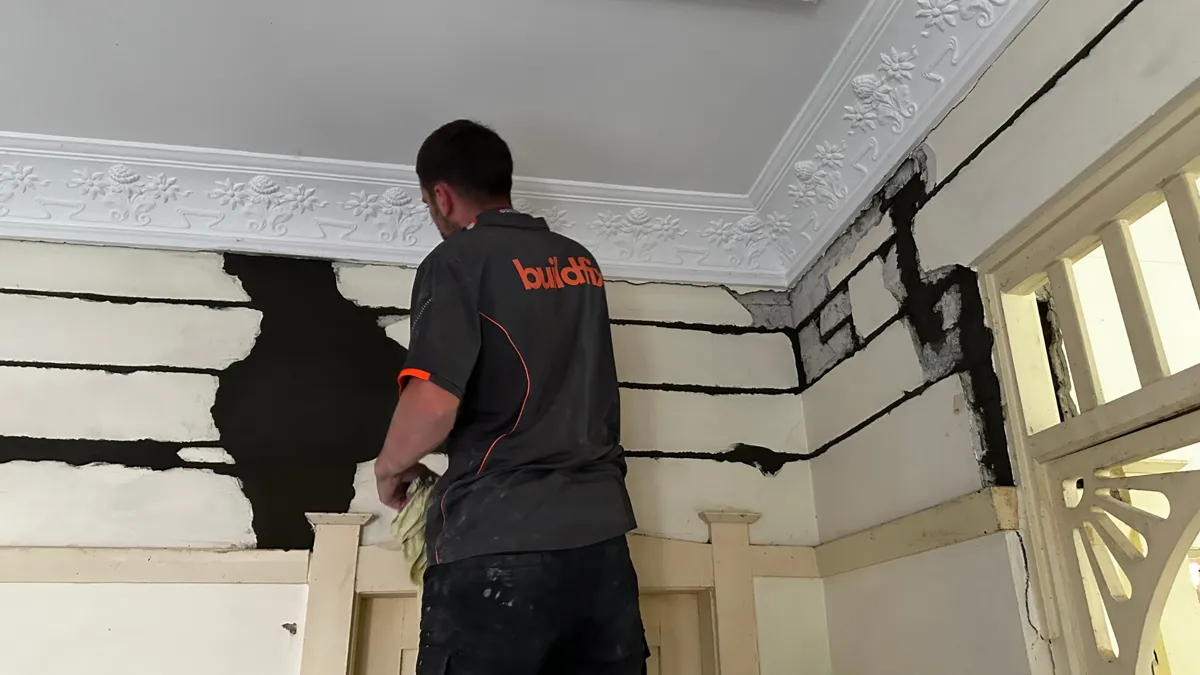
If a wall crack is structural, filling it won't fix it. Plastering it won't fix it. Painting over it won't fix it. The crack comes back six months later, same place, sometimes wider.
Read More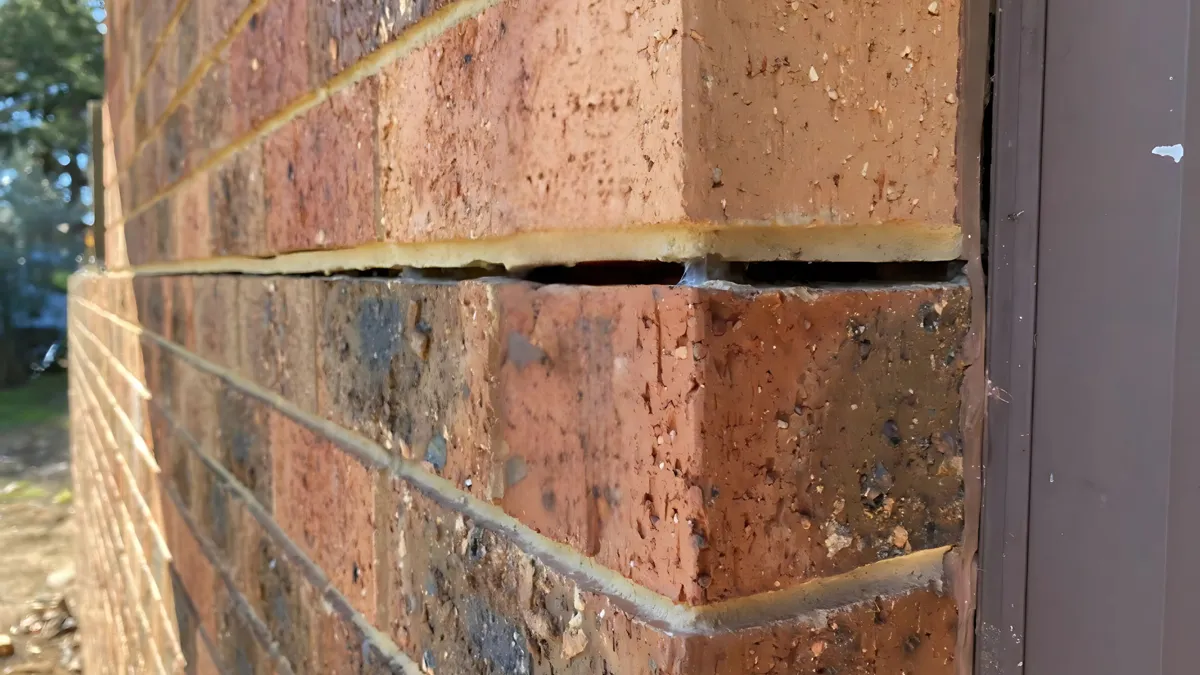
Can a House Be Relevelled?
The short answer is yes. Most homeowners picture relevelling as something out of a renovation show — but in most cases the house never has to leave its address.
Read More
How Drought Places Pressure on Your Home’s Structure
Serious droughts have an impact on infrastructure, large and small buildings alike including your home. Especially if your home’s been built on reactive clay soil.
Read More
Need expert advice on your home?
Our team of engineers and technicians are ready to help.
Book a free structural assessment today.