
Help & Advice
How to Prevent Your Home From Sinking
Help & Advice
How to Prevent Your Home From Sinking
Houses don't sink because of bad luck. They sink because of water, soil, and trees — usually a combination of all three. The good news is that every one of those causes can be managed before it becomes a structural problem.
This is the practical version. The five things that genuinely prevent a home from sinking, and the early signs that mean the foundation is already moving.
It's Almost Always About Water
The single biggest cause of subsidence in Australian homes is moisture moving in and out of the soil beneath the foundation. Reactive clay — the orange-grey soil under most of Melbourne's west, Western Sydney, the ACT, and South East Queensland — expands when wet and contracts when dry. Each cycle moves the soil by several millimetres. Over years, that movement compounds.
The fix is to keep moisture levels under the foundation as consistent as possible. That means three things, in order of importance.
Stormwater drainage that actually works. Downpipes connected, gutters clear, water leaving the property — not pooling against the wall. Hundreds of homes that come to a Buildfix assessment have a single disconnected downpipe washing water straight into the soil beside the footing for years. Walk the perimeter of the house in heavy rain. If you see water collecting near the wall, the drainage is part of the cause.
Plumbing checked every few years. Leaking pipes under a slab will wash a void out of the foundation without you ever knowing — until the slab drops. The first sign is usually a higher-than-usual water bill, then a damp patch on a path, then a sloping floor. A licensed plumber's leak detection check is cheaper than the cracks it prevents.
Garden beds and irrigation that don't run against the wall. Watering a flower bed against the foundation pumps moisture into the soil daily. The clay expands, the slab edges lift, and when summer dries it out, the slab drops further than it lifted.
The Tree Question
Mature trees within 10 metres of a foundation are the second-biggest cause of subsidence — especially on reactive clay. A large eucalyptus, oak, or willow can draw 200–500 litres of water a day out of the soil in summer. The clay shrinks where the roots are taking moisture, the foundation drops on that side, and a stepped crack opens up on the wall above it.
You don't always have to remove the tree. Root barriers, deep watering on the opposite side of the tree, and tree management by an arborist can balance the moisture draw. The point is: if a mature tree is close to the house and cracks are appearing on the wall facing the tree, the tree is part of the diagnosis.
Watch for Early Signs
Subsidence almost never arrives without warning. The signs are subtle for months before they're obvious.
The earliest is a door that used to close fine and now sticks. Doors are calibrated to the frame around them, and the frame is calibrated to the wall. When the wall moves a few millimetres, the door catches. That single sticking door is the cheapest, earliest piece of information a foundation can give you.
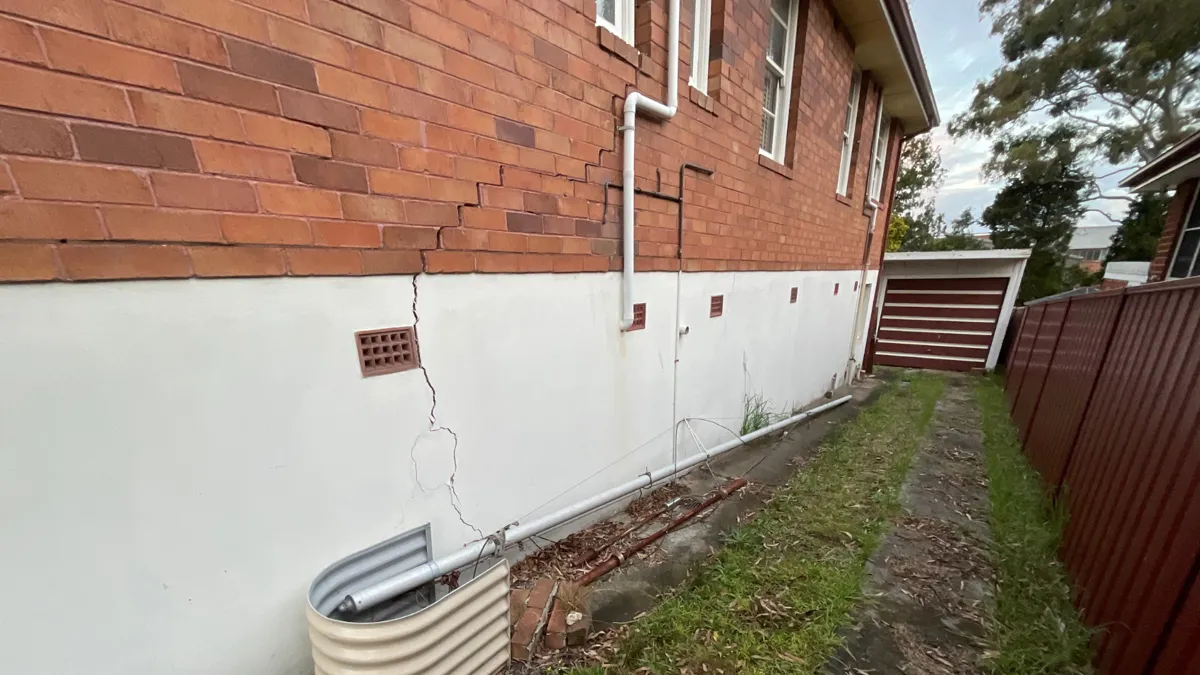
The next sign is a stepped crack — a crack that follows the mortar joints in a staircase pattern on a brick wall. Stepped cracks are the wall giving way along its weakest line. A hairline stepped crack on its own isn't an emergency. A stepped crack that's grown in 12 months, or one wider than a 5-cent piece's edge, is the foundation telling you it's already moved.
The third sign is a sloping floor. Place a ball on the floor of the room you're worried about. If it rolls — and especially if it always rolls in the same direction — the floor isn't level anymore.
When Prevention Becomes Repair
If the early signs are already there, prevention has done its job — it told you the foundation has started to move. From here, the question is whether the movement is still active and whether the cause has been addressed.
That's where a level check pays for itself. A structural engineer measures the floor levels with a laser, maps the movement across the slab, and reads the wall cracks. If the movement is active, the cause gets identified — drainage, plumbing, soil, trees — and the foundation repair options get spelled out. Most homes that get caught early can be relevelled with GeoPoly™ resin injection without any digging — done in 1–2 days, a fraction of the cost of traditional methods.
When to Get the Foundation Assessed
If a door has been sticking for more than a few months, if a stepped crack has opened on a brick wall, or if a floor has started sloping enough to notice — that's the assessment to book. Takes 30–60 minutes. Floor levels are mapped, wall cracks measured, the cause identified. It's free, and you'll know exactly what's happening beneath the house.
For nearly 15 years Buildfix has worked on more than 15,000 homes and structures across NSW, VIC, QLD, and the ACT. Most foundation problems are fixable. The earlier they're caught, the smaller the fix.
Call 1300 854 115 or book a free on-site assessment.
Share this article
Related Articles
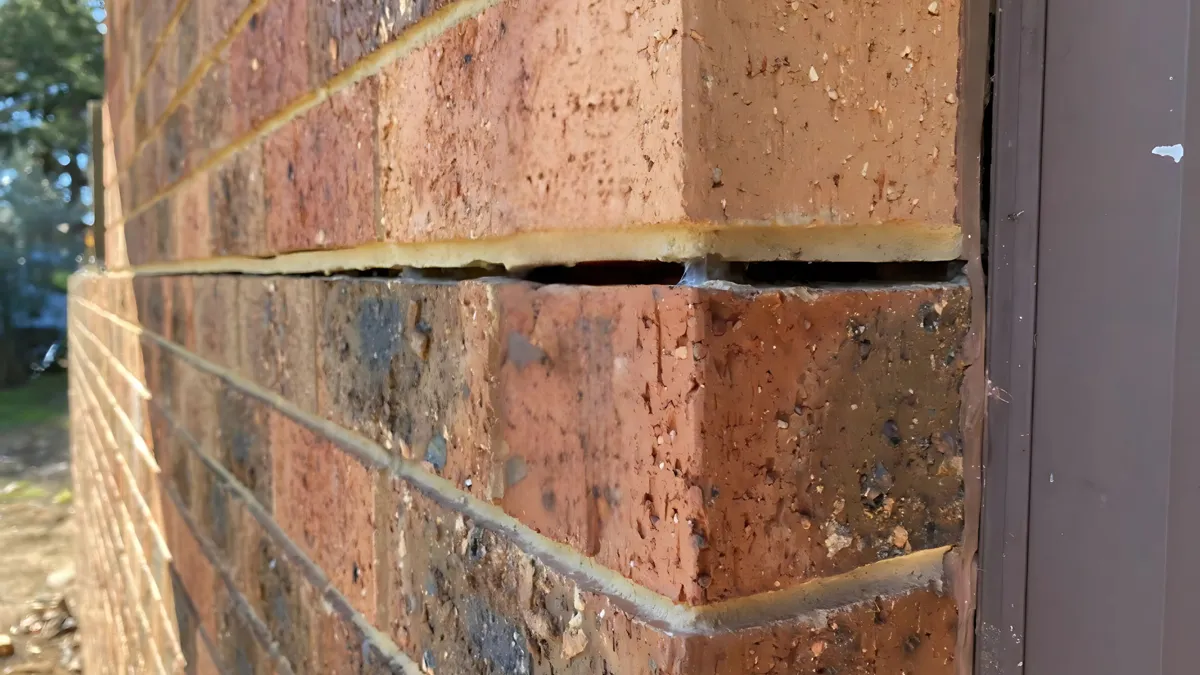
Can a House Be Relevelled?
The short answer is yes. Most homeowners picture relevelling as something out of a renovation show — but in most cases the house never has to leave its address.
Read More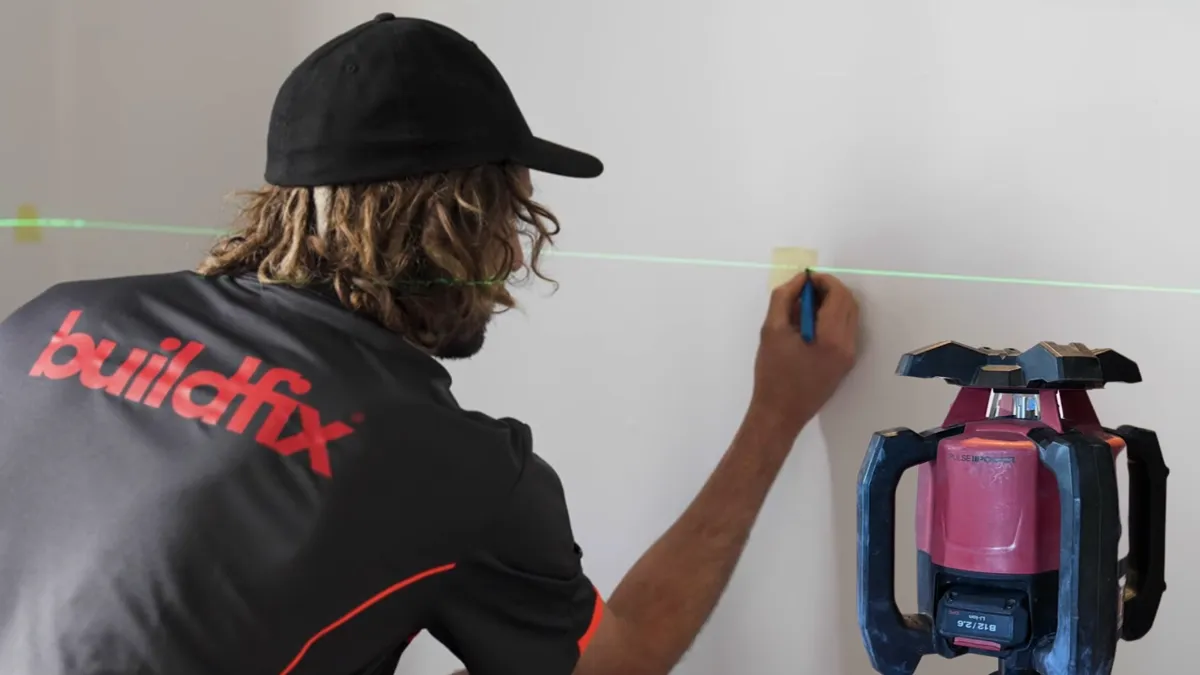
How to Level-Check Your Own Foundation — A Homeowner's Guide
You don't need a structural engineer to know whether your floor has dropped. A spirit level, a tennis ball, and a tape measure will tell you in ten minutes whether your foundation is worth getting professionally checked.
Read More
How Drought Places Pressure on Your Home’s Structure
Serious droughts have an impact on infrastructure, large and small buildings alike including your home. Especially if your home’s been built on reactive clay soil.
Read More
Need expert advice on your home?
Our team of engineers and technicians are ready to help.
Book a free structural assessment today.