
Help & Advice
How to Level-Check Your Own Foundation — A Homeowner's Guide
Help & Advice
How to Level-Check Your Own Foundation — A Homeowner's Guide
You don't need a structural engineer to know whether your floor has dropped. A spirit level, a tennis ball, and a tape measure will tell you in ten minutes whether your foundation is worth getting professionally checked.
This is the homeowner version. The three tests, what the readings mean, and the point at which a DIY check stops being good enough.
Why a Level Check Matters Before Anything Else
Most calls about subsidence start the same way. The owner has noticed a sticking door, a stepped crack, or a sloping floor — and they're trying to work out whether the house is moving or whether they're imagining things. A level check answers that question with numbers instead of guesses.
If the readings show the floor is genuinely out of level, that's worth a free assessment. If they show it's flat to within a few millimetres, you've saved yourself a few months of worrying about a house that's behaving exactly the way it was built to behave.
The other thing a level check does is give you a baseline. Take the readings today, write them down, and check the same spots in 6 months. If the readings are the same, the movement is historic — it happened, it's settled. If the readings have changed, the foundation is still moving, and that changes the urgency of the conversation.
Test 1: The Ball Test
The cheapest, fastest test. Put a tennis ball or a marble on the floor of the room you're worried about and watch what happens.
If it rolls slowly in one direction, the floor has dropped on that side. If it rolls the same direction every time you place it, the slope is real, not a one-off. If it sits still or wobbles back and forth, the floor in that spot is level.
This test won't give you millimetres. What it gives you is a direction — which way the floor has dropped — and a rough sense of how steep the slope is. A ball that rolls fast tells you you've got a noticeable slope. A ball that creeps tells you the slope is small. A ball that sits tells you the floor is fine.
Do the test in every room. If the ball rolls in the same direction across multiple rooms, the foundation has dropped on that side of the house — not just one spot.
Test 2: The Spirit Level
A 1-metre or 1.2-metre spirit level is the right tool for this. Anything shorter and the readings won't mean much across a typical room.
Lay the level on the floor in the centre of the room and read where the bubble sits. A bubble dead-centre means level. A bubble that touches the line on one side means the floor is roughly 4–6mm out of level over the length of the spirit level — already enough to notice.
Now move the level around the room — corners, doorways, the centre. Make a rough sketch of the room and write the readings on it. The pattern matters as much as the individual readings. A floor that's high in one corner and low in the opposite corner has rotated. A floor that's flat through the middle and dips at the walls has settled around the edges.
For a more accurate version, lay the spirit level on a long, straight piece of timber (a 2-metre or 3-metre length of dressed pine works) and walk that across the room. Slip thin coins or business cards under the timber where there's a gap. Each business card is roughly 0.3mm. Count the cards to estimate the drop in millimetres.
Test 3: The Door and Window Check
Doors and windows are calibrated to the wall they sit in. When the wall moves, they're the first thing that tells you.
Open every internal door and let go. If it swings open or closed by itself, the frame is no longer plumb. The direction it swings tells you which way the wall has tilted.
Check the gap around every door. Run a finger along the top edge between the door and the frame. If the gap is even all the way across, the frame is square. If the gap is wider on one side than the other, the frame has racked — which means the wall around it has moved.
Do the same for windows. If a window that used to slide easily is now jamming, or won't latch the way it used to, the frame has racked the same way.
What the Readings Mean
| Reading across one room | What it usually means |
|---|---|
| Under 5mm | Within normal settling — most homes sit somewhere in this range |
| 5–10mm | Noticeable but not necessarily active — worth a baseline and a recheck in 6 months |
| 10–20mm | Foundation has moved enough that the wall is likely cracking — worth an engineer's reading |
| 20mm+ | The foundation has clearly dropped — book the assessment |
What the numbers don't tell you is whether the movement is active or historic, or what's caused it. Reactive clay, a leaking pipe, a tree, washed-out fill — they all leave different signatures, and that's what the professional check picks up.
When to Call Someone
The DIY check is enough to know whether there's a real problem. It's not enough to know what to do about it. If your readings are over 10mm across a room, or if a door has stopped closing properly, or if a stepped crack has opened on a brick wall — that's the point a professional reading pays for itself.
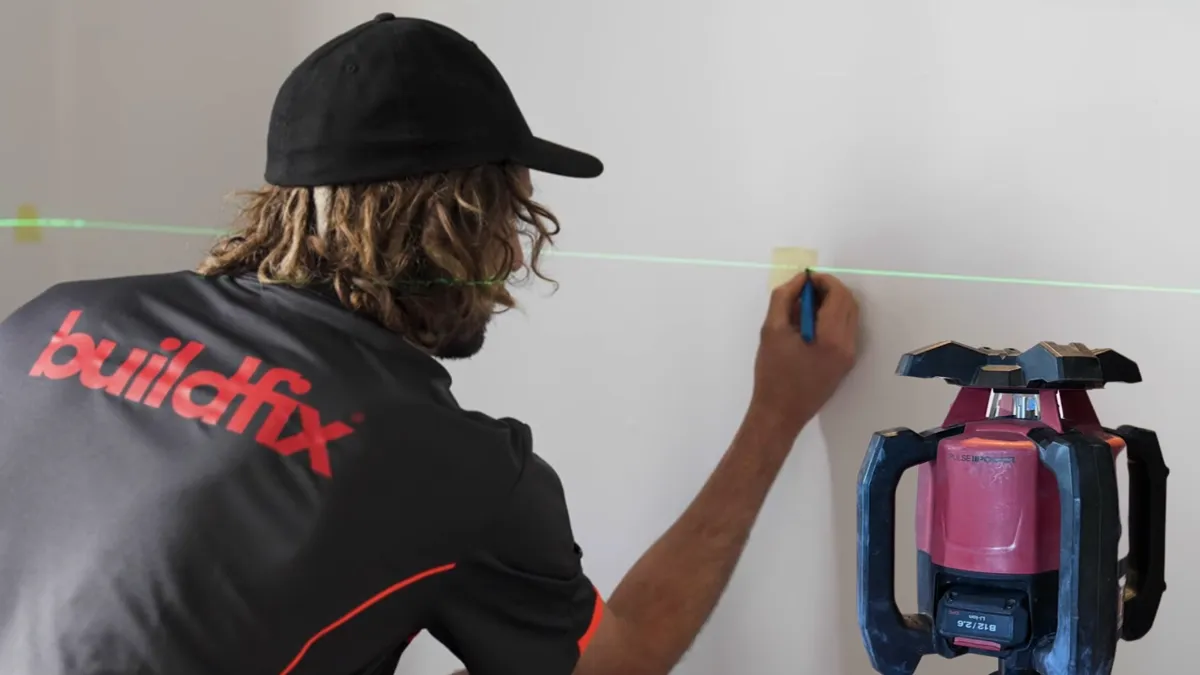
A free Buildfix assessment uses a laser level (millimetre-accurate, faster than a spirit level, and read across the entire floor at once), a moisture meter on suspect walls, and a crack gauge on visible cracks. The whole visit takes 30–60 minutes. You walk away with a map of the subsidence, the suspected cause, and — if needed — a fixed-price quote for foundation repair.
For nearly 15 years Buildfix has measured floor levels on more than 15,000 homes and structures across NSW, VIC, QLD, and the ACT. Most owners are surprised to find their house is either dead level or fixable in a day. The handful that aren't, get caught early enough that the fix is still straightforward.
Call 1300 854 115 or book a free on-site assessment.
Share this article
Related Articles
How to Prevent Your Home From Sinking
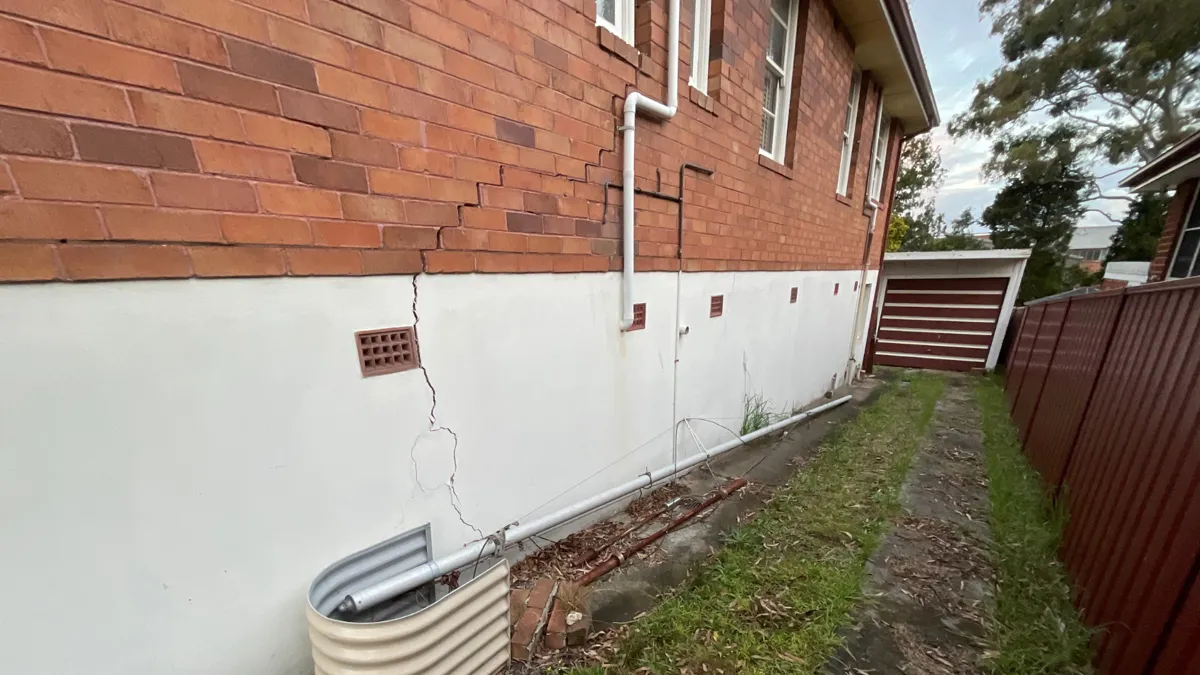
Houses don't sink because of bad luck. They sink because of water, soil, and trees — usually a combination of all three.
Read More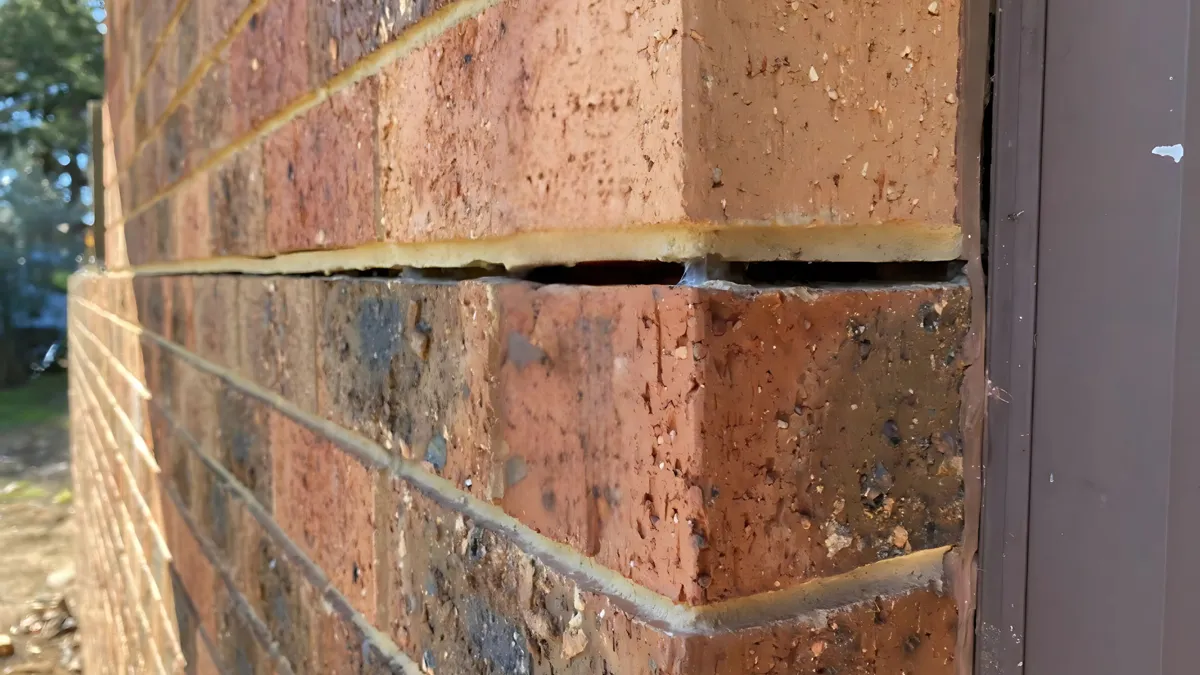
Can a House Be Relevelled?
The short answer is yes. Most homeowners picture relevelling as something out of a renovation show — but in most cases the house never has to leave its address.
Read More
How Drought Places Pressure on Your Home’s Structure
Serious droughts have an impact on infrastructure, large and small buildings alike including your home. Especially if your home’s been built on reactive clay soil.
Read More
Need expert advice on your home?
Our team of engineers and technicians are ready to help.
Book a free structural assessment today.