
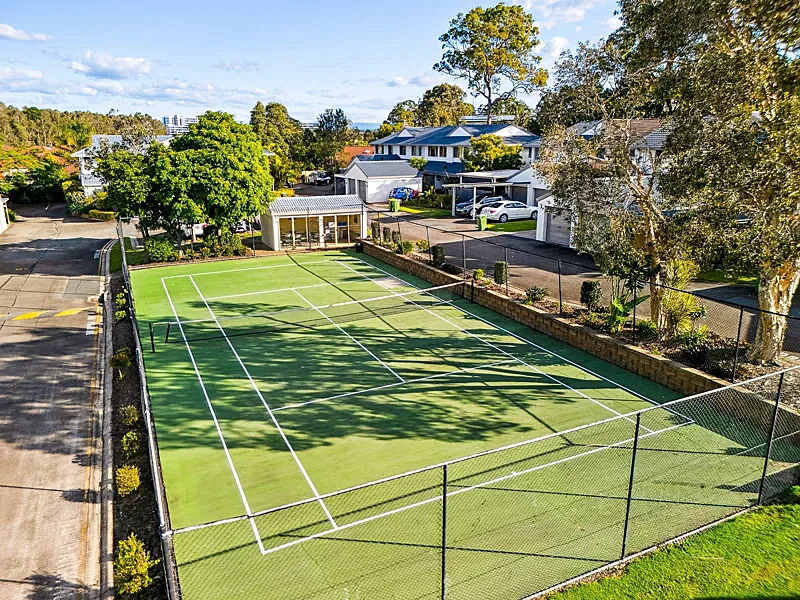
Case Study
Sunken Tennis Court Lifted 100mm
Case Study
Sunken Tennis Court Lifted 100mm
100mm drop across the playing surface — court out of action
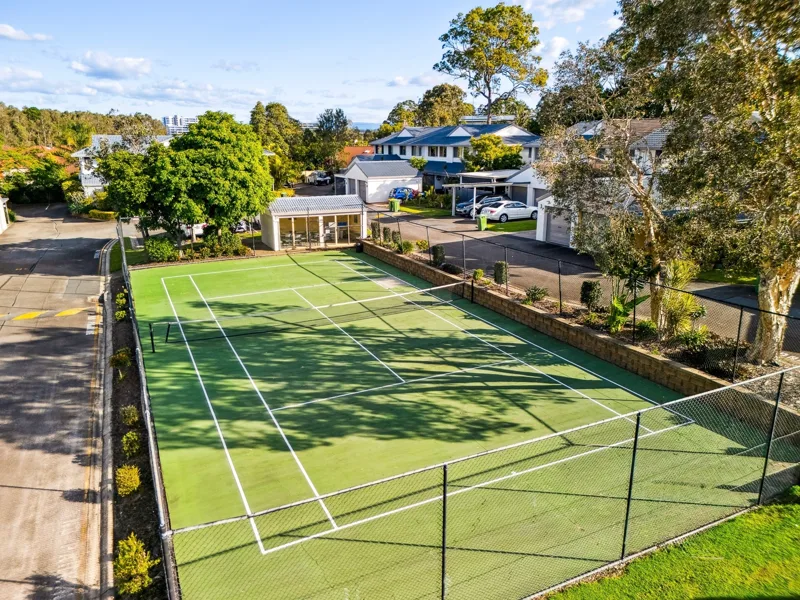
A section of the tennis court at this Runaway Bay residential complex had dropped approximately 100mm — a significant step right through the playing surface and along the perimeter. The court was effectively out of action. Unsafe footing, unpredictable ball bounce, and a genuine trip hazard meant it couldn’t be used until the problem was fixed.
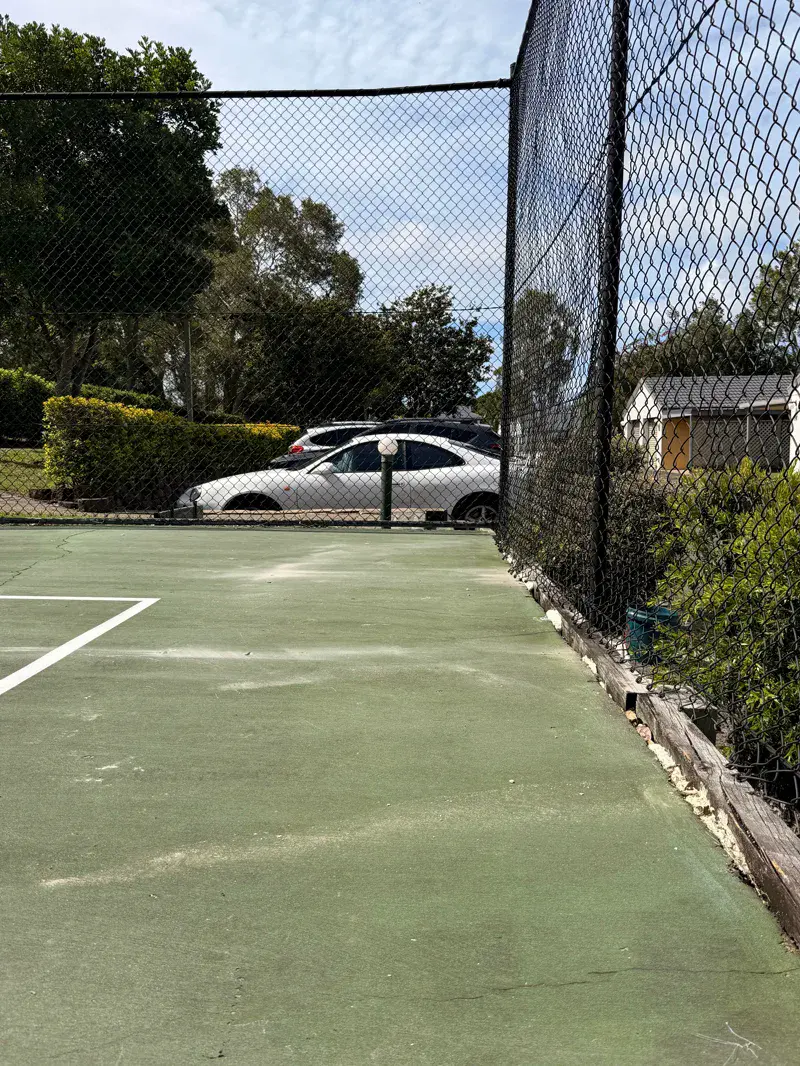
Lost ground support along one edge — ongoing settlement beneath the slab
The slab had lost ground support along one edge, allowing it to sink substantially. A 100mm drop across a sports surface changes everything — footing, ball behaviour, and the risk of trips and ankle injuries. Movement along the edge beam and fence line pointed to ongoing settlement beneath the slab.
The traditional fix — ripping up the court and re-laying the slab — would have been costly and time-consuming. The solution needed to lift and stabilise the court without damaging the existing surface.
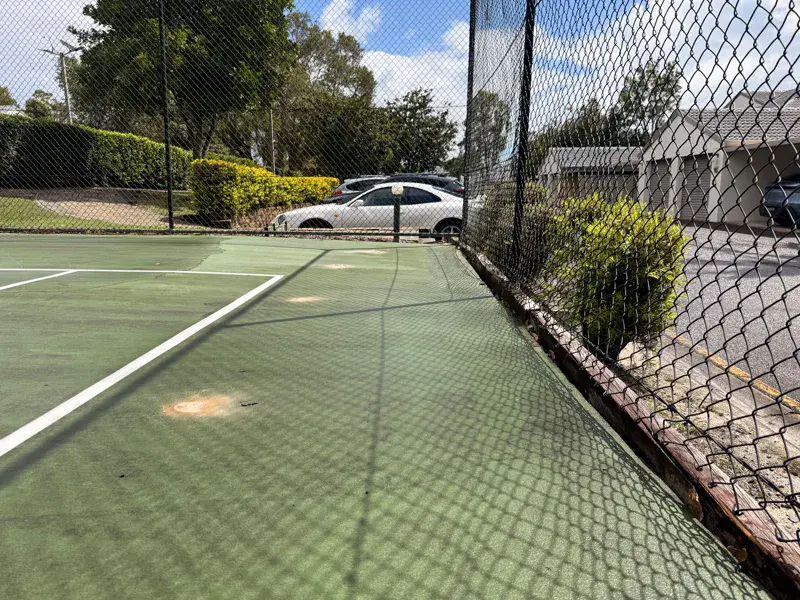
Targeted injection through the court surface — controlled lift back to level
Targeted injection points were drilled through the court surface. GeoPoly™ SJ120 resin was injected beneath the slab, filling voids, compacting the underlying ground, and gradually lifting the sunken section back toward level. The lift was carefully monitored throughout to achieve accurate correction without compromising the court surface.
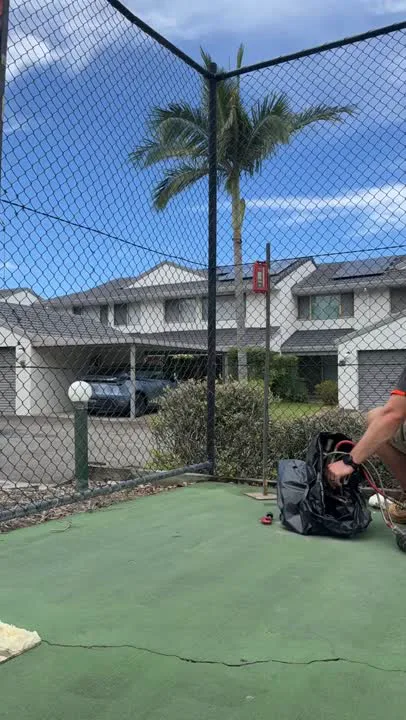
100mm level difference eliminated — court back in use
The 100mm level difference was eliminated. The playing surface was consistent again — safe footing, predictable bounce, no trip hazard. Dealing with sunken concrete on your property? A free assessment explains what concrete relevelling can do.
Share this case study
Related Articles
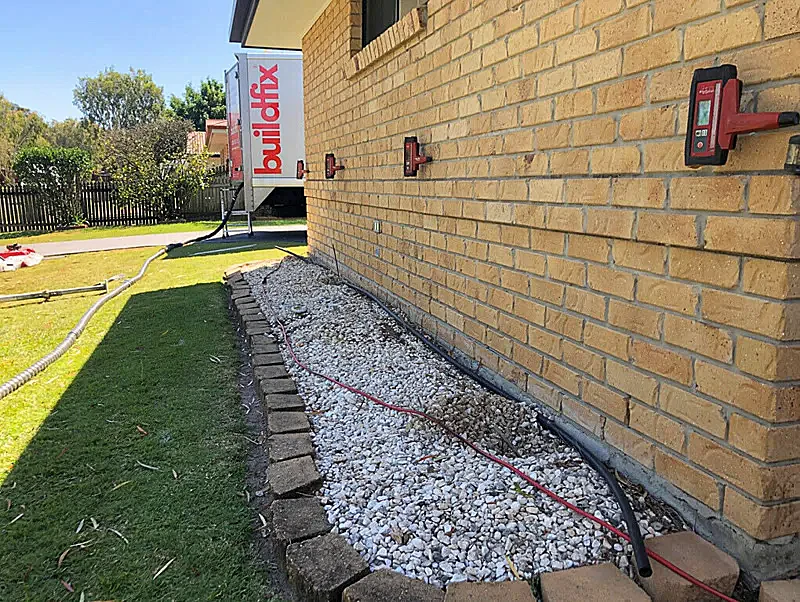
Sinking Garage Lifted 45mm — Harleys and All
A garage sinking for over two decades on poorly prepared soil. GeoPoly™ lifted the slab 45mm in under four hours — the Harleys never moved.
Read More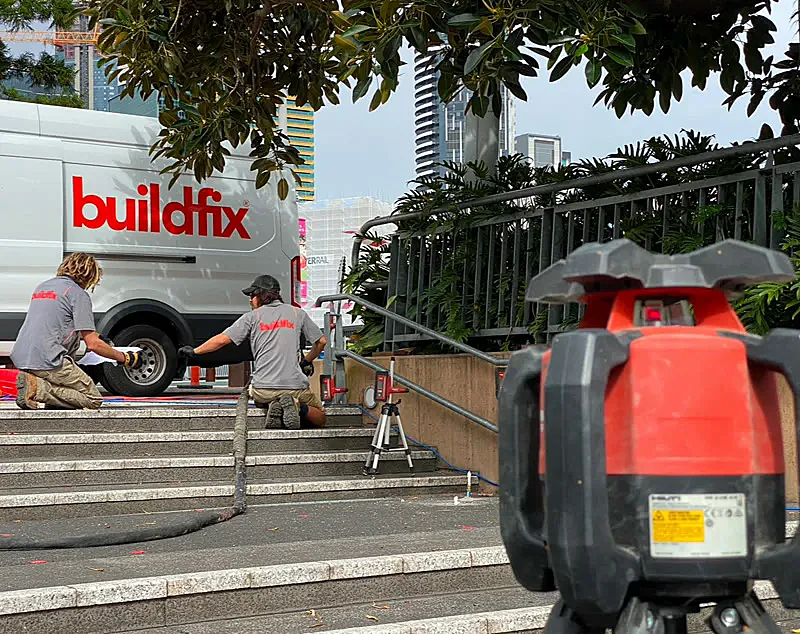
Roma Street Parkland Walkways Relevelled
Sunken stairs, walkways, and bikeways across 16 hectares of public parkland. Brisbane City Council has used Buildfix to relevel affected sections.
Read More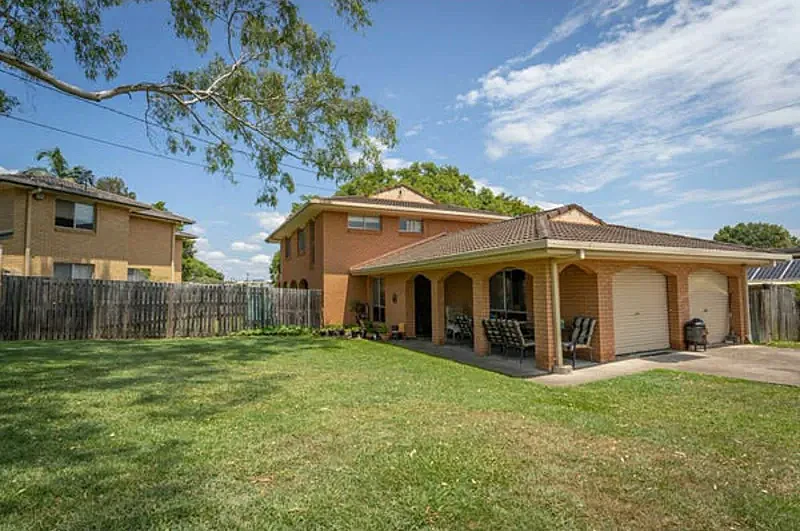
Dining Floor Relevelled — Not a Tile Broken
A sinking dining room floor on reactive black soil — relevelled in one day through 1cm holes in the grout joints, without breaking a single tile.
Read More
Seeing something similar at your property?
Our team of engineers and technicians are ready to help.
Book a free structural assessment today.