What We Fix
Sinking Floor Piers
Stabilise the ground beneath your piers and level your floors — without ripping up floorboards.
- Free assessment · 1–2 day repair · 20-year warranty
- Structural Engineers · Licensed Builders · Skilled Technicians
 Trustpilot
 Google
What We Fix
Sinking Floor Piers
Stabilise the ground beneath your piers and level your floors — without ripping up floorboards.
- Free quote · 1–2 day repair · 20-year warranty
- Structural Engineers · Licensed Builders · Skilled Technicians
Sinking Floor Piers
Stabilise the ground beneath your piers and level your floors — without ripping up floorboards.
- Free structural assessment with a fixed-price quote
- No floorboards removed — most repairs done in 1–2 days
- 20-year product and workmanship warranty
Structural Engineers · Licensed Builders · Skilled Technicians
TrustpilotGoogleAre my floors sinking because the piers have failed?
Floors move. Over time, most homes develop a creak here, a slight slope there. Some of it is normal settlement — the kind of thing you learn to live with.
But when the floor starts bouncing underfoot, doors begin to stick, and you can feel the slope getting worse — something else is going on. Most of the time, the piers are fine. The ground beneath them isn't. The soil has shifted, washed away, or dried out, and the piers have lost contact with what was holding them up.
The symptoms below will help you work out what your floors are telling you — and whether a structural engineer should take a look.
What are the symptoms of sinking floor piers?
Your floors tell you when something is wrong. These are the most common signs of sinking piers.
Sloping or Uneven Floors
Place a ball on the floor. If it rolls away on its own, the floor isn’t level. Floor piers sink at different rates — one drops more than the next — and the floor follows. A table that wobbles, a cabinet door that swings open by itself — these are the everyday signs of piers that have moved.
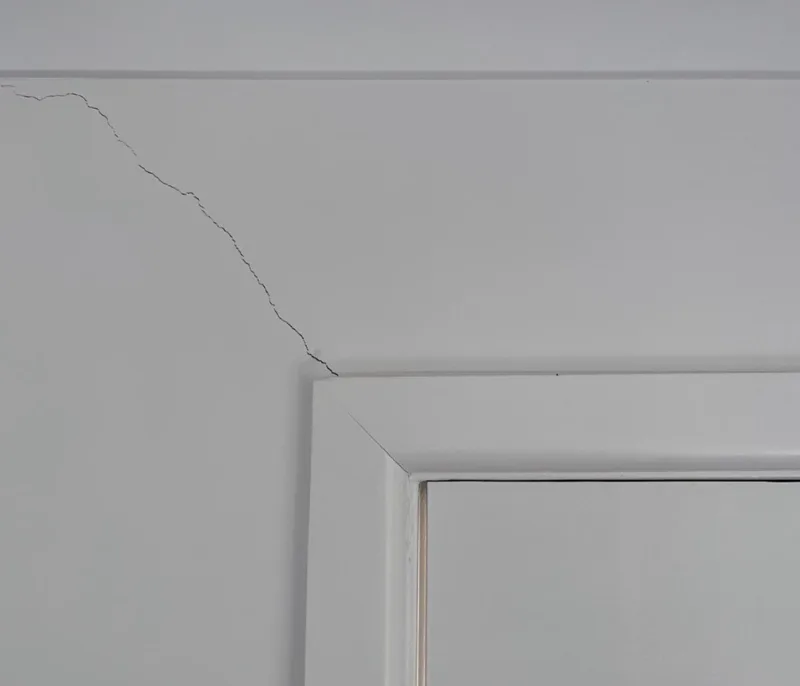
Doors Sticking or Jamming
Doors in the middle of the house are usually the first to go. When piers sink unevenly, the floor tilts and the door frame twists out of square. The door catches the top of the frame, or scrapes the floor — sometimes both. If a door that used to close fine now needs a shove, the piers beneath that section of floor have more than likely moved.
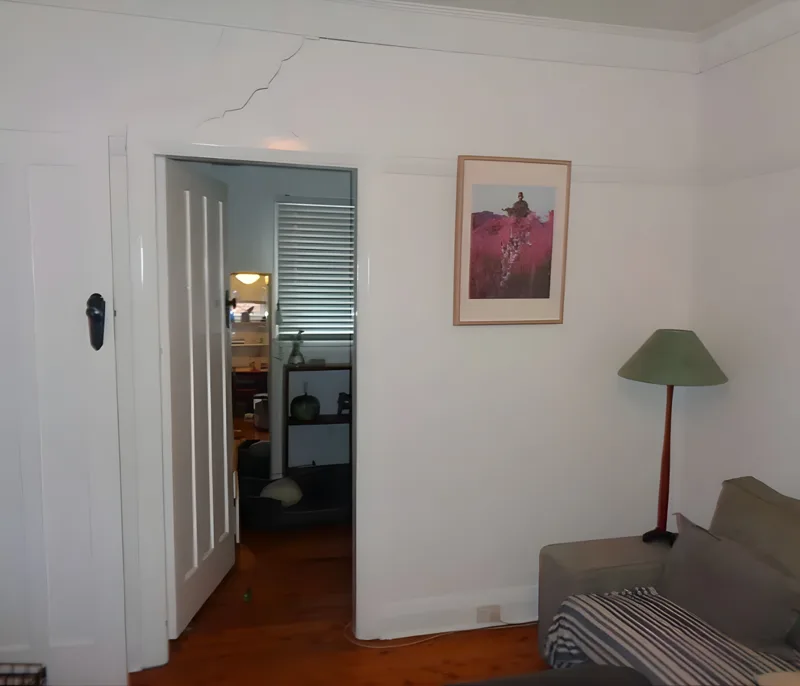
Cracks Through the Middle of Walls
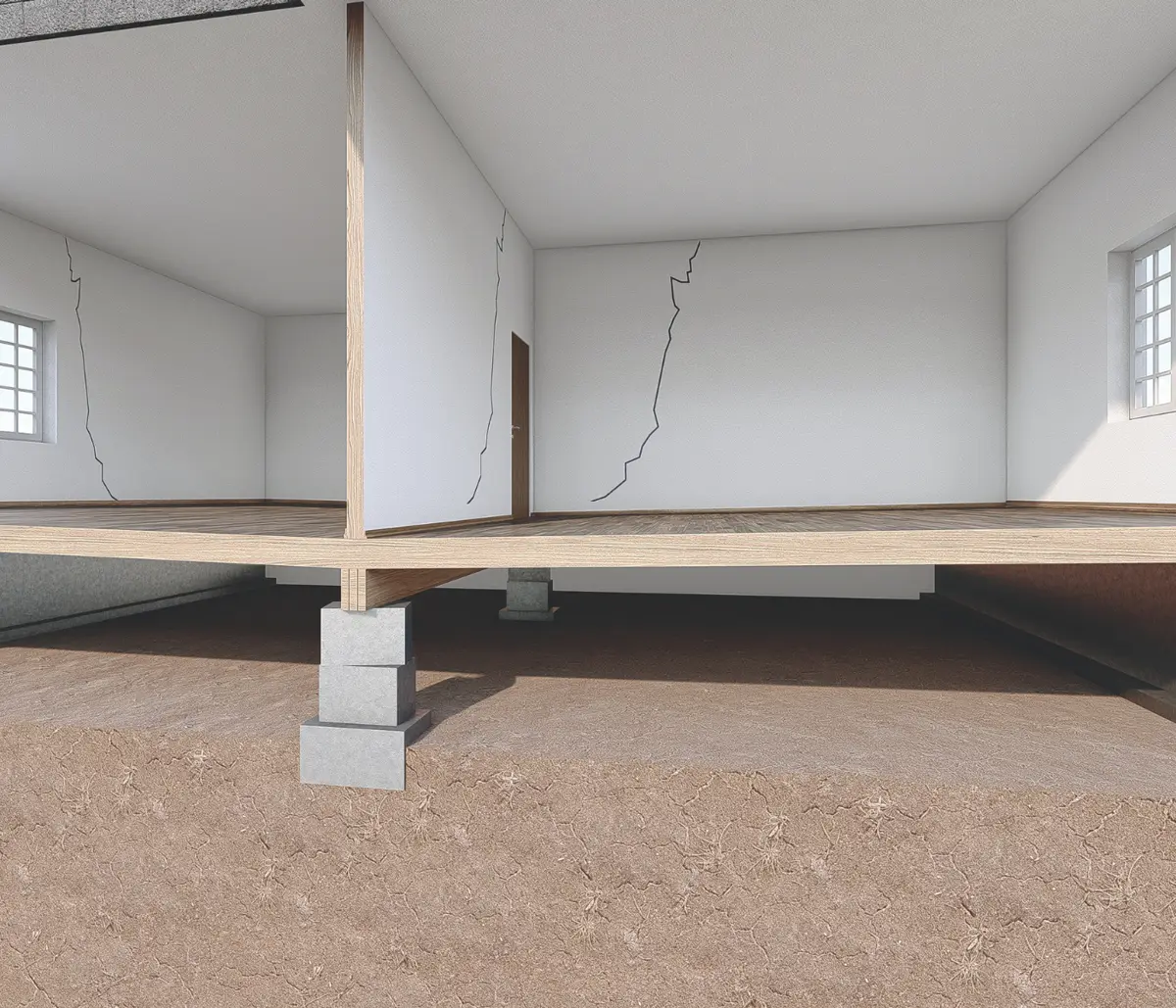
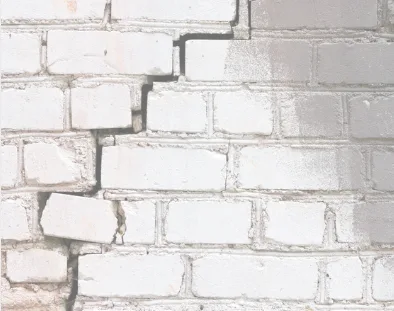
The outside walls sit on deep footings and rarely move. But the piers in the centre of the house often sit on shallow footings — and when the ground beneath them sinks, the floor bows in the middle. That downward pull cracks the internal walls above. If you’re seeing cracks through the centre walls of your home while the outside walls look fine, the piers in the middle have likely dropped.
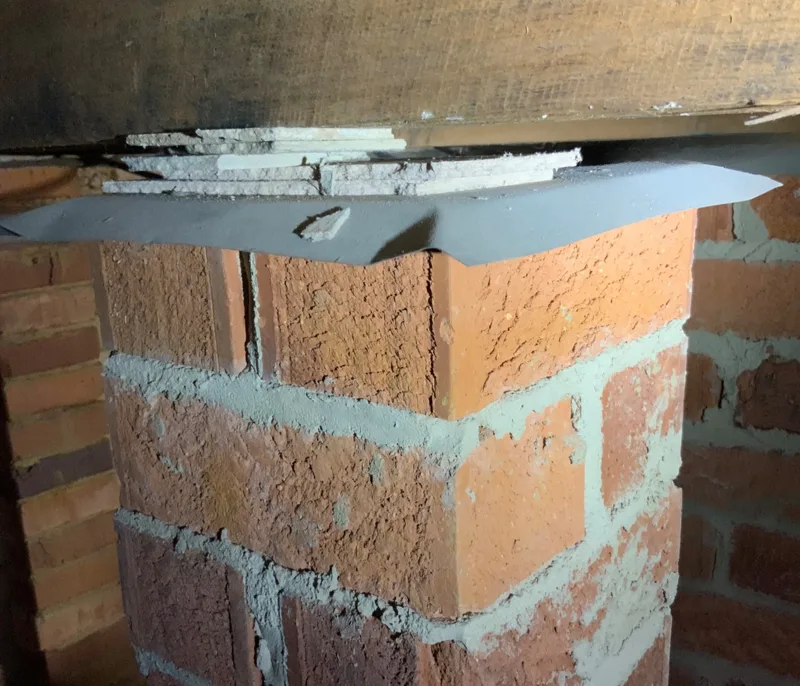
Visible Pier Damage (Sub-Floor)
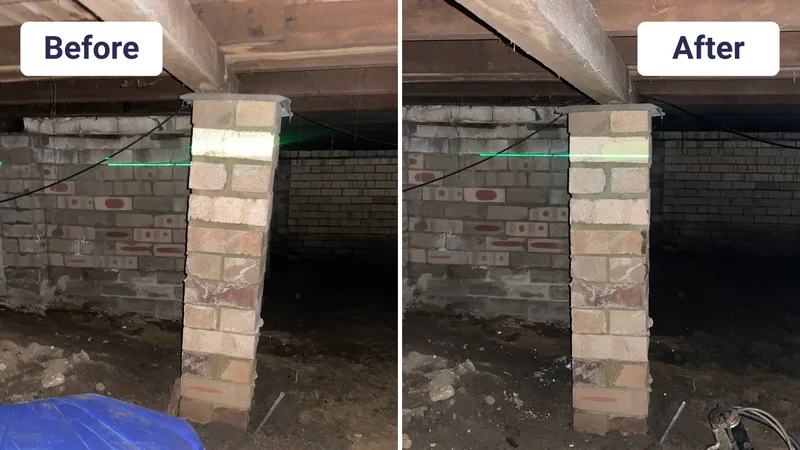
If you can see under your home, look at the piers. A gap between the top of the pier and the bearer above is the clearest sign — the pier has dropped and lost contact with the floor it was supporting. You’ll often find the gaps packed with shims or packers — that’s jack and pack, and it’s a sure sign someone has already noticed the movement.
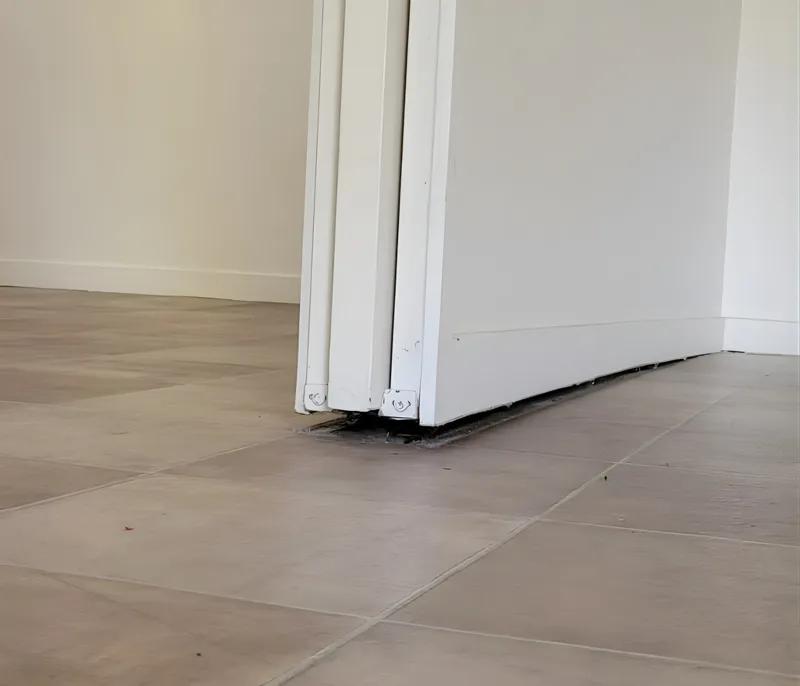
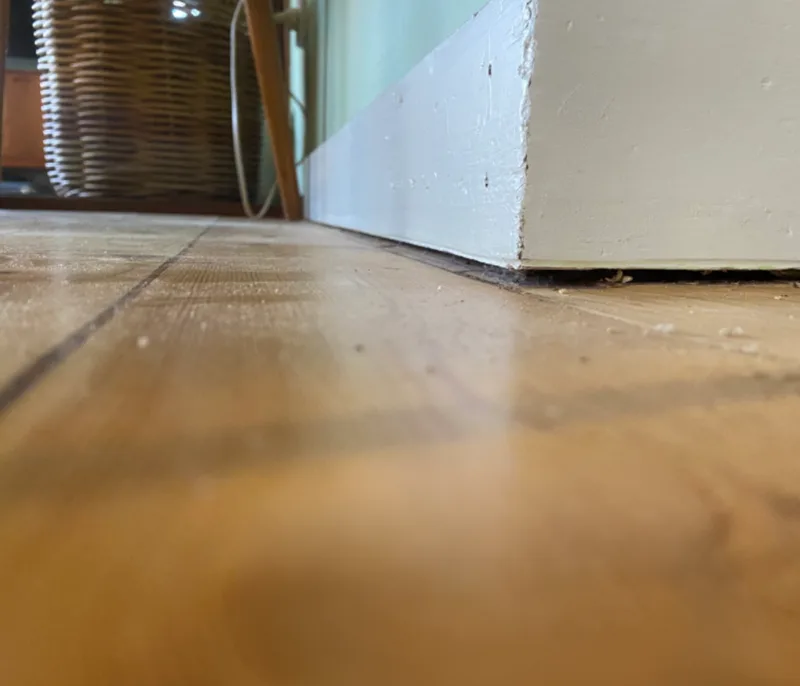
Gaps Under Walls and Doors
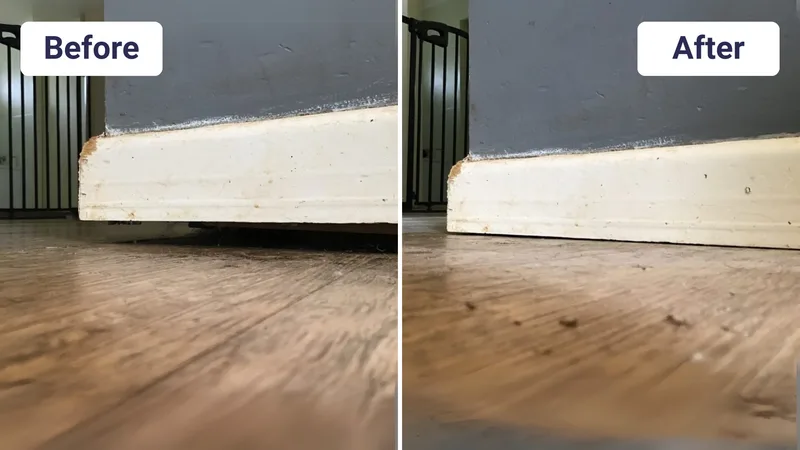
When the floor drops, gaps open at the base of internal walls and under doors. Look at where the door meets the floor — if daylight shows through, or the gap is wider on one side than the other, the piers beneath have moved. The floor has dropped independently of the walls above it.
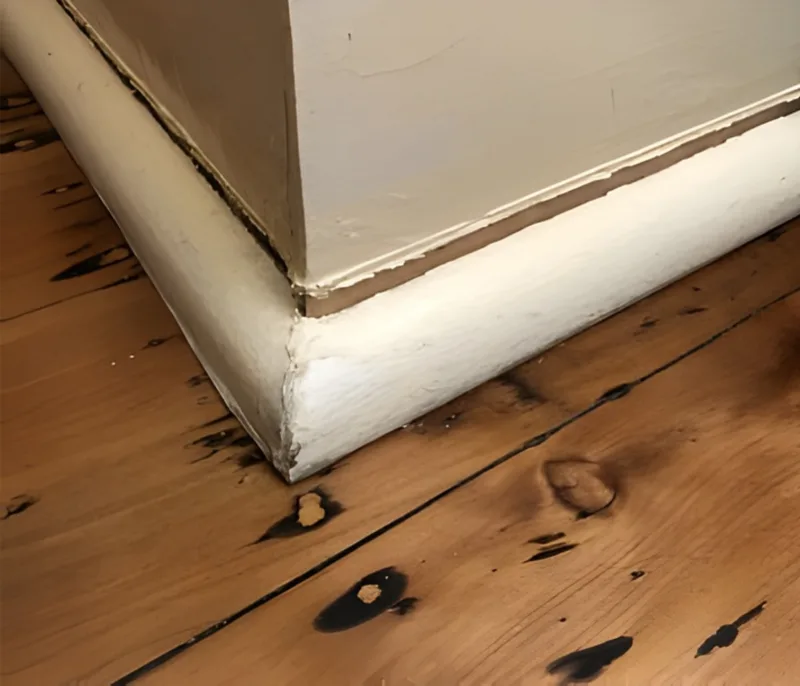
Bouncy Floors
When the ground beneath a pier sinks, the pier drops with it and loses contact with the bearer above. The bearer now has further to span, and it bows under the load — pulling the floor down with it. Walk across the room and the whole room seems to shake. Look at the skirting — if it moves up and down slightly when you walk past, the pier beneath that section has dropped.
What are the signs of sinking floor piers?
What causes sinking floor piers?
The pier hasn’t broken. It’s lost contact with the bearer above it.
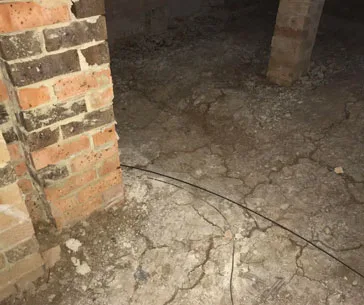
Soil Movement (Reactive Clay)
Reactive clay is the single biggest cause of sinking floor piers across Melbourne, Western Sydney, and South East Queensland. The soil swells when wet, shrinks when dry, and pulls away from the base of your piers. Each cycle leaves a little more gap — until the pier is sitting on nothing.
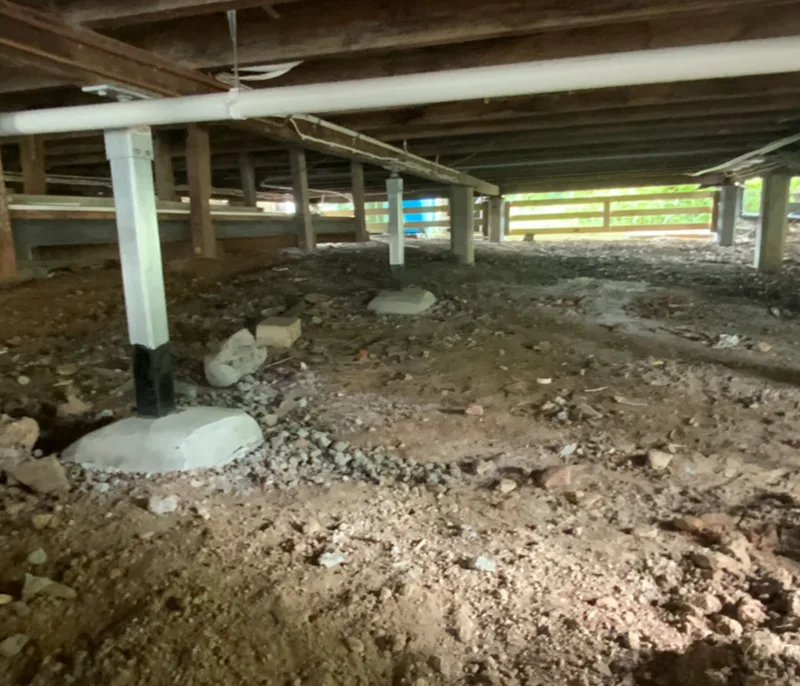
Previous Repairs
New steel piers installed in the same location as the old ones — without addressing the ground they’re sitting on. The original piers were likely fine. They hadn’t cracked or failed. The ground beneath them had moved. Replacing a pier that’s structurally sound doesn’t fix the problem — the new pier sits on the same unstable ground and sinks the same way.
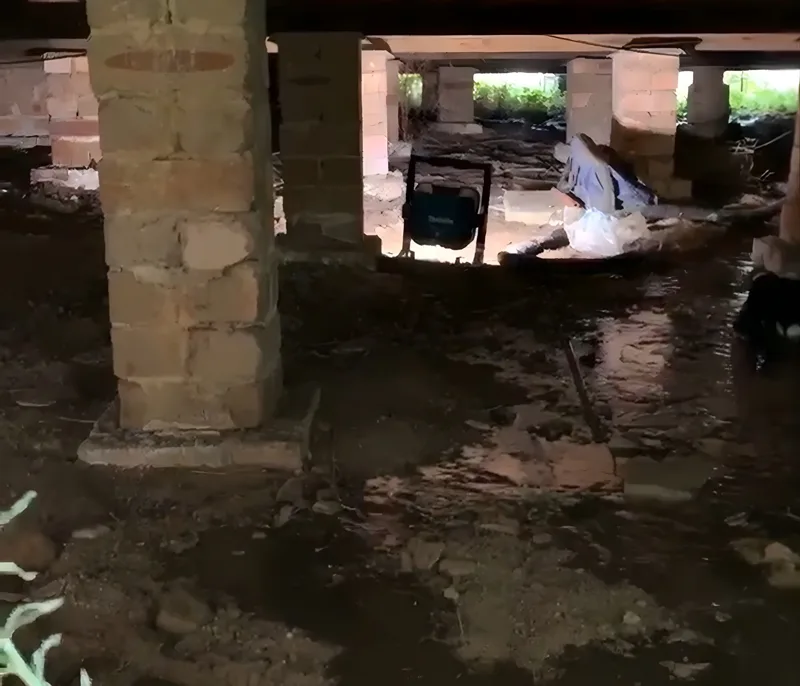
Water Erosion
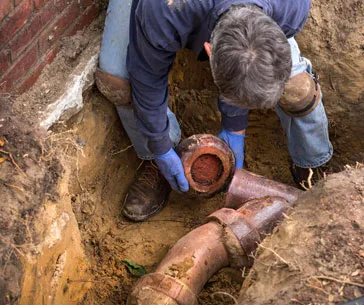
Burst pipes, leaking mains, broken bathroom drains, overflowing gutters — any of these can send water pooling beneath your home. Over time, the water erodes the soil around and beneath the piers, creating soft spots and voids. The pier sinks into the gap.
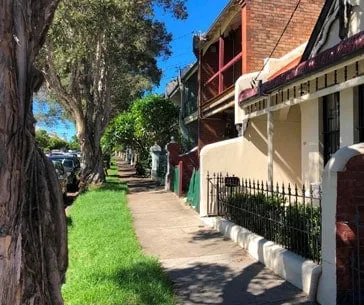
Tree Roots
Tree roots draw moisture out of the ground beneath your home. The soil dries, shrinks, and the pier drops — losing contact with the bearer above. Large trees close to the house are the most common culprit — but even hedges and garden beds with shallow roots can pull enough moisture to cause movement.
Changed Drainage
A new extension, a paved courtyard, altered stormwater — anything that changes where water goes around your home can redirect it under the house. The soil beneath the piers gets saturated, softens, and the piers sink. The drainage wasn’t wrong when the house was built. The conditions changed.
What causes floor piers to sink?
How to fix sinking piers
Non-Invasive. Laser-Monitored. Guaranteed.
Lift Your Piers. Don’t Replace Them.
Nine times out of ten, the piers are fine. They haven't cracked, rotted, or failed. They're sitting on ground that moved out from under them. Replace the piers and the new ones go straight back onto the same ground — and you're back in the same boat.
So GeoPoly™ PSR30 resin injection tackles the issue at the root — the ground itself. Resin is injected through coin-sized holes, travels beneath each pier footing, fills the voids, and compacts the soil that failed. As it expands, the pier lifts back into contact with the bearer above. Slopes level out. Doors open easy again. Cracks close up again. Most jobs take 1–2 days — and because you're fixing the problem at the root, it's permanent.
Not sure what's causing your floor to sink? That's exactly what the free assessment answers.
What to expect
A step-by-step guide of how the sinking pier process works — from assessment to completion.
 Step 1
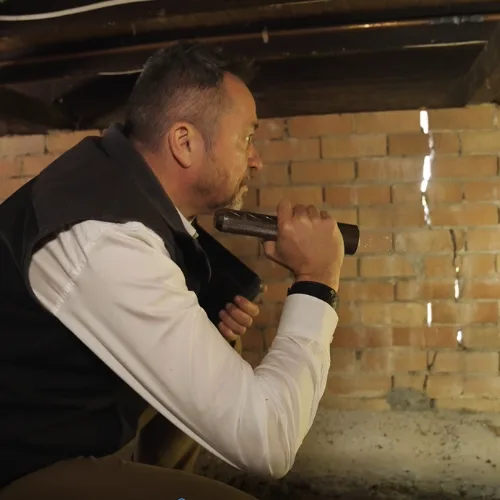
Free Structural Assessment
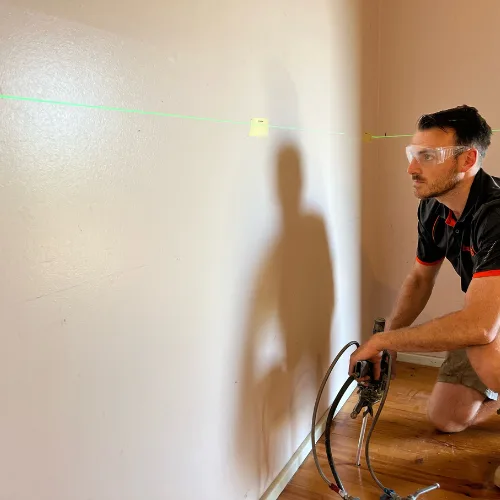
A Buildfix engineer inspects your home, gets under the floor, and measures the pier levels with laser equipment. Each pier is checked for contact with its bearer. The soil beneath is probed for voids and soft spots. By the end of the visit, you’ll know whether the piers have failed or the ground has — and what the repair plan looks like.
 Step 2
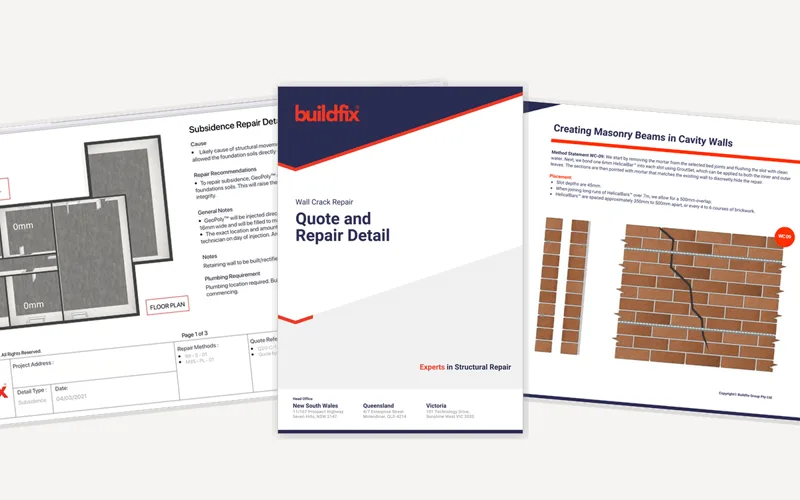
Get Your Quote and Book
A complete quote package arrives — detailed drawings, repair method statement, and a fixed-price quote. The price you see is the price you pay. When you’re ready, book through the online portal and suitable dates are organised for the work.
 Step 3
GeoPoly™ Injection
Small injection points are drilled beside or beneath the sinking piers. Aluminium pipes are inserted to reach the exact depth beneath each pier footing. GeoPoly™ resin is injected at depth, filling voids and compacting weakened soil beneath each pier.
 Step 4
Lift, Level, and Verify
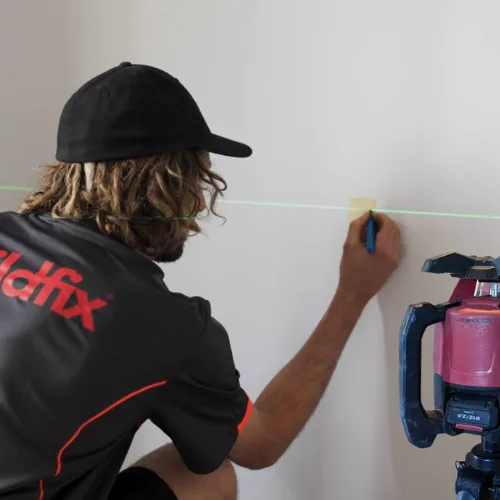
As the resin expands, each pier is gradually pushed back into contact with the bearer above. Laser levelling equipment and digital sensors track every millimetre of movement in real time. The engineer confirms the floors are back towards level before the team leaves.
 Step 5
Receive Your Warranty
Your 20-year product and workmanship warranty arrives via email with the Completion Package — a job report covering the work, materials, and images.
See the difference
Actual GeoPoly™ floor pier repairs — before and after.
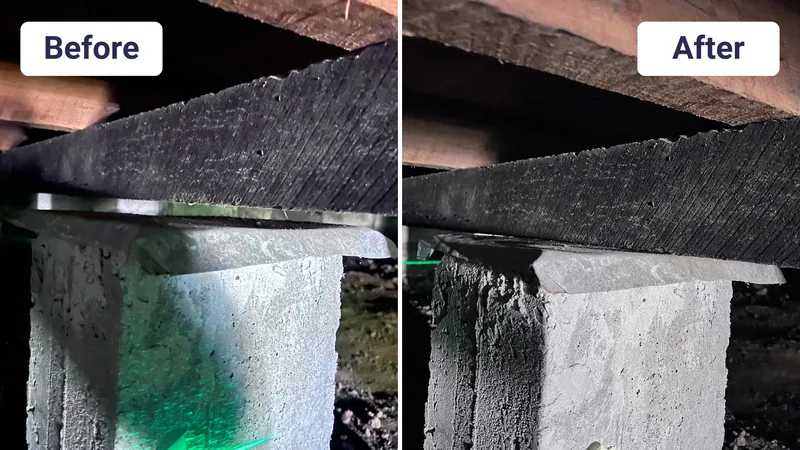
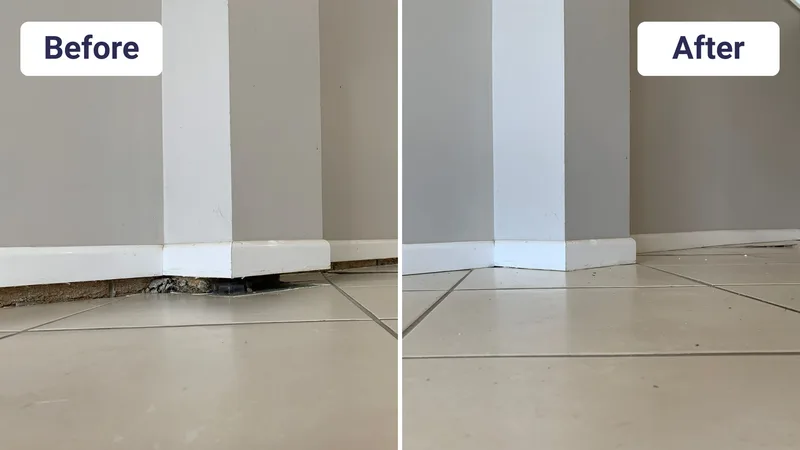
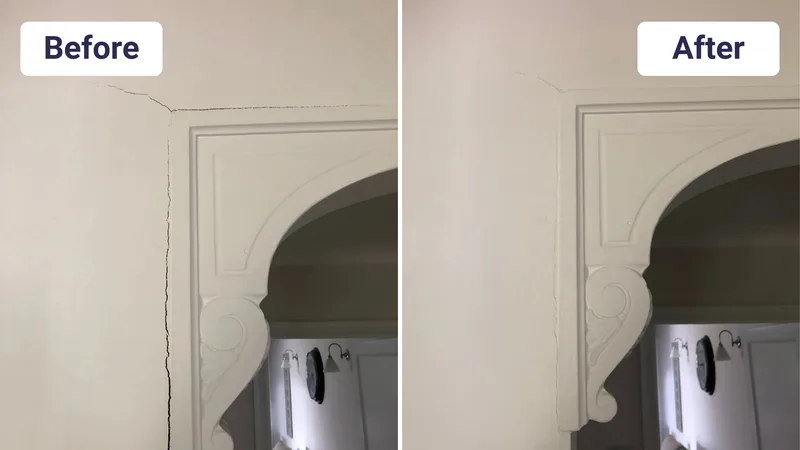
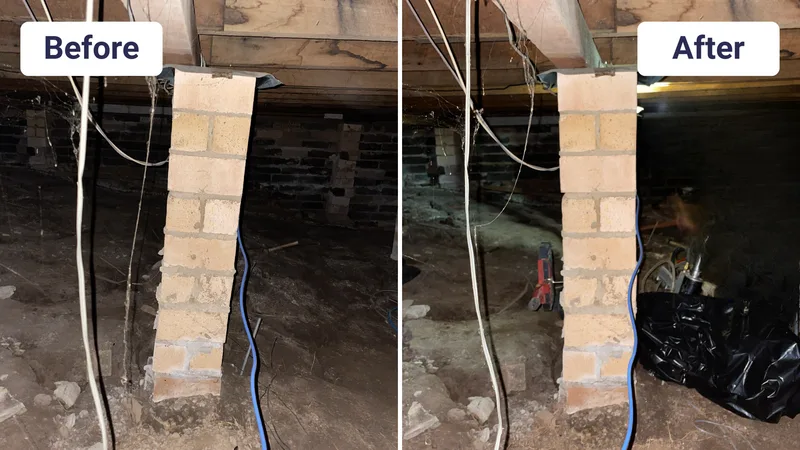
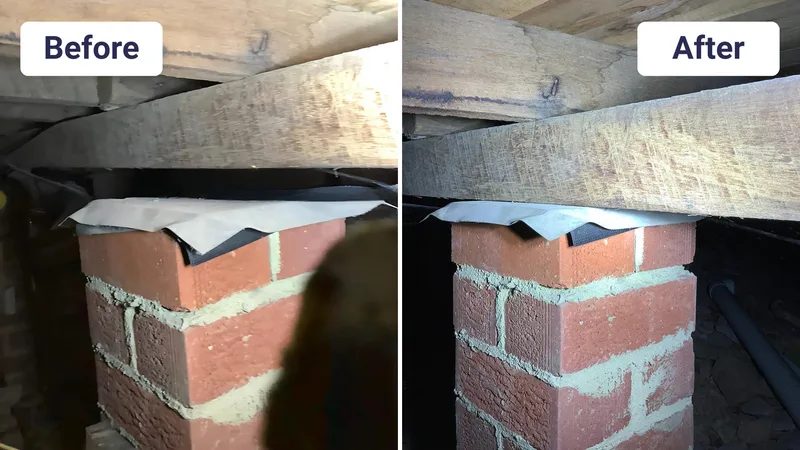
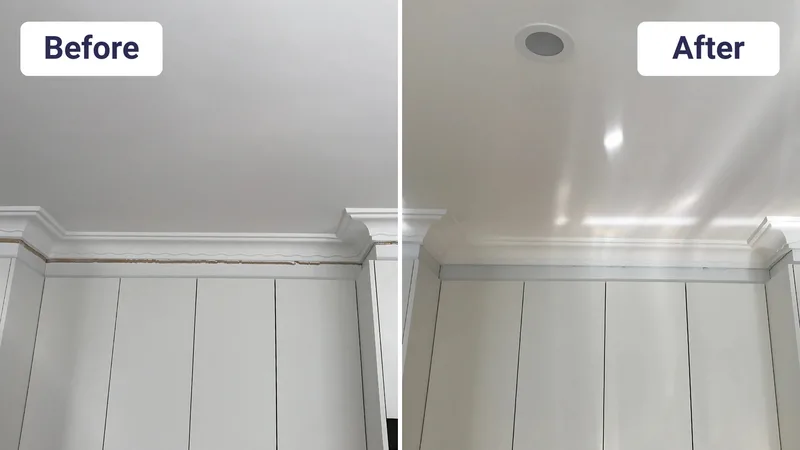
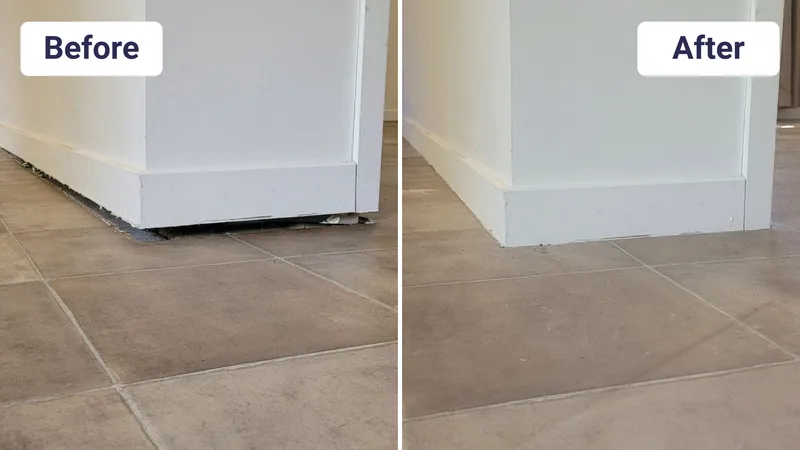
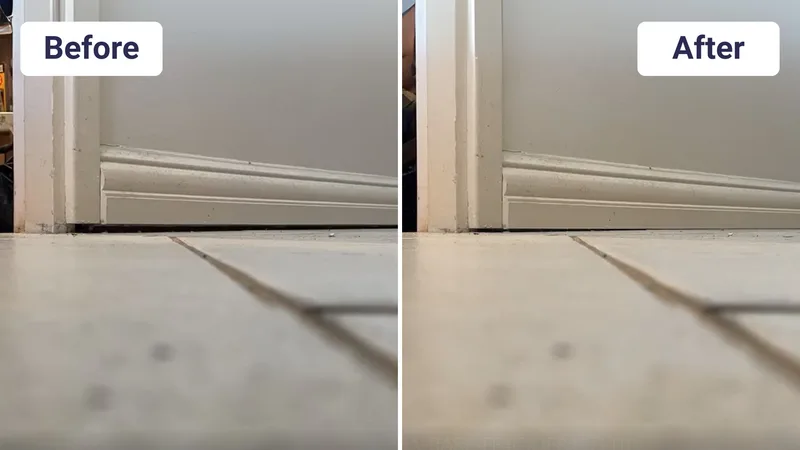
Instant results.
Guaranteed to last.
The benefits of fixing sinking floor piers with GeoPoly™.
Sinking floor piers haven’t failed — they’ve lost contact with the ground beneath them. GeoPoly™ stabilises that ground and lifts each pier back into firm contact with the bearer above. Homeowners typically see floors levelling out and the bounce underfoot stopping.
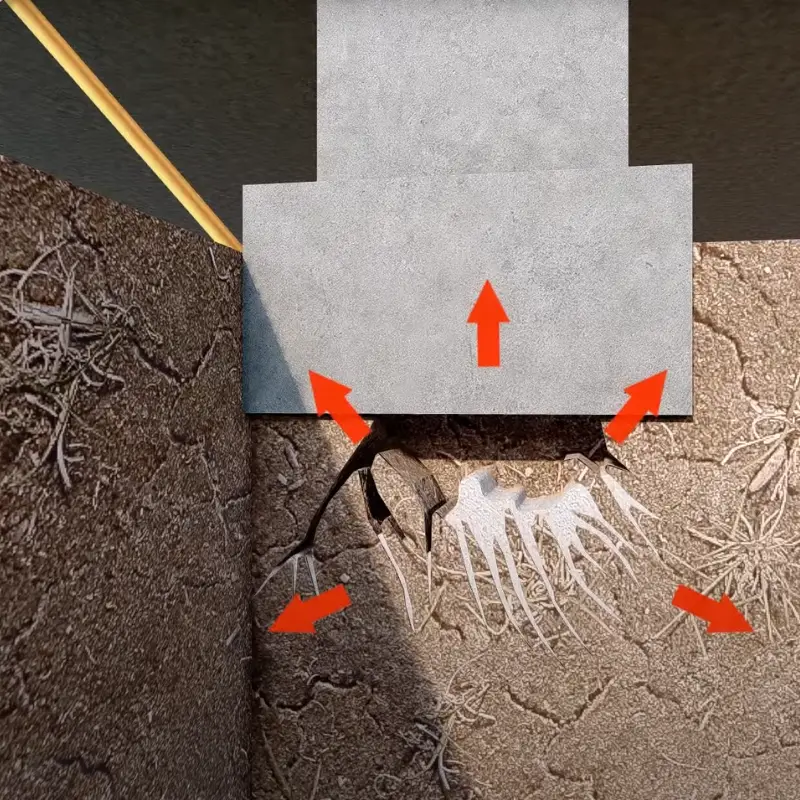
Not sure if it's subsidence? Get your home assessed for free — we'll explain exactly what's going on and what can be done.
Real homes. Real results.
15,000+ homes and structures repaired. Want to see real Buildfix floor pier repairs? Browse a few below.
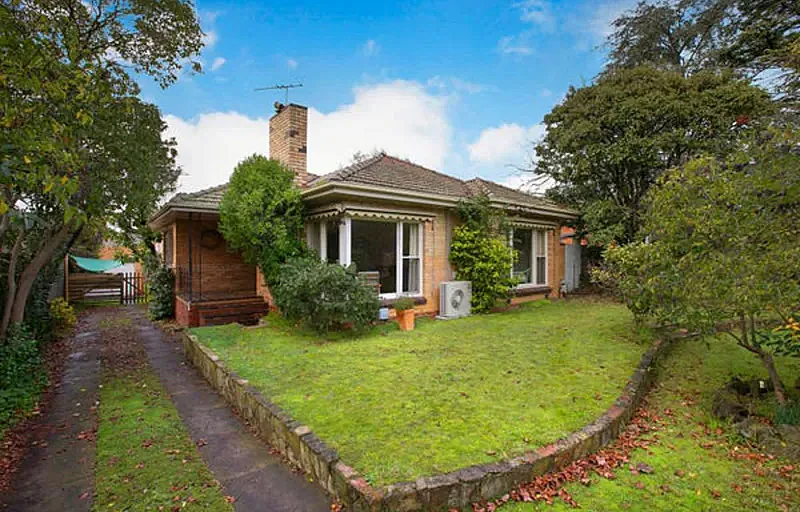 Homeowner
Brighton East, VIC
Stumps Relevelled — No Restumping Needed
The concrete stumps were fine — the soil beneath them wasn’t. GeoPoly™ stabilised the ground and relevelled the floors in two days, saving this homeowner from a second full restumping job.
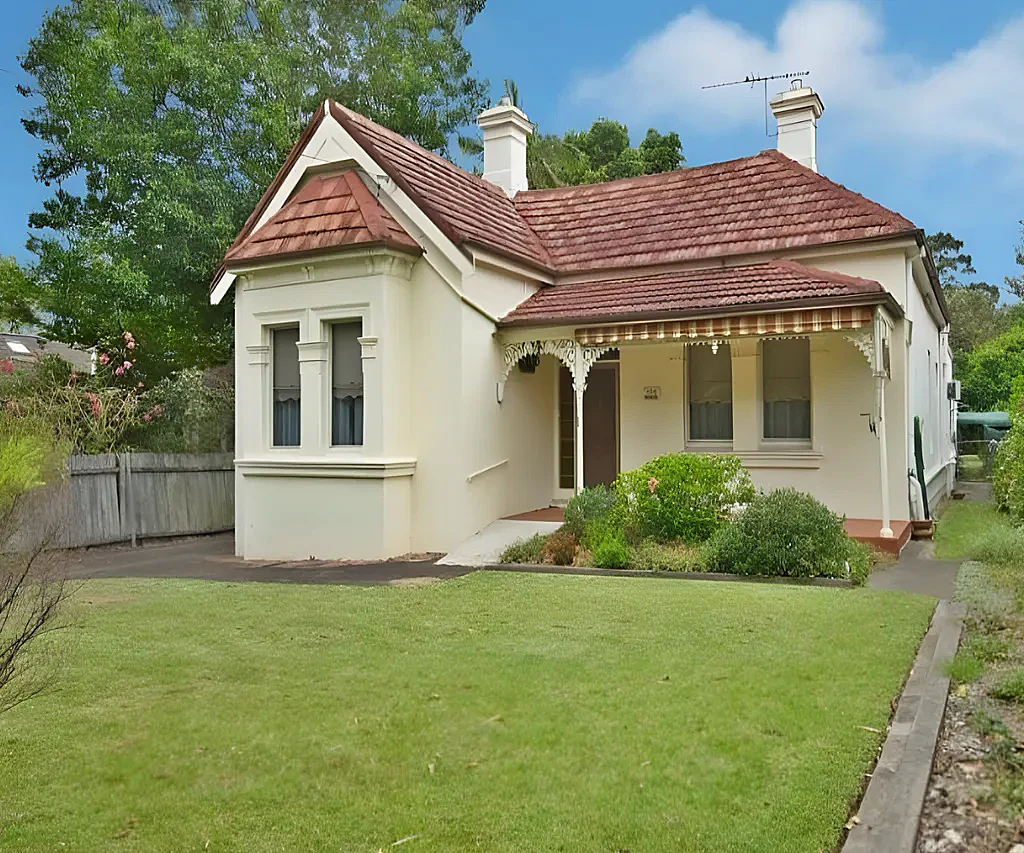 Homeowner
Strathfield, NSW
Heritage Home Repaired Twice, Same Team
When new cracks appeared in this 150-year-old Strathfield home, the owner didn’t hesitate — they called Buildfix again. Buildfix had already fixed the front of the house years earlier. This time, the team tackled the rear.
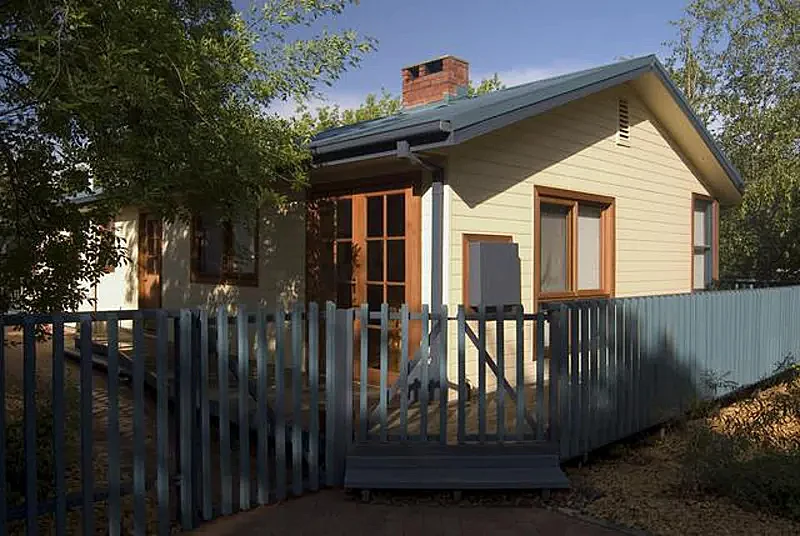 Homeowner
O'Connor, ACT
New Kitchen Saved From a $50k Rebuild
A year after installing a new kitchen, it started pulling away from the wall. Local builders quoted $50,000 to fix it. Buildfix did it in four hours — without touching the kitchen.
 Homeowner
Kings Park, NSW
Jack-and-Pack Failed — Deep-Lift Fixed It
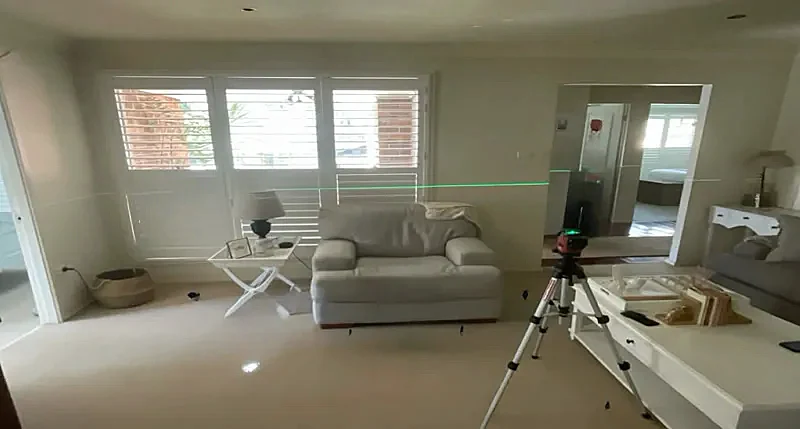
A previous jack-and-pack had failed. The living room floor had sunk 40mm. Buildfix’s deep-lift injection fixed it permanently in a single day — without dismantling a thing.
 Homeowner
Southport, QLD
Stumps Raised and Floors Levelled
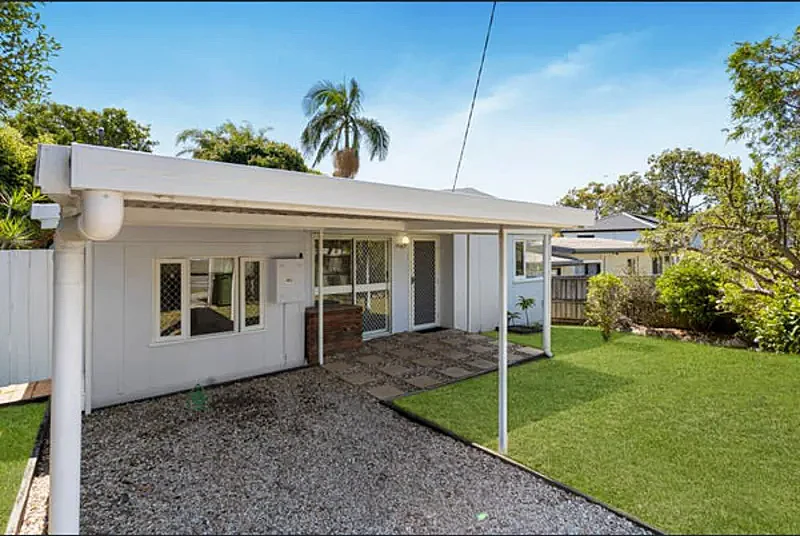
Sloping floors, cracked tiles, and sunken stumps — this investment property needed to be tenant-ready fast. GeoPoly™ got it done at a fraction of the cost of restumping.
 Homeowner
Prestons, NSW
Floor Lifted 60mm — Renovation on Track
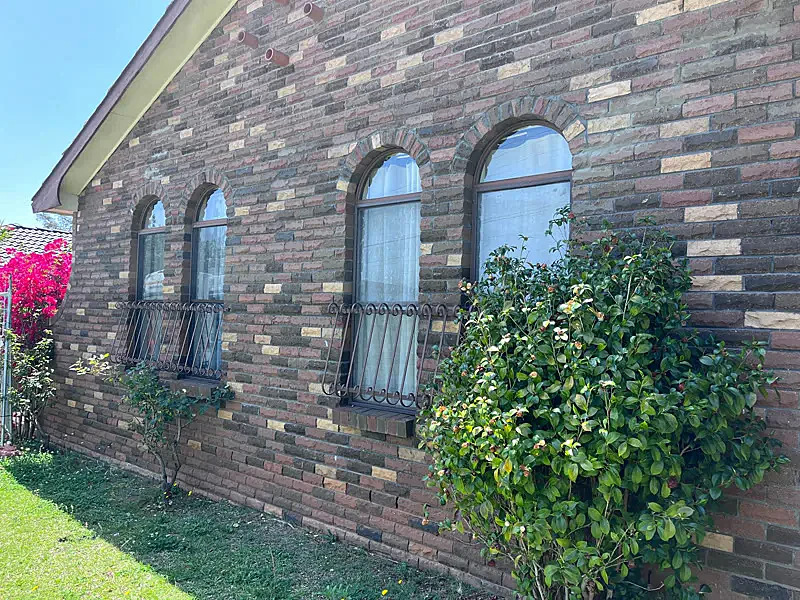
A broken pipe had eroded the soil beneath this property’s piers, sinking floors by up to 60mm. Buildfix stabilised and relevelled everything in two days — not the two weeks expected.
Ashfield, NSW
Meriton Apartments Re-Levelled
A 40-year-old Meriton apartment complex with 12 apartments suffering uneven floors from sinking brick piers. GeoPoly™ re-levelled all piers in under a day, saving over $300,000 versus traditional rebuild.
Pennant Hills, NSW
Sinking Piers and Verandah Rescued
Emergency repair of sinking brick piers on a 1930s villa in Pennant Hills. GeoPoly™ injection stabilised the verandah and prevented roof collapse — completed in a single day.
“All of the Buildfix team have been easy to communicate with. Everyone was punctual and communicated arrival times well ahead of arrival.”
Scott HolmesMelbourne, VIC
“All of the Buildfix team have been easy to communicate with. Everyone was punctual and communicated arrival times well ahead of arrival.”
Scott HolmesMelbourne, VIC
“All of the Buildfix team have been easy to communicate with. Everyone was punctual and communicated arrival times well ahead of arrival.”
Scott HolmesMelbourne, VIC
“All of the Buildfix team have been easy to communicate with. Everyone was punctual and communicated arrival times well ahead of arrival.”
Scott HolmesMelbourne, VIC
Questions?
Our team is here to answer any questions you may have Monday – Friday 8am to 4pm AEST. Give us a call on 1300 854 115.