Solutions
Remedial Wall Ties
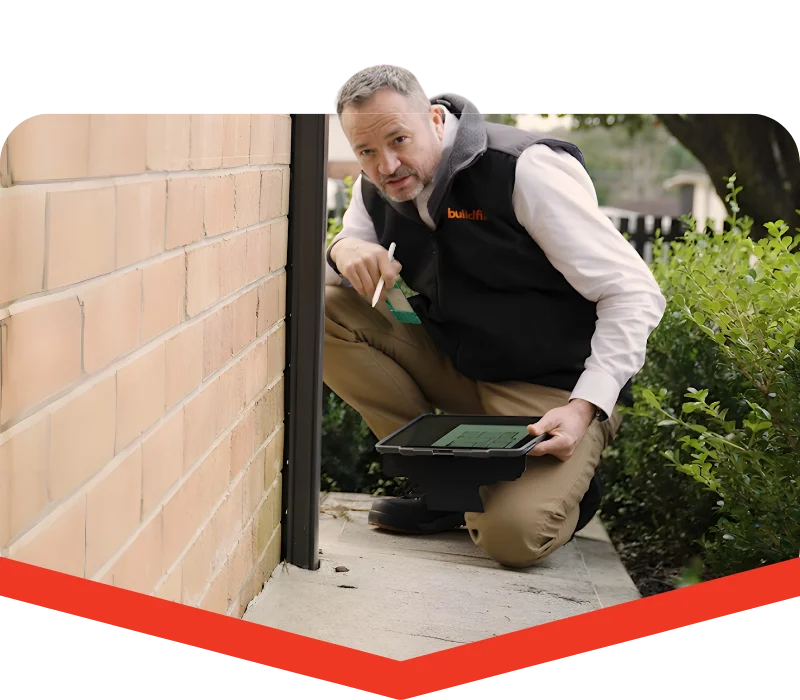
Reconnect leaning cavity walls with HelicalBar™ T316 remedial wall ties — no rebuilding, done in 1–2 days.
- Free assessment · 1–2 day repair · 20-year warranty
- Structural Engineers · Licensed Builders · Skilled Technicians
 Trustpilot
 Google
Solutions
Remedial Wall Ties
Reconnect leaning cavity walls with HelicalBar™ T316 remedial wall ties — no rebuilding, done in 1–2 days.
- Free quote · 1–2 day repair · 20-year warranty
- Structural Engineers · Licensed Builders · Skilled Technicians
Remedial Wall Ties
Reconnect leaning cavity walls with HelicalBar™ T316 remedial wall ties — no rebuilding, done in 1–2 days.
- Free structural assessment with a fixed-price quote
- No walls knocked down — most remedial wall tie jobs done in 1–2 days
- 20-year product and workmanship warranty
Structural Engineers · Licensed Builders · Skilled Technicians
TrustpilotGoogleWhat are remedial wall ties?
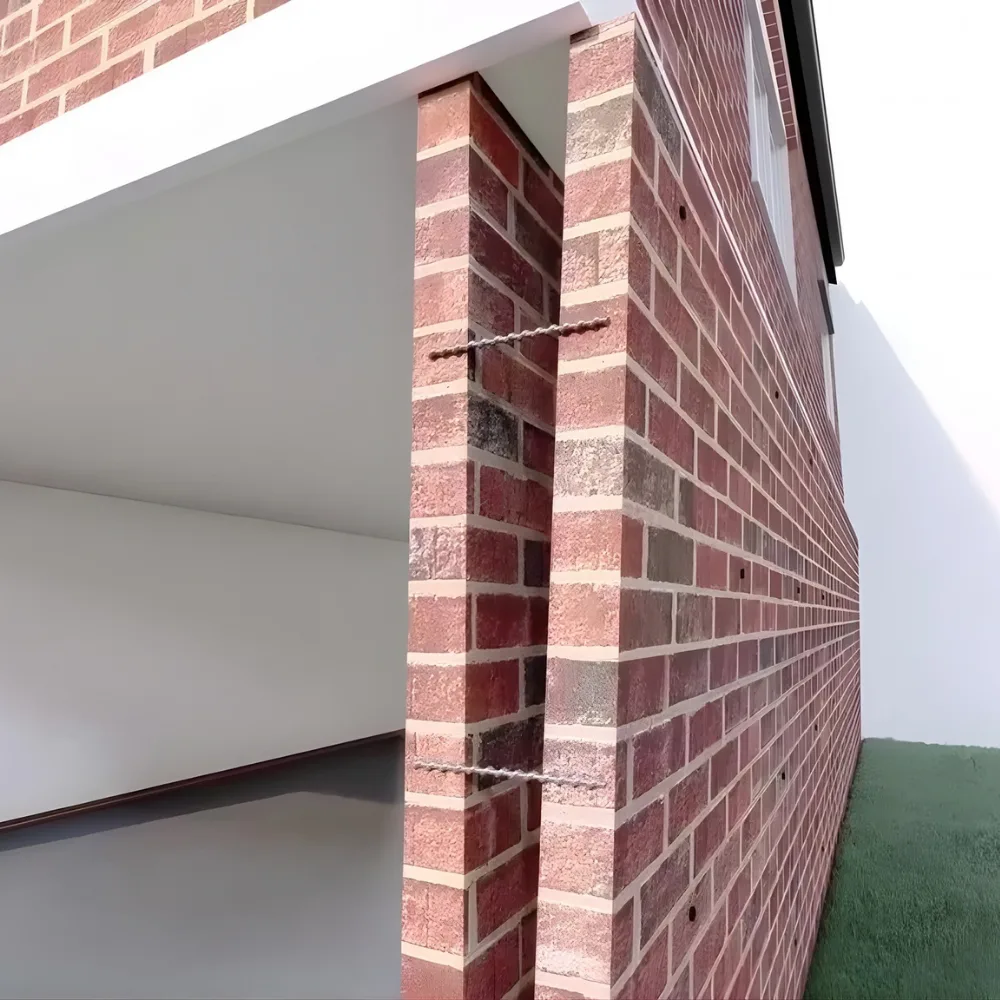
Remedial wall ties — also referred to as wall tie replacements or lateral restraints — are stainless-steel fixings drilled through the outer brick leaf of a cavity wall, across the cavity, and bonded into the inner leaf. They physically reconnect the two leaves of the wall, replacing the original metal ties that have corroded and failed.
Here's what most homeowners don't realise: the brickwork is usually fine. It's the invisible ties behind it that have failed. Those original ties — mild steel or galvanised wire in older homes — rust, expand, and eventually snap. Once enough ties go, the outer wall has nothing holding it in place and it starts to show signs of leaning and bowing outward under its own weight.
Remedial wall ties reconnect what time has taken away. The wall is stabilised without knocking it down, without rebuilding, and without any visible fixings on the face of the brickwork. Done in 1–2 days.
When does a wall need remedial ties?
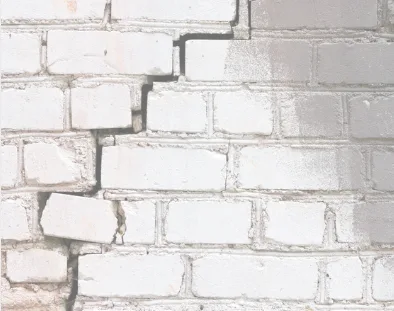
The primary causes of wall tie failure include corrosion from exposure to moisture and water, disconnection caused by subsidence, and damage from expanding brickwork. When enough ties fail, the outer leaf disconnects from the inner structure and starts moving independently — leaning, bowing, or separating from window frames and the roofline.
Look for gaps opening around windows, horizontal cracking along mortar bed joints, or the outer wall visibly pulling away from the roofline. Remedial wall ties reconnect those leaves before the damage progresses further. Once installed, the lean is arrested, the wall is stable, and the repair is invisible behind colour-matched mortar.
Our remedial wall tie solution – HelicalBar™ T316
Non-Invasive. Permanent. Guaranteed.
No Walls Knocked Down. No Rebuilding. Ever.
When the original metal ties inside a cavity wall corrode and snap, the outer brick leaf loses its connection to the inner structure. It starts to lean, bow, or bulge outwards under its own weight. But in most cases, the brickwork itself is fine — it just needs reconnecting. That 's what remedial wall ties do.
Buildfix never tears down, buttresses or reconstructs anything when it comes to fixing leaning and bulging walls. HelicalBar™ T316 remedial wall ties are stainless-steel helical fixings drilled through the outer leaf, across the cavity, and bonded into the inner leaf with high-strength structural grout. This physically reconnects the two leaves of your cavity wall — stopping outward movement and giving the outer wall the structural support the original ties have lost.
No walls knocked down. No rebuilding from scratch. No visible fixings on the face of the brickwork. You can continue to stay in your own home while the work is done. Remedial wall tie installation typically takes 1–2 days. When it's done, the drill holes are repointed to match the existing mortar colour and profile — the repair is invisible.
Not sure if your wall ties have failed? That's what the free assessment is for.
What to expect
How the remedial wall tie installation works — from assessment to completion.
 Step 1
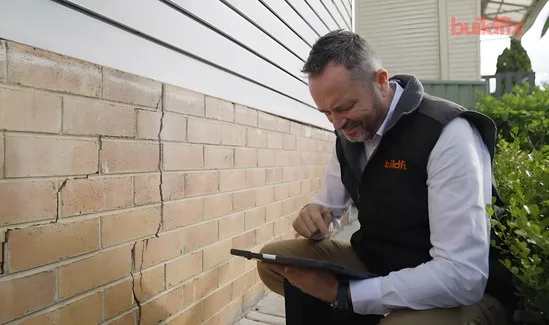
Free Structural Assessment
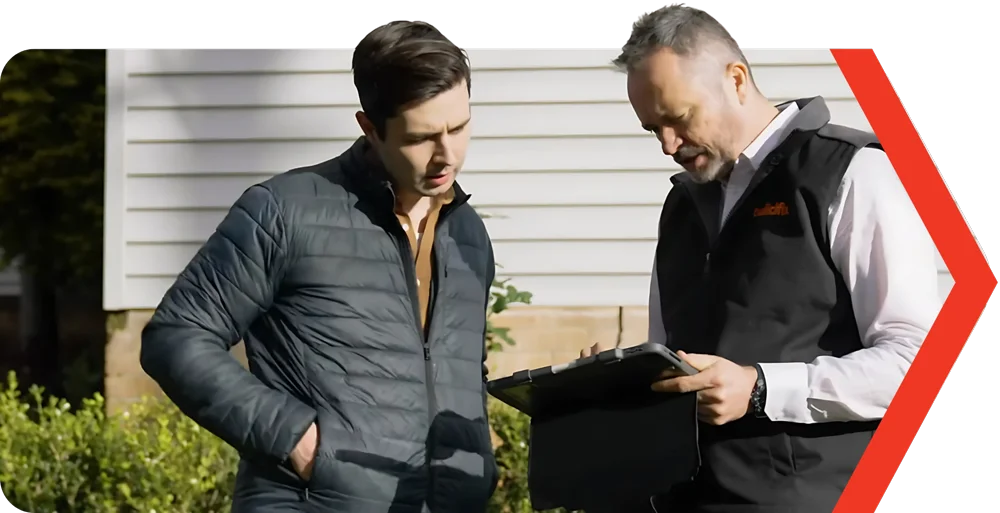
A Buildfix engineer inspects the cavity wall, measures the extent of any lean, checks for signs of tie corrosion, and designs a remedial wall tie plan on-site. You’ll know exactly what’s needed — and the price — before any work starts.
 Step 2
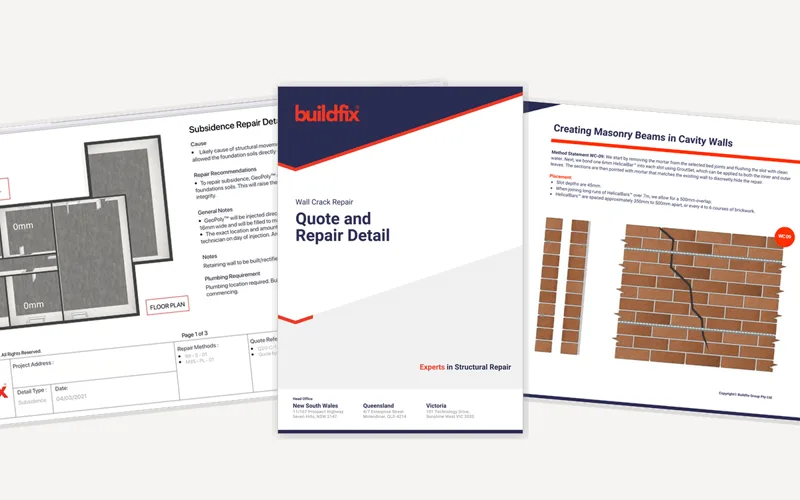
Get Your Quote and Book
A complete quote package arrives — detailed drawings, tie layout, and a fixed-price quote. The price you see is the price you pay. When you’re ready, book through the online portal and suitable dates are organised for the remedial wall tie installation.
 Step 3
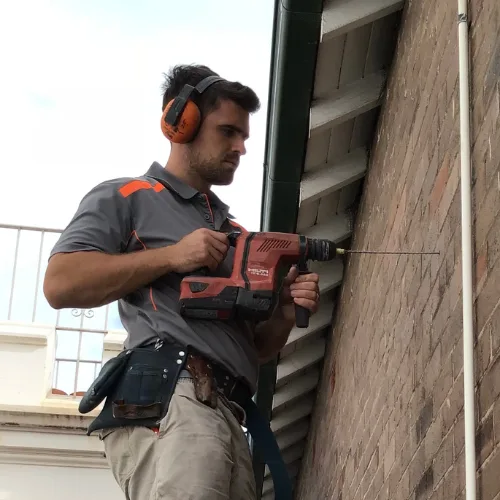
Install Remedial Wall Ties
Stainless-steel helical ties are drilled through the outer leaf, across the cavity, and bonded into the inner leaf with structural grout. Each remedial wall tie is installed through the mortar joints — no bricks removed, no visible fixings.
 Step 4
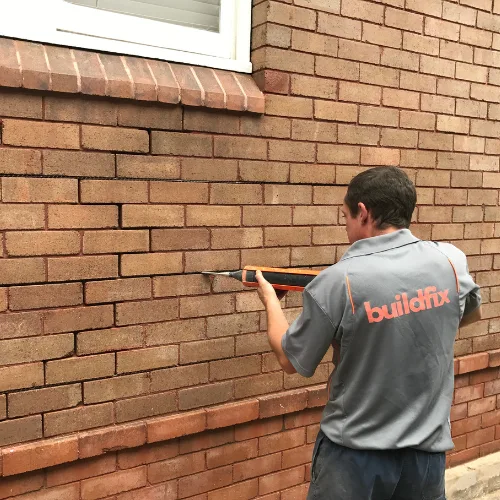
Repoint and Finish
The drill holes are repointed to match the existing mortar colour and profile. The remedial wall tie installation is completely concealed — you’d barely know the wall had been touched.
 Step 5
Receive Your Warranty
Your 20-year product and workmanship warranty arrives via email with the Completion Package — a job report covering the work, materials, and images.
Structural fix.
Guaranteed to last.
The benefits of HelicalBar™ remedial wall ties.
Remedial wall ties reconnect what the original ties have lost. HelicalBar™ T316 is drilled through the outer leaf, across the cavity, and dry fixed into the inner structure. The lean is arrested and the wall stabilised from within.
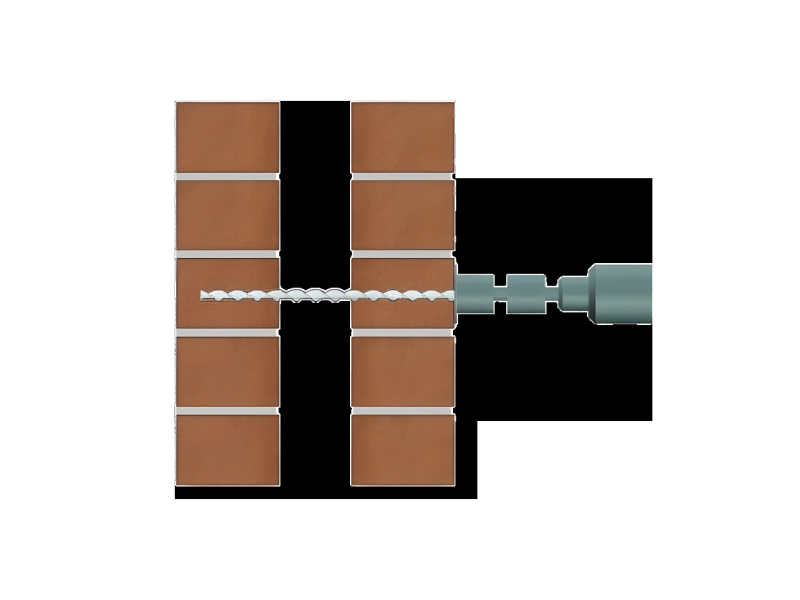
Ready for remedial wall ties that can reconnect and stabilise your walls? Book your free assessment to get started.
Real homes. Real results.
15,000+ homes and structures repaired. Want to see real Buildfix remedial wall tie projects? Browse a few below.
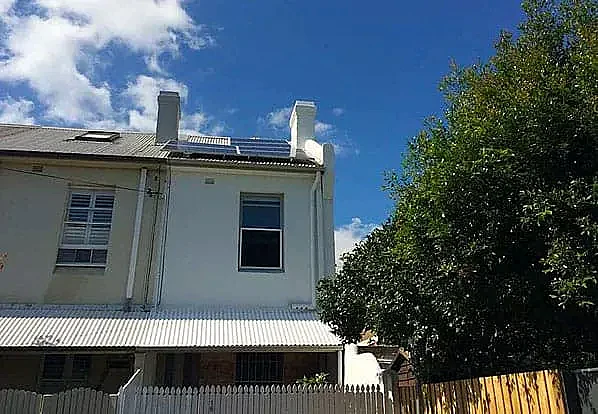 Homeowner
Rozelle, NSW
Terrace Wall and Façade Repaired
A large crack ran from bottom to top of this Victorian terrace’s gable end wall, threatening the chimney above. Buildfix stitched the wall closed with remedial ties — no bricks removed, no neighbours disturbed.
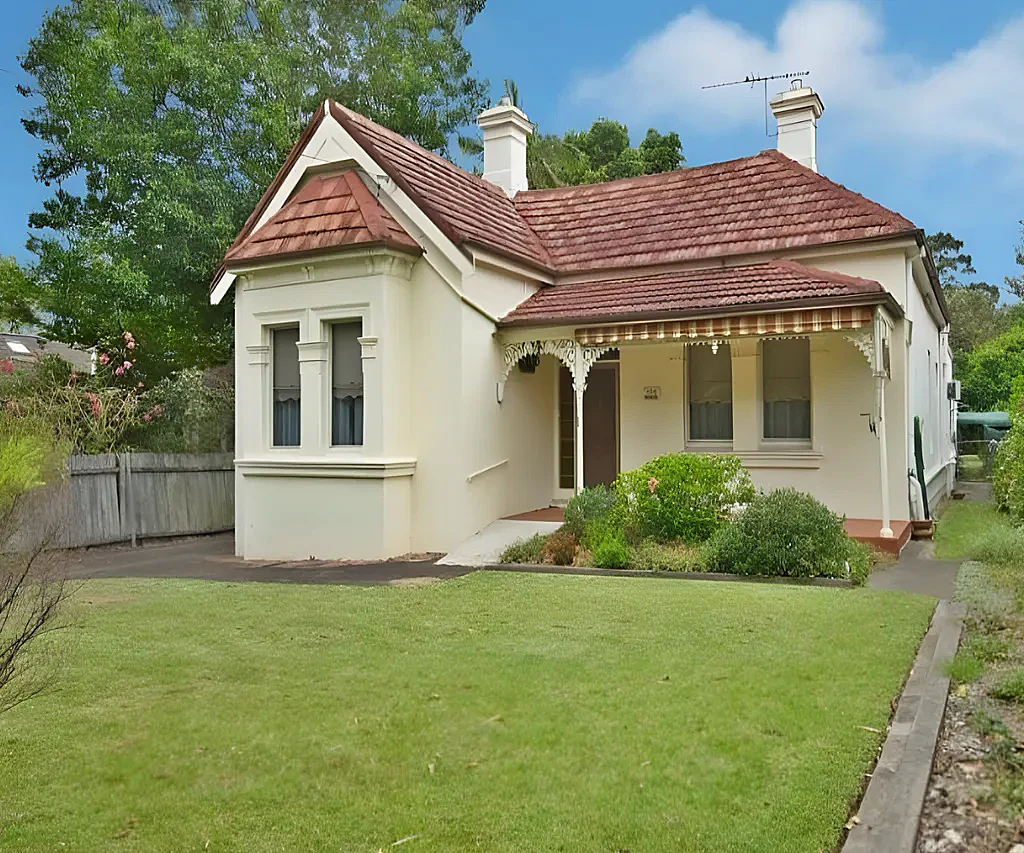 Homeowner
Strathfield, NSW
Heritage Home Repaired Twice, Same Team
When new cracks appeared in this 150-year-old Strathfield home, the owner didn’t hesitate — they called Buildfix again. Buildfix had already fixed the front of the house years earlier. This time, the team tackled the rear.
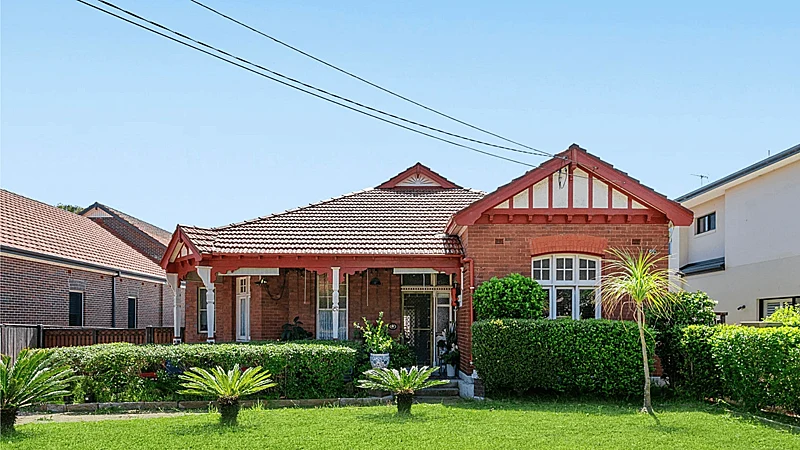 Homeowner
Strathfield, NSW
Walls Reconnected After Tie Failure
Both external walls of this 150-year-old double-brick home had been slowly separating from the internal load-bearing wall for decades. Buildfix replaced every failed tie — without removing a single brick.
 Homeowner
Manly, NSW
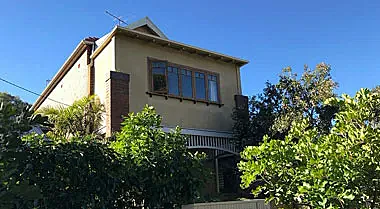
80 Years of Hidden Wall Tie Corrosion
The brickwork looked perfect. Inside the cavity, 80 years of salt air had corroded every wall tie to failure. Buildfix installed over a thousand stainless steel replacements — without disturbing a single brick.
Ballina, NSW
Brick Veneer Stabilised and Re-Tied
A double-storey brick veneer home in Ballina was leaning due to ground subsidence from a faulty subterranean water system. GeoPoly™ stabilised the ground and HelicalBar™ re-tied the veneer in half a day.
“All of the Buildfix team have been easy to communicate with. Everyone was punctual and communicated arrival times well ahead of arrival.”
Scott HolmesMelbourne, VIC
“All of the Buildfix team have been easy to communicate with. Everyone was punctual and communicated arrival times well ahead of arrival.”
Scott HolmesMelbourne, VIC
“All of the Buildfix team have been easy to communicate with. Everyone was punctual and communicated arrival times well ahead of arrival.”
Scott HolmesMelbourne, VIC
“All of the Buildfix team have been easy to communicate with. Everyone was punctual and communicated arrival times well ahead of arrival.”
Scott HolmesMelbourne, VIC
Questions?
Our team is here to answer any questions you may have Monday – Friday 8am to 4pm AEST. Give us a call on 1300 854 115.