
Help & Advice
Replacing a Concrete Driveway
Help & Advice
Replacing a Concrete Driveway
Your concrete driveway takes a battering on a daily basis. You drive your vehicle over it. You and your family walk on it. In the open, your driveway bears the full brunt of natural elements such as wind, rain, hail, blistering heat and freezing cold. And sometimes, motor oil, gas or other chemicals will fall on it and erode the driveway surface too.Naturally, wear and tear, heavy usage and age will get the better of it over time. Eventually, cracks and/or potholes will appear. And so will the dangers that come with those cracks and potholes.If this is what you're seeing, we understand why you might want to consider a replacement. The thing is, replacing a concrete slab can cost a small fortune. The concrete slabs will need to be pulled out of the ground and taken away. Then the driveway concrete will need to be relaid all over again with brand new slabs.A well maintained concrete driveway should actually last between 20 and 30 years. Before choosing to replace your driveway entirely, there's a few things you need to observe and think about.
If the cracks and potholes aren't that bad…
If the cracks and potholes in your driveway are smaller, don't replace it just yet. Smaller cracks are easier to repair so they're not the biggest concern you should have. What you need to consider is the ground on which the concrete driveway has been laid.There are cost-effective alternatives to completely replacing your concrete driveway. The trick to saving yourself a lot of money and time is to get to the bottom of why the driveway is showing signs of damage.Small cracks are an indicator of unevenness in the ground. This unevenness could be because your driveway is sitting on reactive clay soil which expands and contracts in different weather conditions.Or it could be because your driveway has been laid on top of soil that's become oversaturated because of a burst water main underneath. Or perhaps a nearby stormwater drain has overflowed and caused subsidence of the ground on which your driveway sits.Don't fix the symptoms, fix the cause, which in this case is most likely the ground.
If the cracks and potholes are huge…
If the cracks and potholes you're seeing are particularly deep, wide or even long, it might be time to replace your driveway. When the cracks and potholes are this large, it's a strong indicator the concrete is so far gone, it's beyond repair.It's likely if you were to try repairing such large cracks, they'll just return. What will make your driveway break apart even faster is liquid pooling in those cracks from something like rain. Pooling liquids will further weaken the driveway concrete to create more cracks and potholes.On top of this, pooling liquid will find its way into the soil and erode the soil. Your concrete slabs will sink further into the soil and continue breaking apart.Such large cracks and potholes are a danger to you, your family and your vehicles. If you're experiencing this situation, get the soil under your driveway checked out, then replace the driveway.
Want the ground under your driveway checked out?
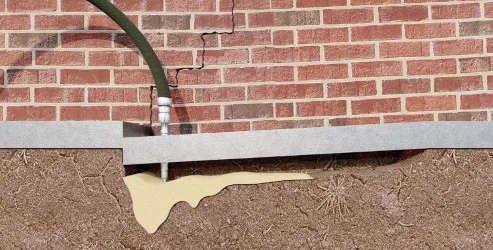
Whether your driveway is completely falling apart or only has some minor cracks in it, the trick is to have the ground underneath fixed first. Buildfix's concrete relevelling solution can raise your sunken concrete slabs, solidify the soil underneath and proof it against any further movement. A free assessment checks the slab and the ground beneath it — and explains exactly what's possible.
Share this article
Related Articles
How Might a Simple Water Leak Sink My Home?
A water leak from an unconnected downpipe, a cracked drain or overflow from guttering may seem like nothing to worry about. But water absorbed over months or years can lead to subsidence.
Read More
Subsidence: What Are Its Top Causes to Look Out For?
You don't need to be a geological expert or structural engineer to understand what subsidence is. Defined simply, subsidence is a downward shifting of the ground that can impact buildings in terrible ways.
Read More
Need expert advice on your home?
Our team of engineers and technicians are ready to help.
Book a free structural assessment today.