
Case Study
Water Tank Slab Lifted 150mm Back to Level
Case Study
Water Tank Slab Lifted 150mm Back to Level
- 150mmHow far the slab had dropped under the full tank
- 5,000 LThe rainwater tank, kept full throughout
- 2mDepth of the DeepLift injection pipes
- 150mmThe lift, back to the original level
A horizontal crack in the brickwork, and a tank slab 150mm down
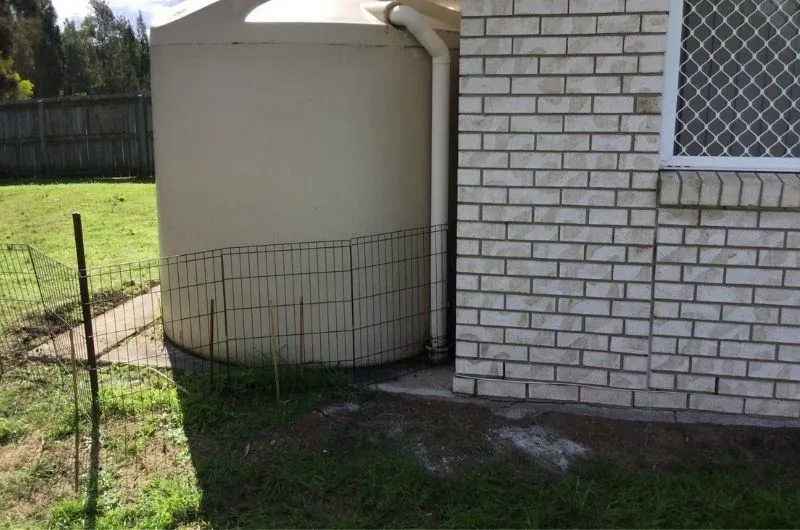
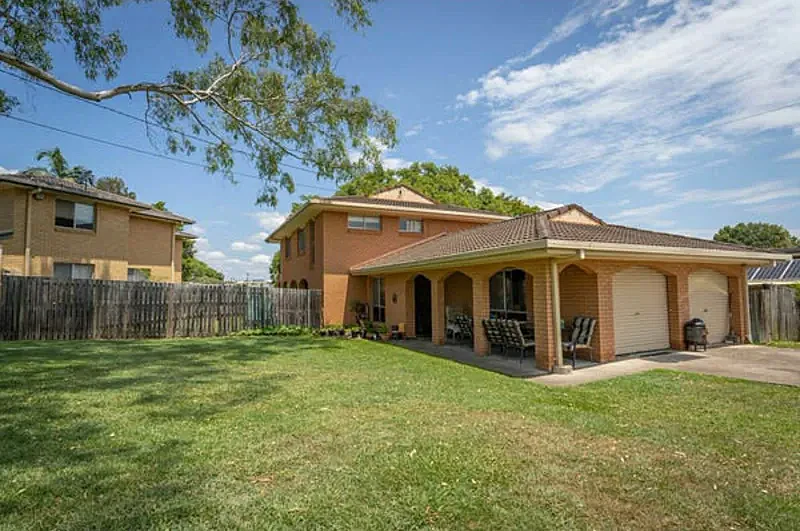
When the homeowners of this rural Ipswich home noticed a sizeable horizontal crack forming on the external brickwork of the house, they were understandably concerned.
Upon further investigation, it became apparent that the house itself was not the cause of the issue; it was the fault of an extended concrete slab holding a 5000-litre rainwater tank — currently at its capacity. The slab showed evidence of being incapable of sustaining the load from the water tank, likely due to poorly compacted soil upon construction, and had dropped by a massive 150mm.
As the slab continued to subside, it was indeed pulling the corner of the home with it — cracking the brickwork in the process.
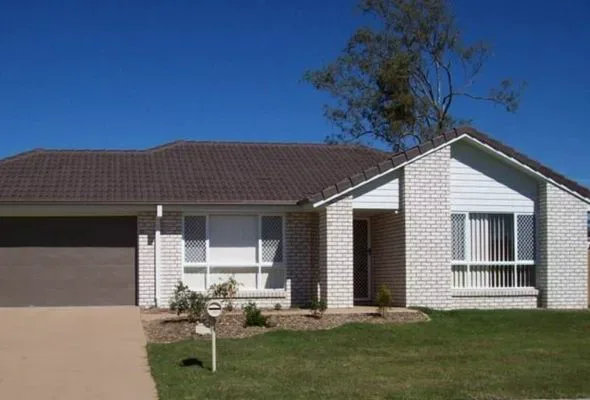
A full tank that had to stay full, on saturated ground
The tank was currently at its capacity, and the water it contained was invaluable to the owners. Also, a recent storm had left the soil surrounding the slab saturated.
The tank had to remain full because of the rural location and the lack of water for the homeowners' garden. We were also not going to be defeated by the saturated soil.
Luckily for the homeowners, challenges like these are right up our alley, and we had the perfect solution for the problem — our DeepLift method.
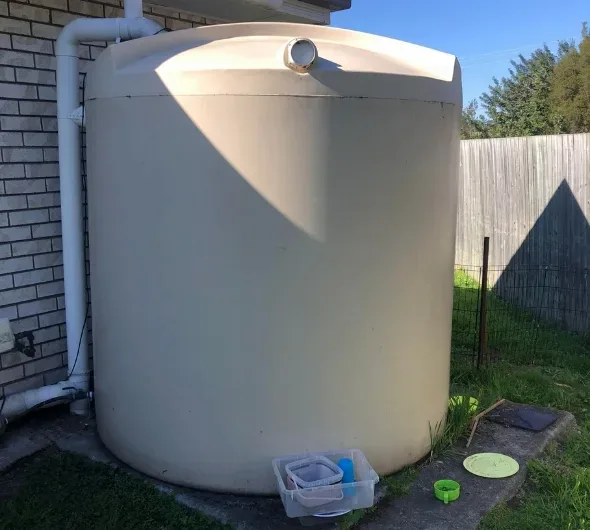
Stabilise the soil 2 metres down, then lift
With the tank leaning so dramatically, the slab needed to be relevelled precisely. The poorly compacted soil and subsidence were the sources of all the building's issues; we started by stabilising the ground with our unique DeepLift method.
Our DeepLift method involves drilling small holes in the ground to insert our pipe systems two metres deep. The pipes carry GeoPoly™ resin to where the soil is weakest. Targeting the weaknesses deep in the soil allows us to cover a broader area. The more coverage we can get, the greater the expansion force we could expect.
Considering the structure's weight in such a small area and the saturated topsoil layer, this was the correct solution. We successfully underpinned and lifted the water tank and the house, leaving excellent results!
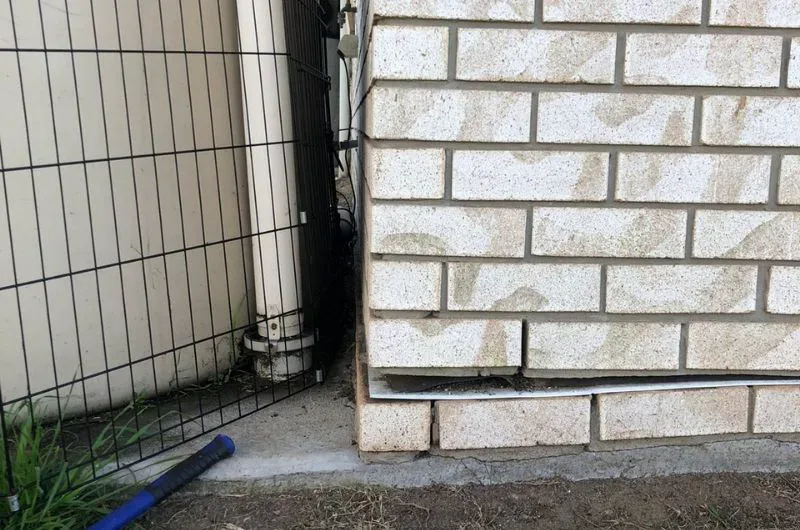
Lifted the full 150mm, water saved, crack closed
Our priority was to increase the soil's load-bearing capacity so the slab wouldn't subside in the future, save the water, and permanently fix the problem.
Not only did we underpin the concrete slab and save the precious water, but we also lifted it by a whopping 150mm and returned it to the original level. A tremendous result and a huge burden lifted off the homeowner's shoulders.
A slab beside the house that has dropped and is taking a wall with it? A free assessment measures the drop and checks how deep the soft ground goes — that decides how far down the resin has to reach.
Share this case study
Related Articles
Dining Floor Relevelled — Not a Tile Broken
A sinking dining room floor on reactive black soil — relevelled in one day through 1cm holes in the grout joints, without breaking a single tile.
Read More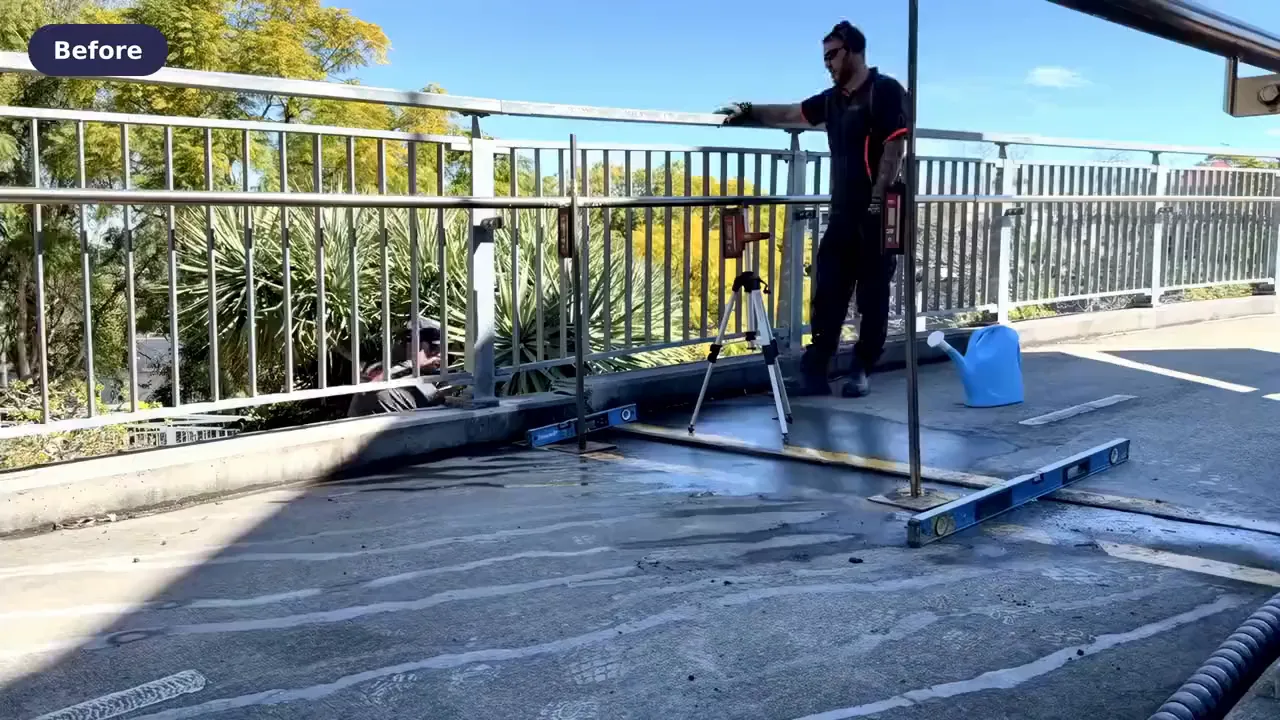
Roma Street Parkland Walkways Relevelled
Sunken stairs, walkways, and bikeways across 16 hectares of public parkland. Brisbane City Council has used Buildfix to relevel affected sections.
Read More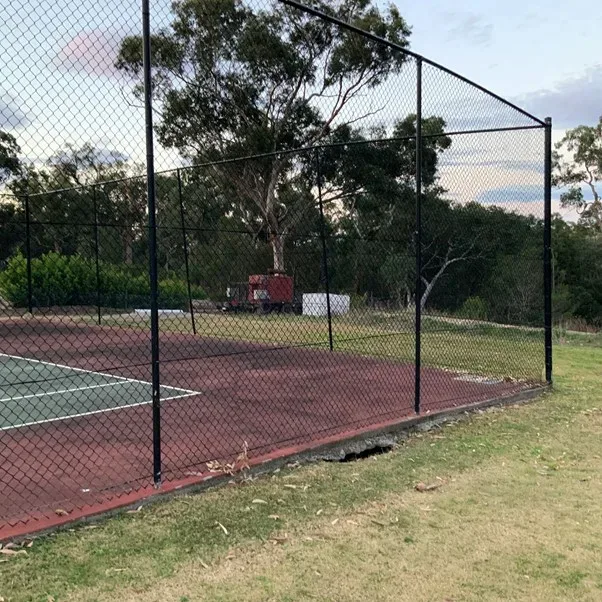
Tennis Court Lifted 300mm After Drain Failed
A broken stormwater drain washed the soil out from under the back corner of this Hunter Valley tennis court, dropping it 300mm. GeoPoly™ filled the void and lifted the slab the full 300mm.
Read More
Seeing something similar at your property?
Our team of engineers and technicians are ready to help.
Book a free structural assessment today.