
Help & Advice
How to spot rising damp
·
Help & Advice
How to spot rising damp
·
What is it and what are the tell-tale signs?
Rising damp is a term used to describe the process by which porous masonry such as stone, mortar and brick, absorbs water from the ground. The 'damp' itself is sucked upwards from the ground, into your walls.
Most porous masonry is full of capillaries. Even modern air-fired bricks, while densely packed, are still full of capillaries. These capillaries turn the masonry into sponges that draw moisture out of the ground. If you're wondering how to spot rising damp, here are some of the telltale signs.
If you recognise more than one of them, the fix is rising damp treatment: a new damp proof course injected into the mortar course in a day, no bricks removed, and the wall drying from that point on.
Flaking, Blistering or Powdery Paint
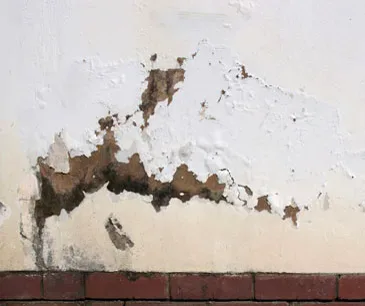
One of the easiest ways to spot rising damp is to look out for flaking, blistering or powdery paint. Paint needs a dry surface to adhere to but damp works against this. As your porous masonry walls absorb water out of the ground, the walls become drenched with liquid, salts and minerals. This damp interferes with the surface the paint is trying to adhere to, causing major damage to the aesthetic quality of your walls.
Mould
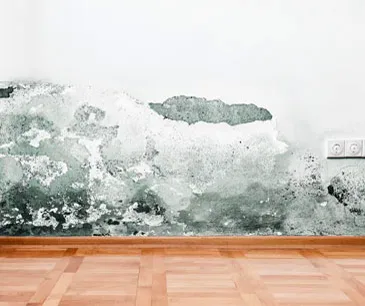
Deep down in the foundations of your home, the moisture that your porous masonry has drawn from the ground has nowhere to escape. As a result of being unable to dry up, the base of both your interior and exterior walls may have developed a dark green or even black mould. If you spot mould localised around the base of your interior walls, the likelihood of rising damp is high.
Yellow or Brown Tide-Like Stains
If your walls are showing yellow, wavy, tide-like stains, it's likely you have a damp issue. When porous masonry soaks up water, it draws salts and minerals out of the ground too. The wavy stains indicate that some of the moisture has had a chance to dry a little. The yellow, tide-like stains are the salts and minerals left behind. But don't be fooled. Your porous masonry will still be soaked through and damaged on the inside.
Structural Damage
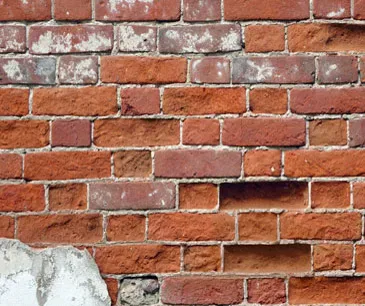
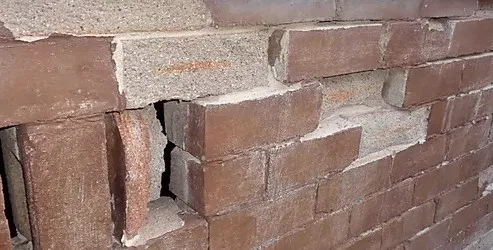
One of the simplest ways to spot rising damp is to look for structural damage to your walls. Having drawn water out of the ground, your masonry has trapped salts and minerals. Under varying weather conditions over time, the salts and minerals expand and try to work their way out of the masonry. This causes it to disintegrate into dust from the inside out. The salts and minerals also eat away at the mortar joints between bricks turning your home's walls into a crumbling mess.
This is the part most homeowners never see until a brick face falls off — how salt damp turns brick walls to dust from the inside explains what the salt is doing inside the wall.
You Feel Sick at Home

As capillaries in the porous masonry suck more and more moisture out of the ground, it becomes heavily loaded. This turns your masonry into a hotbed for bacteria. Mould and thousands of other microorganisms flourish in environments such as these. They bring about allergies and asthma which can result in wheezing, coughing, tightness of the chest and shortness of breath.
For what untreated damp does to the plaster, the skirting and the air in the room over time, read the effects of rising damp and what you can do about them.
Damp isn't the only thing the ground sends up a wall
Rising damp is a wall problem with its cause in the ground, and it often shares a house with the other kind. Cracks stepping through the brickwork above a damp patch are a job for wall crack repair once the wall is dry. A wall that leans or bows outward is usually failed ties — remedial wall ties pull it back. Floors that slope towards the damp side are the piers or stumps dropping: what's making my house piers move covers why, and floor levelling is the fix. And when the whole footing has dropped, that's subsidence and underpinning. A sunken path or driveway outside is slab lifting.
Need our help identifying rising damp?
Seeing some of the symptoms on this page around your house but still unsure? We'd be happy to help you spot rising damp for what it really is with a free inspection.
Free structural inspections — We take a look at your home at no charge.
Simple, transparent quotes — Our quotes come with easy to understand computer-generated drawings that detail our proposed solution.
Minimal disruptions to your life — Repairs to damaged walls shouldn't take more than a day or two.
Minimal disruptions to your home — We don't damage your home by installing physical membranes.
Permanent fixes — We're thorough in what we do, the walls we fix, stay fixed.
20-year warranty — In the rare case damp returns, we'll be back too, at no extra cost.
Book a free assessment — the moisture is mapped with meters, the source identified, and you'll know exactly what's going on inside the wall.
Share this article
Related Articles
What Are the Effects of Rising Damp? What You Can Do to Fix It
Rising damp turns the dark, damp lower areas of your home into a hotbed for bacteria. Left untreated, the effects can be destructive to your home and health.
Read More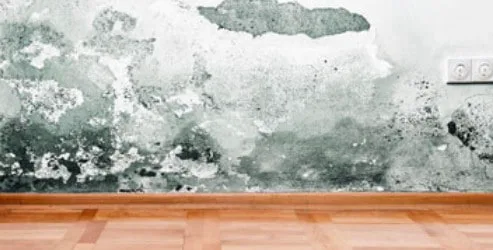
3 Ways to Stop Mould Growing in Your House
Excessive moisture that doesn’t dry up attracts bacteria and eventually forms mould. Here are a few simple, practical techniques to stop mould from growing in your home.
Read More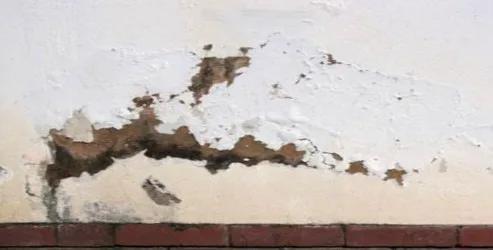
Damp Smells: How to Get Rid of Them From Your Home
A strong damp smell is an indicator there’s too much moisture in your home. Here are some of our top tips to rid your home of that damp smell.
Read More
Need expert advice on your home?
Our team of engineers and technicians are ready to help.
Book a free structural assessment today.