
Case Study
Excess Moisture Removed From a 1920s Semi
Case Study
Excess Moisture Removed From a 1920s Semi
- 4 daysRising damp stopped, tenants at home throughout
- 2Eras of brickwork, 1920s and 1970s, each needing its own DampBlock™
- ~100 yearsHow long the untreated 1920s walls had drawn water from the ground
A lower floor overwhelmed with mould
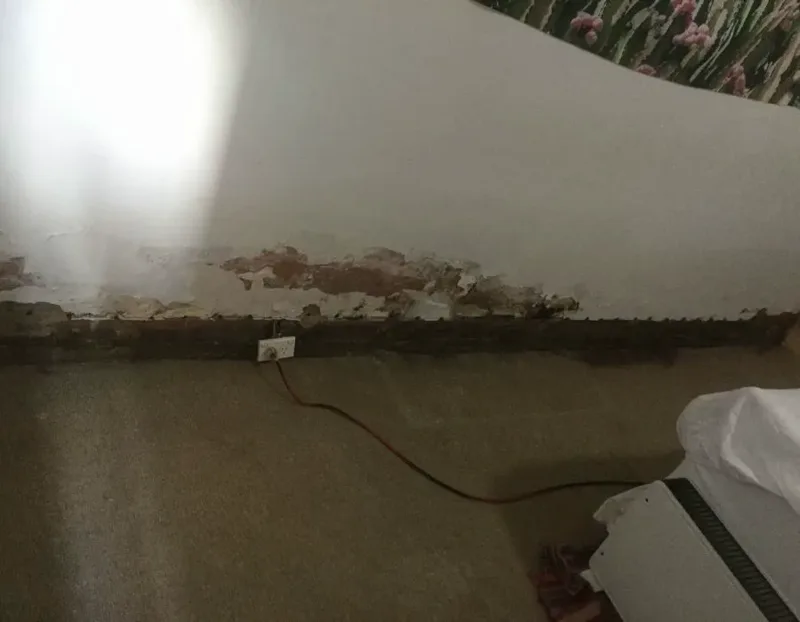
For years, the tenants of this renovated semi-detached home had struggled with extreme moisture levels inside the building. Located in Turramurra on Sydney's Upper North Shore, the home's lower floor was overwhelmed with mould and smelt particularly bad.
Left much longer, the moisture levels in the lower floor of the semi-detached house could have made the tenants extremely sick. The owner called us in under the correct assumption the source of moisture and mould was rising damp.
Two eras of brick behind one skirting board
Upon initial inspection, the semi-detached structure appeared to be built in the 1970s. The style of the weakening mortar joints and the use of hard-pressed brick were tell-tale signs. There seemed to be no structural problems with the house.
The only issue seemed to be the breakdown of the damp proof membrane which would have occurred due to age.
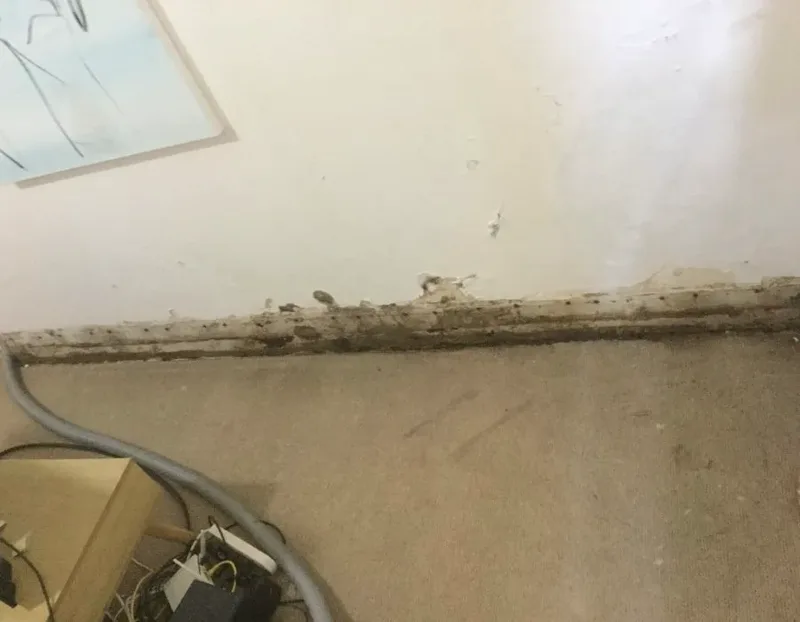
However, upon taking a deeper look into the source of rising damp, we found an interesting surprise. After removing skirting boards in the lower floor of the house, we identified masonry from the 1920s, more porous than any brick from the 1970s. The masonry was structurally sound but soaked through.
When the semi-detached house was renovated in the 1970s, the renovations occurred directly on top of the 1920s structure. The old 1920s walls had never been treated for rising damp and had been drawing water out of the ground like sponges for almost 100 years.
Both the 1920s and 1970s masonry were soaked through.
From completely different eras, the nature of the masonry was also completely different. The 1920s brick was soft pressed and extremely porous. The 1970s brick was hard pressed but still drawing significant amounts of liquid out of the ground.
The right DampBlock™ for each brick
This meant we needed to come at this challenge from multiple angles. To stop the rising damp, we brought both our proprietary solvent and silicon based solutions to overcome this challenge.
First, we injected our solvent based version of DampBlock™ into the highly porous 1920s brickwork. A low pressure solution, it was perfect for the 1920s bricks lower quality mortar joins.
Second, we injected our silicon based version of DampBlock™ for the 1970s hard pressed brick. A gravity fed silicon, it was the appropriate damp barrier for more modern bricks.
Our unique technical understanding of residential structures and materials from different eras allowed us to inject the right chemicals into the right places. By doing so, we created damp barriers which have seen the moisture and mould eliminated from the semi-detached home.
Dry walls, new skirting, done in 4 days
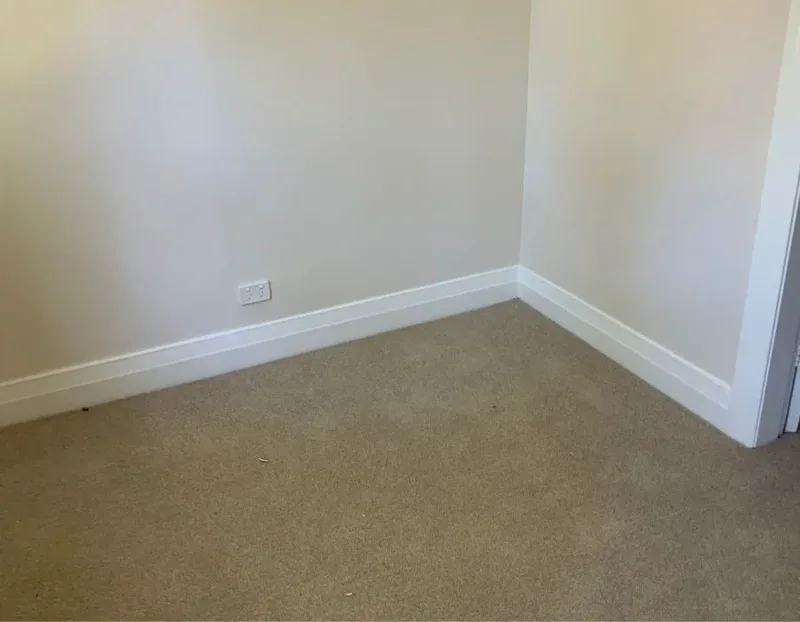
We were able to complete this project and eliminate the rising damp within 4 days. The horrible smell, moisture and bacterial health risks are now gone.
The tenants of the house were able to live as usual while we were working. Installation of brand new skirting boards have everything in the lower floor of the house looking like new.
Got a musty smell downstairs, paint bubbling at the base of a wall, or skirting boards that have gone soft? A free assessment maps the moisture with meters and tells you whether it's rising damp, and from which walls.
Share this case study
Related Articles
Damp Attacking From Both Sides
Damp damage showing on both internal and external walls? That means moisture has saturated the full wall — and neither repainting nor re-rendering will stop it. Book a free damp assessment.
Read More
Crumbling Bricks No Bricklayer Could Fix
Strata committee dealing with crumbling brickwork that no tradesperson seems able to fix? The problem might not be the bricks — it might be what’s happening behind them. Book a free damp assessment for your building.
Read More
Rising Damp in Both Balcony Pillars
Rising damp in brick pillars, piers, or columns? The damage accelerates faster in exposed masonry — don’t wait for it to reach the top. Book a free damp assessment.
Read More
Seeing something similar at your property?
Our team of engineers and technicians are ready to help.
Book a free structural assessment today.