
Help & Advice
3 Causes of Wall Tie Failure
·
Help & Advice
3 Causes of Wall Tie Failure
·
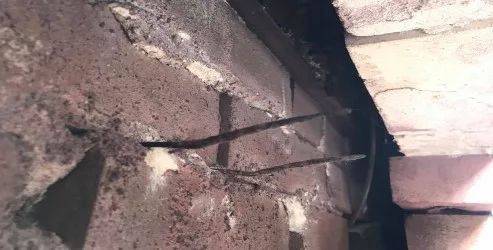
The walls of most residential structures are made from an interior and exterior wall with a cavity sitting between them. Cavities provide thermal insulation and stop too much heat travelling inside your home. Inside the cavity, wall ties hold the interior and exterior walls together, keeping them stable and upright. The numbers explain the risk. Each leaf is 110mm of brick, the cavity between them 50–70mm, so a tied cavity wall is 270–290mm thick and very sturdy. Take the ties away and you're left with two free-standing walls 110mm thick — and a 110mm brick wall on its own is not a stable thing. But if any of the walls inside or outside your home lean, bend, bow or bulge, the ties within the cavities may have failed. There are many reasons why ties fail, but here are our top 3.
1: Subsidence
Subsidence is the downward shifting of the ground underneath your home. If someone were to tell you your home was suffering from subsidence, they'd mean your home was sinking.Subsidence can be caused by oversaturation of the ground on which your home sits, shrinking of the reactive clay under your home due to hot weather, vibrations and even poor workmanship.Uneven sinking of your home's structure can lead to unevenness of the foundations directly beneath your interior and exterior walls. If your exterior or interior walls shift downward a little more than the other, the shifting can cause the ties within the walls to snap, tear and disconnect completely.
2: Wall Tie Corrosion
Over years or even decades, moisture can build up between your interior and exterior walls. Especially if your home is situated near the seaside, in a tropical areas or experiences immense amounts of wet weather.Wall ties are often made of steel and tend to rust due to excess moisture or salty sea air. The brickwork itself can also soak up a lot of moisture, causing wall ties that sit in the brick and across the cavity to corrode and rust.
Distance to the water is the quickest read on your own risk. Within about 10km of the coast or a bay the salt in the air reaches the cavity, and ties in brick homes built before the 2000s — galvanised wire or mild steel — are the ones that go. Not every house is at immediate risk; ties rust at different rates. But a pre-2000 cavity wall near the water almost always has some corrosion in it by now.
3: Expansion
A knock-on effect of corrosion is expansion. As excess moisture builds up in the cavity between an interior and exterior wall, wall ties corrode. But left untreated, the corroded ties expand to take on a greater volume than the original wall tie. These wall ties distort or crack the walls in which they're placed.Due to absorption of moisture, brickwork can expand too. This expansion places uneven pressure on your structure and may result in a leaning, bowing, bending or bulging wall.
Have your wall ties failed? Need help fixing them?
What to look for: horizontal cracks along the mortar beds, a wall that bows, leans or bulges, mortar joints gone soft and sandy — and on a rendered wall, rust marks bleeding through the surface where the ties sit.
Any wall that doesn't stand upright needs attention. If your walls lean, bow, bulge or bend, it's likely the cavity ties have failed. Remedial wall ties reconnect the wall without knocking it down — done in 1–2 days. A free assessment checks the ties and explains exactly what's needed.
Share this article
Related Articles
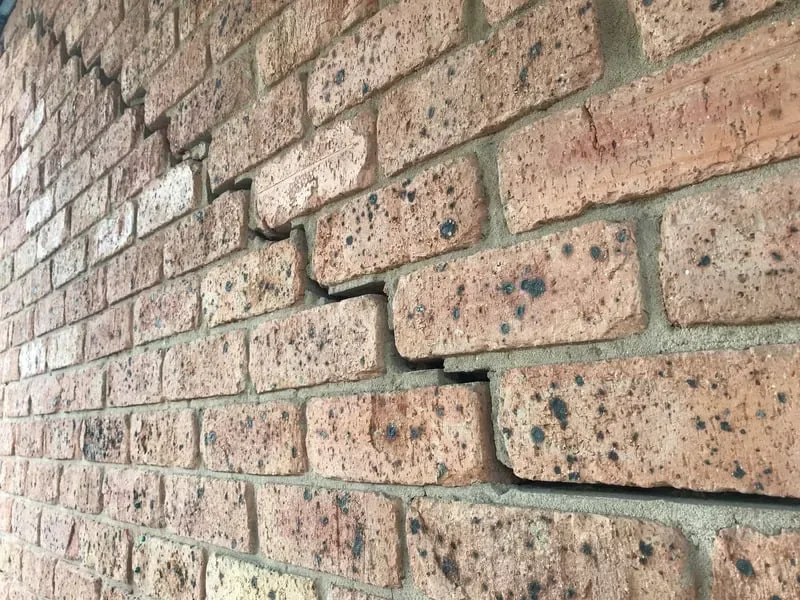
How to Tell If a Wall Crack Is Cosmetic or Structural
Wall cracks are common in Australian homes, but not all mean something's wrong. Some are harmless signs of natural settling or aging materials.
Read More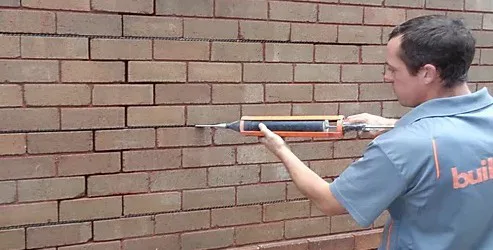
Brick Repair: How to Repoint Your Brick Wall
When the mortar joints between the bricks in your home begin aging, they crumble and crack. Repointing is something you can do yourself. Here’s our step-by-step guide.
Read More
Need expert advice on your home?
Our team of engineers and technicians are ready to help.
Book a free structural assessment today.